
Thirty amps. That's the continuous rating stamped on a spool of ordinary 10 AWG copper wire, and it's close to double what most single-panel DIY energy setups will ever actually push through it. Pick too thin a wire for the amperage running through it and solar wiring turns into a voltage drop problem at best and a fire risk at worst, sitting quietly behind a charge controller. Off-grid basics get taught backwards more often than not: everyone obsesses over panel wattage and battery capacity, and the copper connecting the two gets whatever was cheapest in the box.
Two spools of wire can sit side by side at a hardware store looking nearly identical and behave completely differently once current runs through them for hours in a hot garage. That difference, thin gauge versus correctly sized gauge, is worth working through as a straight comparison, not a checklist, because the two situations that call for each gauge are genuinely different.
AWG Runs Backwards From What You'd Guess
American Wire Gauge (AWG) works like the inverse of an internet speed rating — the smaller the number, the fatter the wire, and the more current it can carry without complaint. A 10 AWG wire is meaningfully thicker than a 12 AWG wire even though ten is the smaller digit, which trips up anyone used to numbers going up as capacity goes up. The ampacity backs it up: 10 AWG copper is rated for 30 amps continuous, while 12 AWG copper tops out around 20 amps — a gap that matters once a panel array pushes more current than the wire in the box was ever meant to handle.
A guy up the street has been restoring a 1972 Chevy C10 in his driveway for what feels like two summers now, and when I complained about wire-gauge math he just laughed. Automotive restorers size wire for amperage first and ask questions later, because a fried harness under a dashboard ruins a lot more than an afternoon does. Bundled kit wire, the 12 AWG or 14 AWG stuff most budget solar panels ship with, gets none of that same respect, and it shows the first time someone runs a real load through it.

Stock Kit Wire vs. Upgraded PV Wire
Stock kit wire and proper PV wire look similar coiled up in a box, but only one of them is built for the job. Standard wire insulation cracks under continuous UV exposure the way an old dashboard does in a closed car — it's a matter of when, not if, especially anywhere the Arizona sun hits it directly. Solar-specific PV wire carries UV-resistant insulation meant to sit outside for years, and that alone is worth the upgrade before gauge size even enters the conversation.
Sizing the rest of the system changes the math too. How much wire a build actually needs depends partly on how the battery bank itself is sized, which is its own separate rabbit hole, partly on whether a charge controller is a PWM or MPPT type, since that changes the amperage flowing through the wire in the first place, and partly on whether the inverter downstream is pure sine or modified sine, a completely separate decision from wire gauge that people mix up constantly. None of those questions have a one-line answer, so this isn't the place to pretend they do — just know that wire gauge is downstream of all three, not independent from them.
Voltage Drop Is Worse on a 12V System Than a 48V One
Distance does to DC power what latency does to a network connection. It doesn't matter how strong the source is if too much gets lost in transit. On one long roof-to-garage run, the panels measured 19 volts at the source, but only 16 volts arrived at the charge controller after fifty feet of wire — three volts gone to nothing but heat inside the insulation. Industry practice puts the recommended ceiling for DC voltage drop at 3%, and past that point the panels are generating power that never actually reaches the battery.
That 3% ceiling hits differently depending on system voltage. Losing two volts out of twelve is a real problem; losing two volts out of forty-eight barely registers, because the ratio is what matters, not the raw number. Getting the input voltage as high as possible in the first place — through panel tilt angle and orientation — helps, but it only buys back what a thin wire run would otherwise waste.
Wiring choices upstream matter just as much. Panels wired in series versus parallel push very different amperages through the same run of copper, and that decision — made before a single wire is cut — is really what determines the gauge the rest of the system needs.
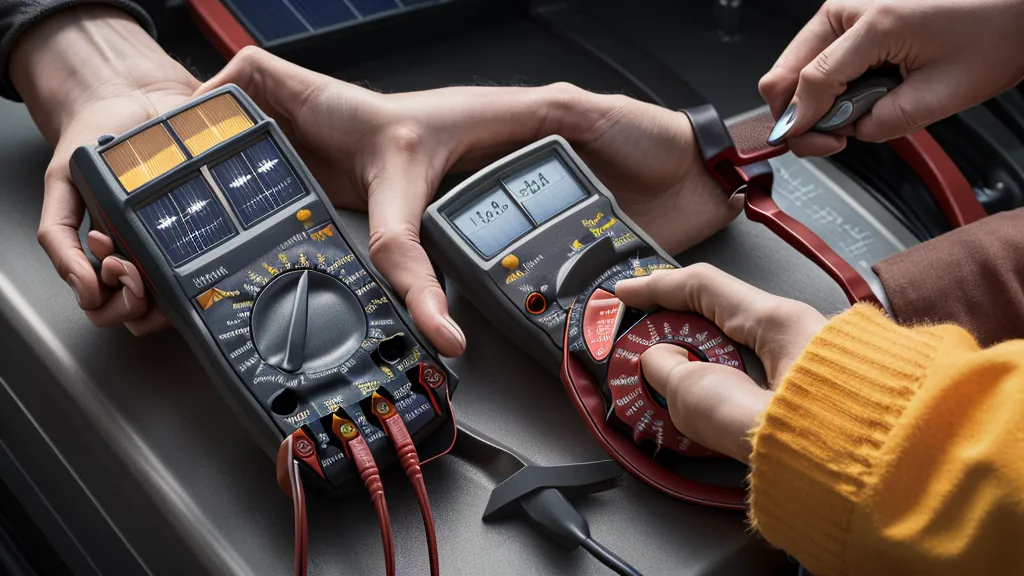
Is Bigger Wire Always the Right Call?
Most advice defaults to "go as thick as possible" — 4 AWG or even 2 AWG for everything, to minimize voltage drop no matter the cost. That advice ignores the terminal block sitting at the end of the wire. Most mid-range solar charge controllers accept 8 AWG or 10 AWG at the largest, and forcing a 4 AWG cable into a terminal that size means trimming strands until it technically fits — which quietly turns an expensive heavy cable back into a thin one exactly where the connection matters most.
MC4 connectors add their own ceiling to the comparison. A standard MC4 connector current rating tops out at 30 amps, so paralleling multiple panels into a single line without checking that combined number against the connector rating is its own way to create a bottleneck, independent of whatever gauge wire feeds it. A clean, properly sized connection on 10 AWG wire beats a trimmed, high-resistance connection on 4 AWG almost every time. Resistance at a bad joint generates heat right where it's least wanted, inside a controller that already cost real money.
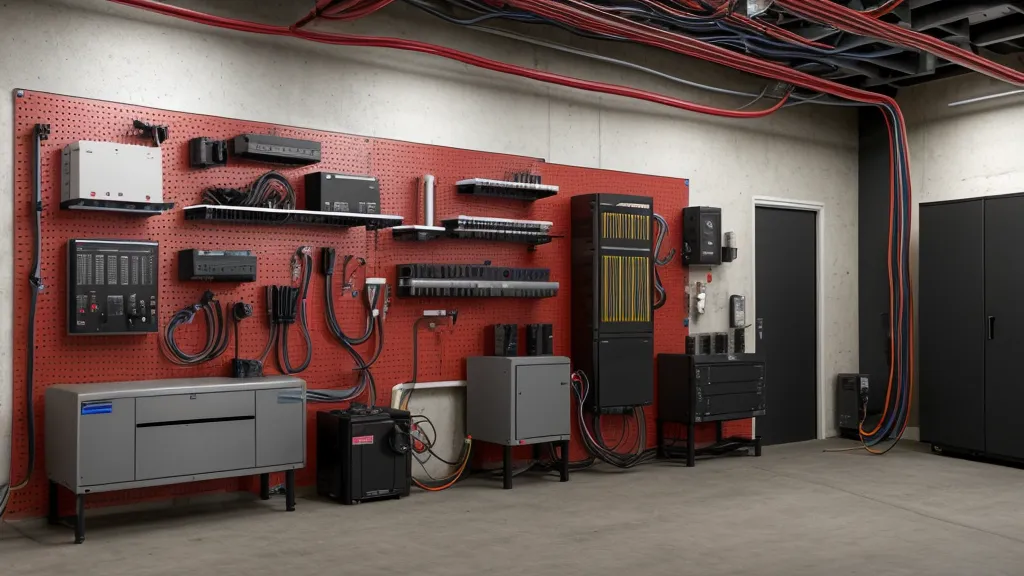
Picking the Right Gauge for Your Setup
Skepticism earns its keep here. Three separate "power saver" outlet devices once promised something like a real cut in household draw, and a Kill-A-Watt showed exactly zero difference before all three went back in a drawer. Wire gauge doesn't work like that — it isn't a marketing claim, it's Ohm's law, and Ohm's law doesn't care how confident the packaging sounds.
There's a specific crinkle to peeling anti-static wrap off a brand-new charge controller, right before the real question shows up: is the wire already on hand actually rated for what this controller is about to push through it? That question is worth answering with a chart, not a guess, and it's worth answering before the controller goes in the wall, not after.
The actual decision comes down to two situations. A long run on a low-voltage system — panels on the roof feeding a charge controller in the garage, running at 12V — calls for the heavier gauge, and the terminals need to be confirmed as compatible before that wire gets bought, not after. A short run, like battery to inverter, or anything running at 48V instead of 12V, makes the heavier gauge close to pointless; matching the wire to what the terminal actually accepts is the smarter trade there. My own power grid generator setup for the home office is built around exactly that split — heavier wire for the long roof run, appropriately sized wire everywhere else — and it's held up without a single warm connector since. None of this replaces a proper home energy audit for finding where the bigger losses are elsewhere in the house; wire gauge only fixes what's lost between the panel and the battery.
Proof of that shows up in unexpected places. My wife walked in one afternoon holding her phone, pointing at the utility app, asking why the number looked different — lower, without the system getting any bigger, just wired correctly this time. Most of the actual thinking on wire gauge happens on a walk out at Dreamy Draw Recreation Area, not staring at a datasheet in the garage, and the conclusion is always the same one: the copper connecting a system is not the place to guess.