Mid-afternoon hits in Phoenix and the AC compressor kicks in with a thud that I swear makes my monitor flicker, reminding me that I am paying a premium for the desert sun to bake my living room. It is that specific kind of vibration you feel in your teeth, the sound of 120 volts of standard US household power being chewed up by a cooling system that is fighting a losing battle against 110-degree heat. For a guy like me, an IT tech who spends his day staring at bandwidth logs, that flicker is basically a 'high latency' warning for my bank account. Every time that compressor cycles, I can practically see the digital meter on the side of the building spinning like a hard drive during a defrag.
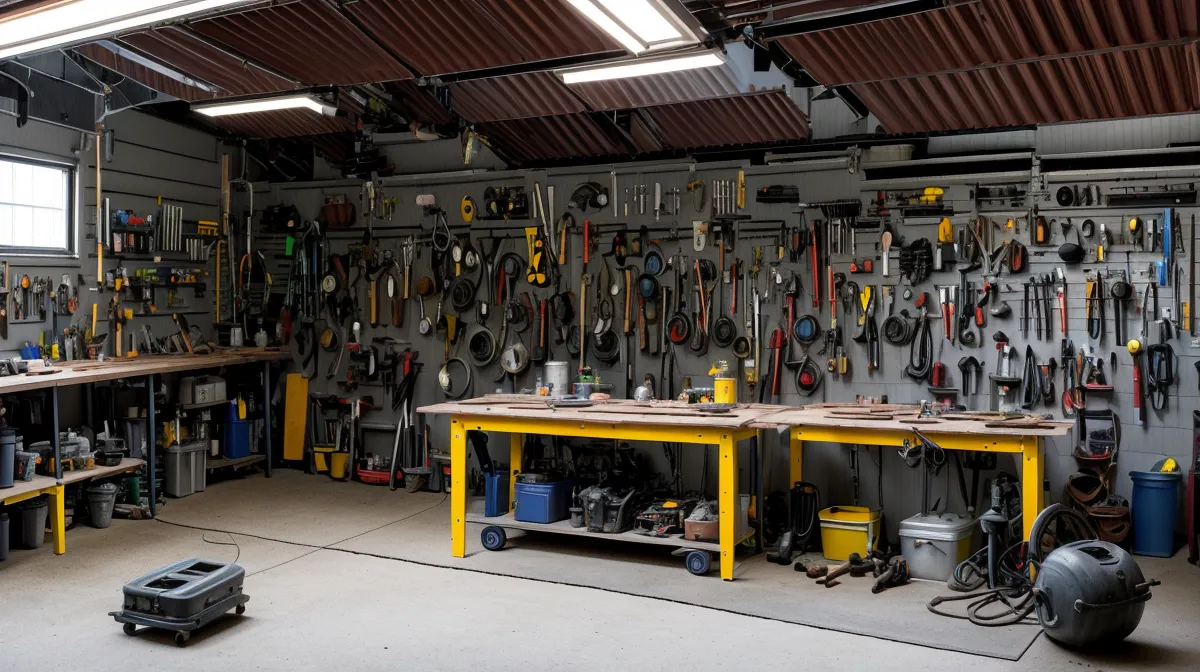
My landlord's 'no modifications' clause meant my dreams of a roof-mounted array were dead, so I turned my two-car garage into a testing lab for portable, non-permanent energy solutions. Being a renter in a heatwave is like trying to run a high-traffic server on a throttled connection; you have plenty of demand but very little control over the infrastructure. I spent the last 18 months trying to find a workaround that did not involve drilling through stucco or losing my security deposit. My garage now looks like a cross between a workshop and a Radio Shack from the 1990s, filled with things my wife calls 'science experiments' but I call 'packet-switching for electrons.'
The Renter's Dilemma: Solar Without the Screws
When you cannot bolt anything to the roof, you have to get creative with your 'network topology.' In the world of DIY energy, we often think of solar as a permanent hardware install, but for a renter, it needs to be more like a peripheral—something you can plug in, use, and disconnect when the lease is up. I started my journey in early March, just as the Phoenix sun begins to transition from 'pleasant' to 'hostile.' I quickly realized that the biggest bottleneck for renters isn't the technology; it is the physical constraints of the building.
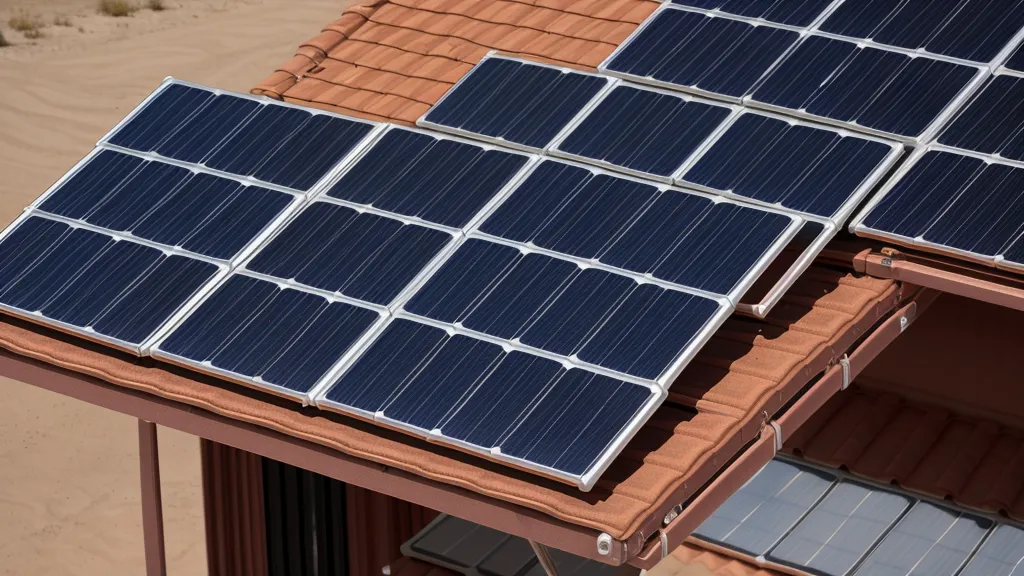
I started small with foldable panels draped over balcony furniture and a portable power station tucked behind the couch to run my home office setup during peak rate hours. The idea was simple: harvest energy during the day and use it to offset the 'vampire loads' of my dual-monitor IT setup. If you have ever looked at solar radiation data, you know that Phoenix is a goldmine. On average, we get about 6.4 peak sun hours daily, which is basically like having a high-speed fiber connection to the sun. The problem is that most rental balconies are not designed for maximum throughput.
I spent late one Sunday afternoon measuring my balcony railing. Most residential guards follow the International Building Code requirement for a standard balcony railing height of 42 inches. That height is great for safety but terrible for shadows. If you place a panel flat on the floor, the railing acts like a firewall, blocking your 'data stream' (the sun) for half the day. I had to build a non-permanent PVC frame that hooked over the railing—no screws, no drilling—just gravity and tension. It was the electrical equivalent of a temporary patch cable run across a server room floor.
The Math of the Balcony: Why Portable Stations Might Be a Trap
Here is where I have to get a little nerdy with the numbers, because this is where most 'green energy' blogs lead you astray. Everyone recommends buying those sleek, all-in-one portable power stations. They look great, but if you are trying to save money, the ROI is a nightmare. Most of these units use Lithium Iron Phosphate (LiFePO4) cells. Now, LiFePO4 is great tech; it has a standard cycle life of about 3500 cycles before the capacity drops to 80%. That sounds like a lot, but let us look at the 'bandwidth' cost.
If you spend over a thousand dollars on a pre-built station to save fifty cents a day on your electric bill, you will exhaust the battery's cycle life long before the unit pays for itself. It is like buying a top-tier enterprise router to manage a home network with two devices; the overhead kills the value. In my testing, I found that these portable stations are often a wasteful investment for renters because their high upfront cost is rarely recovered through energy savings alone. They are great for camping or emergencies, but for daily 'peak shaving,' they are a slow way to lose money. I talk about this more in My Phoenix Garage Experiment: The 7 DIY Changes That Actually Cut My Massive Electric Bill, where I broke down the actual cost-per-watt of my various setups.
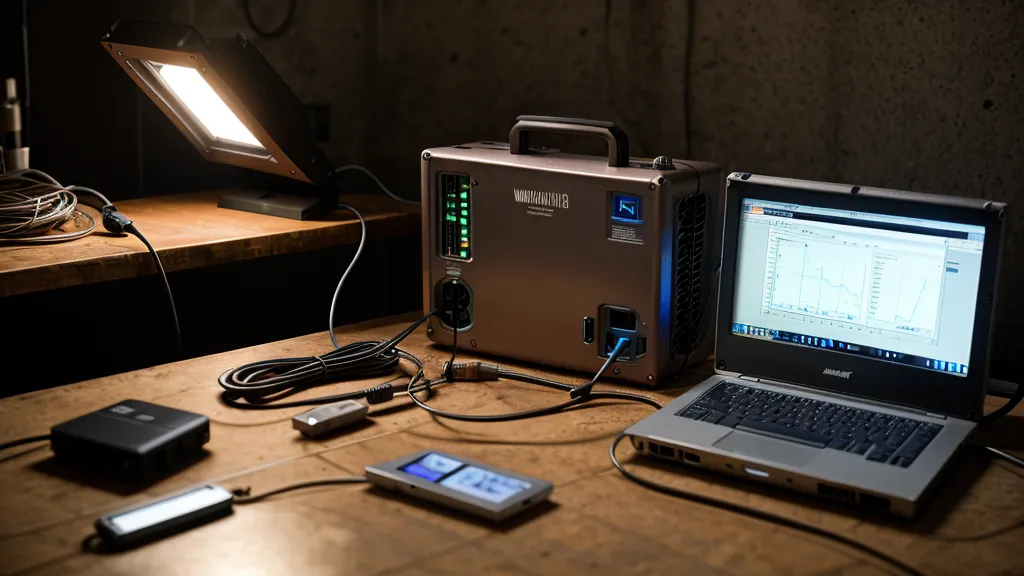
Instead of the expensive all-in-one units, I started experimenting with 'raw' components—batteries and separate inverters. It is more like building a custom PC versus buying a locked-down laptop. I'm not a licensed electrician, and I have zero engineering degrees, so I had to be careful. I always tell people: talk to a professional if you are unsure, because standard US household voltage is 120, and it does not forgive mistakes. I learned this the hard way during a mid-July heatwave when I heard the faint, high-pitched whine of a budget inverter struggling to keep my dual-monitor IT setup running during a localized brownout. The inverter was screaming because I was pulling too much 'bandwidth' for its cheap capacitors to handle.
Chasing the Sun and Cable Management Nightmares
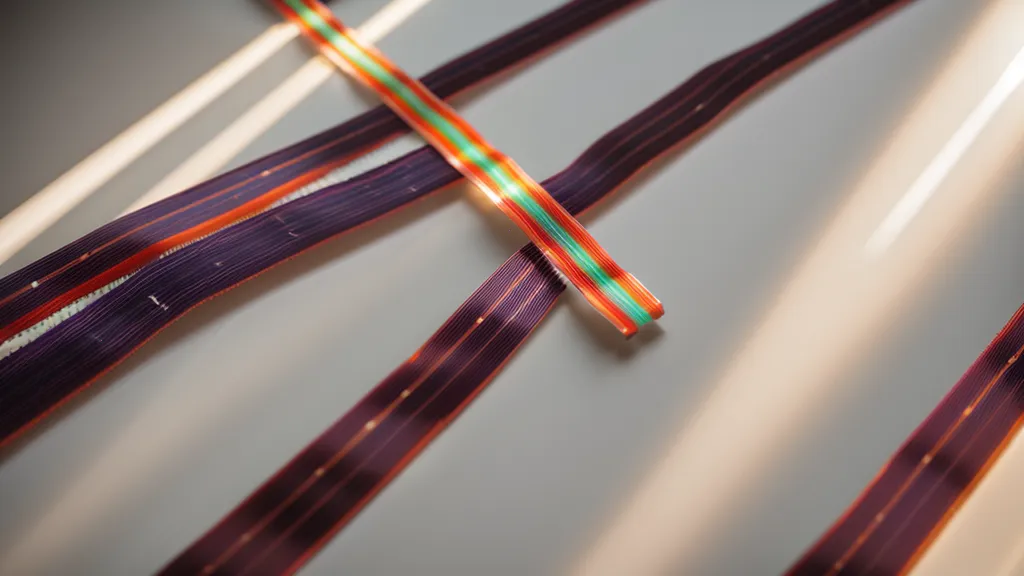
Realizing that 'portable' energy isn't just about the hardware was my biggest turning point. It is actually about the tedious dance of chasing the sun across a north-facing patio and the cable management nightmare that follows. In a rental, you cannot just drill a hole for your PV wires. I had to use flat-ribbon window cables—essentially flat conductors that allow you to shut and lock your window while still passing power through. It is the electrical equivalent of a VPN; it gets you through the 'wall' without compromising security.
After about six weeks of testing, I realized that my efficiency was tanking because I wasn't accounting for the heat. In Phoenix, solar panels lose efficiency as they get hot—which is ironic, considering they need the sun to work. It is like a CPU throttling when the fan fails. I had to figure out how to keep the panels angled perfectly while also allowing for airflow behind them. If you just lean them against the sliding glass door, you are essentially creating a giant heater for your apartment, which forces the AC to work harder, negating any energy you saved. It is a classic 'looping error' in your logic.
I also discovered that passive cooling is actually more effective for renters than solar panels. I applied reflective window film to the west-facing windows. It is non-permanent, peels off when you leave, and it reduced the solar heat gain significantly. It was like upgrading the cooling on a server rack; suddenly, everything else didn't have to work as hard. This was one of those 'cheap and reliable' fixes I noted while beating the Phoenix heat through my DIY journey.
The Ozone Incident: A Lesson in Topology
Not every experiment in the garage was a success. One of my biggest failures happened when I tried to increase my 'storage capacity' without the right controller. I tried to daisy-chain two mismatched battery packs—one was an older lead-acid unit I had lying around and the other was a newer lithium pack. I thought I could just bridge them like adding an extra hard drive to a NAS. I was wrong.
The acrid smell of ozone filling the garage after I tried to daisy-chain those mismatched battery packs without a proper charge controller is a scent I will never forget. It is the smell of 'expensive mistake.' The different internal resistances caused the batteries to fight each other, basically trying to upload and download power between themselves at maximum speed until the wires started to cook. I managed to pull the disconnect before anything caught fire, but it was a stark reminder that power isn't just a passive resource; it is a live stream that needs proper routing. If the 'handshake' between your components isn't right, the whole system crashes.
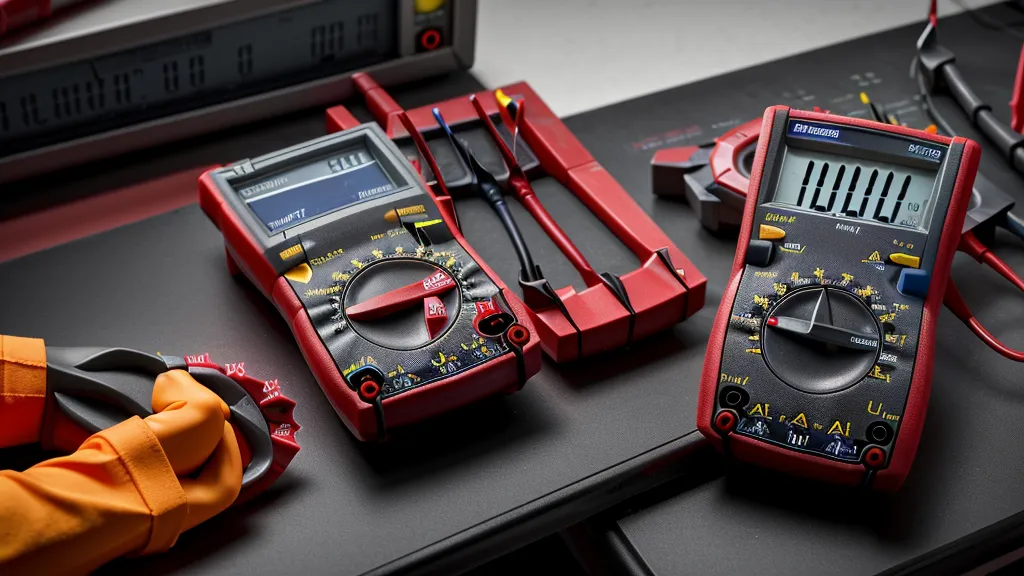
This failure taught me that for a renter, modularity is key, but so is compatibility. You cannot just mix and match 'packets' of power. Everything in your circuit needs to speak the same language. Now, I keep a multimeter handy at all times, checking the 'ping' (voltage) of every component before I integrate it into the main system. It is a slow process, but it is the only way to ensure I don't blow a fuse or, worse, burn down a place I don't even own.
Final Reflections: Shaving the Peak
Accepting that while I won't go fully off-grid in a rental, I have managed to shave the top off my peak usage and haven't blown a fuse or lost my security deposit yet. My summer electric bill still hits hard, but instead of that $380 gut-punch, I’ve seen it drop into the low-three-hundreds. It is not 'financial freedom' or a 'get rich quick' scheme—it is just better resource management. I’m essentially just optimizing the 'load balancing' of my life.
For most renters, the goal shouldn't be to replace the grid, but to supplement it. By using a small, well-designed portable system to run your home office or your entertainment center, you are effectively taking those devices 'offline' during the most expensive parts of the day. It is like using a local cache for your most-accessed data instead of hitting the main server every time. It saves time, saves money, and reduces the strain on the overall network.
Just remember: I am a guy with a multimeter and too much curiosity, not a professional engineer. If you are going to try this, start small. Don't go out and buy a massive battery bank on day one. Get a single panel, a basic charge controller, and a small battery. See how much 'bandwidth' you can actually harvest from your specific balcony. You might find that your 'connection' to the sun is throttled by a nearby tree or a neighbor's chimney. Test your assumptions before you spend your hard-earned cash, because in the world of DIY energy, the most expensive component is always the one you didn't need.