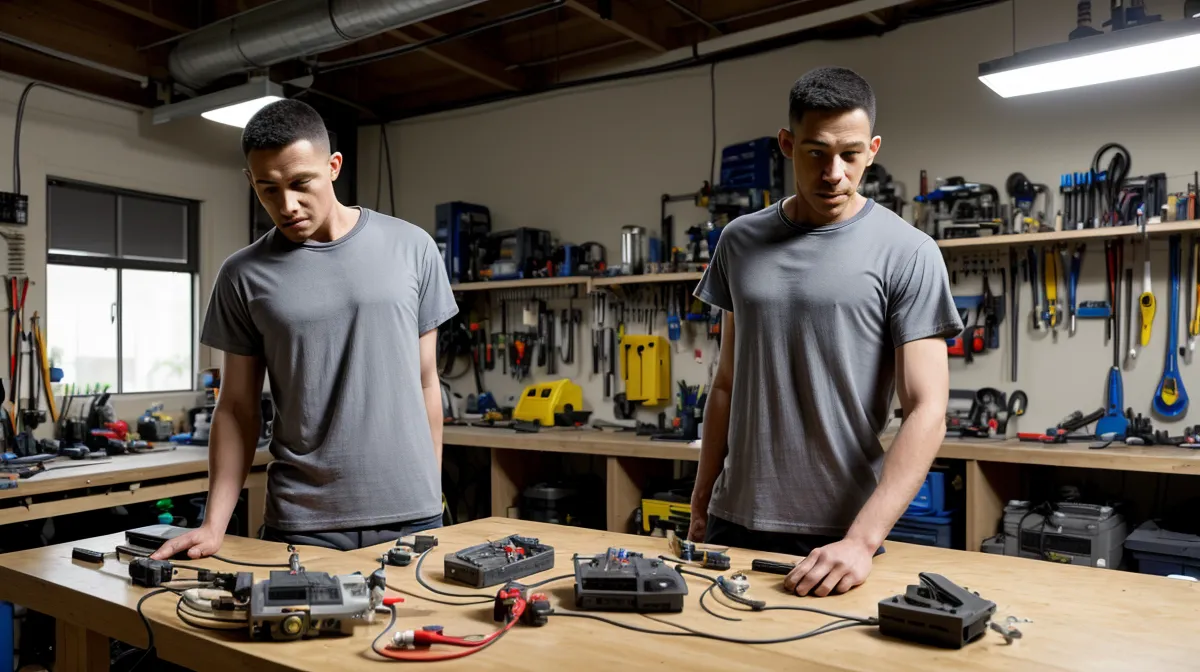
I was standing in my garage late at night, the air still thick with Phoenix heat, staring at a multimeter while the utility meter outside spun like a ceiling fan. It was mid-November, usually a time when we get a breather from the cooling costs, but my bill was still hovering at a level that made my eyes water. I’ve spent the last 18 months turning this two-car garage into a graveyard of half-finished solar kits and magnetic motor prototypes, all because I couldn't accept another summer of $380 bills.
To be clear, I’m not an electrician or an engineer. I’m an IT support technician. I look at energy through the lens of network topology and bandwidth. If my home is a network, my electricity is the data, and right now, I have a massive bottleneck that’s costing me a fortune. After three years of consecutive summer spikes, I decided to stop treating my energy bill like a fixed cost and started treating it like a buggy software deployment that needed a serious patch.
The $380 Ghost and the Garage Lab
My garage now looks like a cross between a workshop and a Radio Shack from the 1990s. It’s filled with the faint, metallic smell of hot solder and the low-frequency hum of a budget inverter struggling in the garage heat. I’ve learned the hard way that DIY energy isn't just about sticking a panel on the roof; it’s about understanding the load. Before I could fix the bill, I had to understand why my "science experiments" were failing to move the needle.
I started by hunting down the low-hanging fruit. In IT, we call this optimizing the baseline. If you have a server running at 40% CPU idle, you don't buy a faster CPU; you find out what's eating the cycles. I applied the same logic to my house. I wasn't just looking for what was on; I was looking for what was "standing by."
1. Hunting the Vampire Loads
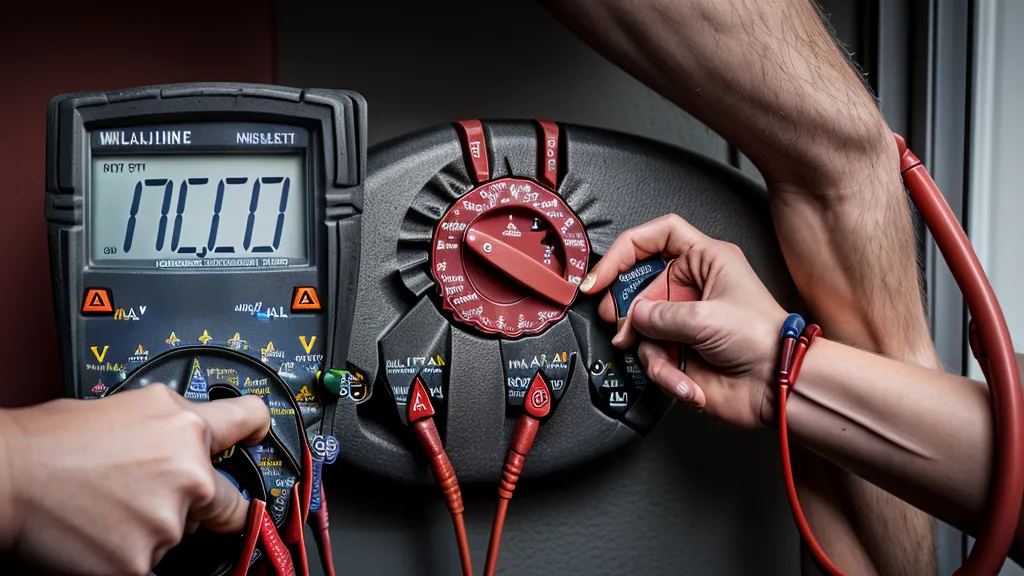
The first change was a systematic audit. According to the EIA, vampire loads—or standby power—can account for up to 10 percent of average household energy use. In my house, it was higher. I took a Watt meter and went through every room like I was troubleshooting a ghost in the machine. I found that my home office setup alone was pulling significant wattage even when the computers were "off."
It’s a classic case of phantom power. Your printer, your dual-monitor setup, even your coffee maker—they’re all sitting there, pinging the grid, waiting for a command. I started putting these on smart strips that actually kill the circuit. If you’re interested in the specifics of that hunt, I wrote about finding phantom power loads in your home office with a watt meter previously. It was the first step in reclaiming my baseline bandwidth.
2. The Zone 2 Insulation Strategy
Phoenix is classified as a Zone 2 climate by the Department of Energy, which means our insulation needs are specific to keeping heat out rather than keeping it in. Last winter, around mid-November, I crawled into my attic. It was a dusty, miserable weekend, but I realized my insulation was basically a 20-year-old wool sweater with holes in it. I added DIY blown-in cellulose to hit the recommended R-value for our region.
This is where the "bandwidth" analogy really hits home. If your insulation is poor, your HVAC system is like a router trying to send packets through a degraded copper cable—you’re losing half your signal before it reaches the destination. By thickening that barrier, I reduced the frequency of my AC cycles significantly.
3. Solar for the Low-Draw Basics
I didn't go out and buy a $30,000 whole-home solar array. Instead, I started small. I set up a modest DIY array in the backyard using 10 AWG wire, which is standard for these 30-amp circuits. With Phoenix getting 300 days of sunshine a year, it felt like leaving money on the table not to capture some of that energy.
I dedicated this small system to my "always-on" gear: the security cameras, the router, and the garage lights. I used a 12 volts deep cycle battery configuration to store the juice. It wasn't about going off-grid entirely; it was about offloading the constant, low-level drain from the utility meter. The Tesla's legacy in a suburban garage was something I looked into for larger storage, but for this, a simple lead-acid bank worked for the initial testing phase.
4. The Inverter Efficiency Trap
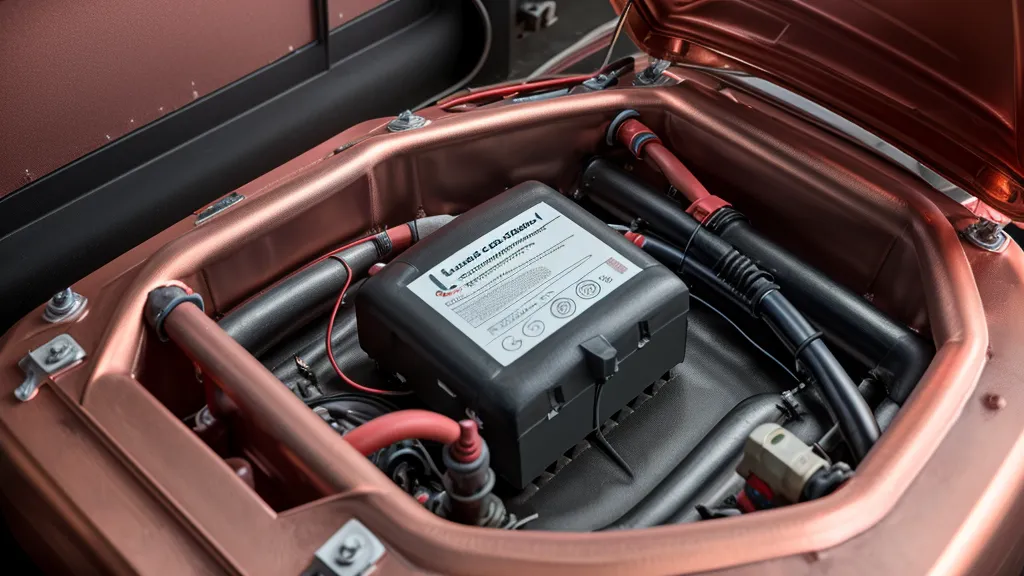
This was my biggest surprise finding, and it happened after about two months of testing. I had this idea that if I bought high-efficiency modern appliances, my DIY solar system would handle them easily. I bought a high-efficiency mini-fridge for the garage, thinking it would be a light load. However, my off-grid inverter was oversized for the job.
Here’s the thing most guides don't tell you: an inverter has an "idle draw." If you have a 3000W inverter running a 20W load, the inverter itself might be wasting 50W just to stay powered on. I realized that upgrading to modern high-efficiency appliances often increases your total electricity bill if your off-grid inverter is oversized and wastes energy idling to power low-draw electronics. It’s like using a massive enterprise-grade backbone switch to connect a single laptop; the overhead is more expensive than the data being moved. I had to right-size my inverters to match the actual loads.
5. Wiring Topology and Mistakes
In IT, network topology matters. In DIY power, circuit topology is everything. I made plenty of mistakes here. One sweltering afternoon in late July, when it was 106 degrees Fahrenheit outside, I tried to rush a re-wiring project. I was sweating, frustrated, and I crossed my leads.
There was a sharp pop of a 30-amp fuse and then a sudden, heavy silence in the garage. That silence is the sound of a mistake that could have been a fire. I’m not a professional, and that moment reminded me why safety protocols exist. I had to rethink how I was routing power. I moved from a chaotic "hub and spoke" model to a more organized bus-style distribution for my DC loads, reducing the resistance and heat buildup in the wires.
6. The HVAC "Load Balancing"
I started treating my air conditioner like a server load. Instead of letting it spike during peak utility hours (when the power company charges the most), I started "pre-cooling" the house during the early morning hours. By the time the sun hits its peak, the house has enough thermal mass to stay cool without the compressor screaming for mercy.
I also installed a DIY misting system for the outdoor AC condenser unit. It’s a simple hack that uses evaporation to help the heat exchange process. It’s not perfect, and it requires maintenance to prevent scale buildup, but on those 115-degree days, it’s the difference between the AC keeping up and the AC falling behind.
7. Real-Time Monitoring
You can't manage what you don't measure. I installed a whole-home energy monitor in my breaker panel (again, consult a licensed professional if you aren't comfortable opening that panel). Seeing the real-time wattage spike when the dryer kicks in or the oven preheats changed my behavior more than any "green" lecture ever could.
It turned the electric bill into a game. I could see the bandwidth usage in real-time. When I saw a 400W spike I couldn't account for, I went on a hunt. Usually, it was something like a space heater left on in the guest room or a dehumidifier running in the laundry room that didn't need to be.
The Bottom Line: Does It Work?
After 10 months of this—from the first insulation project in mid-November to the peak of this past summer—the results are in. My peak July bill, which used to be a reliable $380, came in at $245. That’s a significant drop for a guy with a multimeter and some spare time in a hot garage. I haven't "beaten" the power company, and I’m certainly not living off-grid in some desert utopia. I’m just a guy who stopped the bleeding.
If you're starting this journey, start with the data. Buy a Watt meter, check your insulation, and be very careful with inverter sizing. Don't let the "high efficiency" labels fool you into thinking the system overhead doesn't matter. It’s all about the total cost of the packet from the source to the destination. I'm still making mistakes, and I'm still learning, but at least now, when I stand in my garage at night, the meter outside isn't spinning quite so fast.