
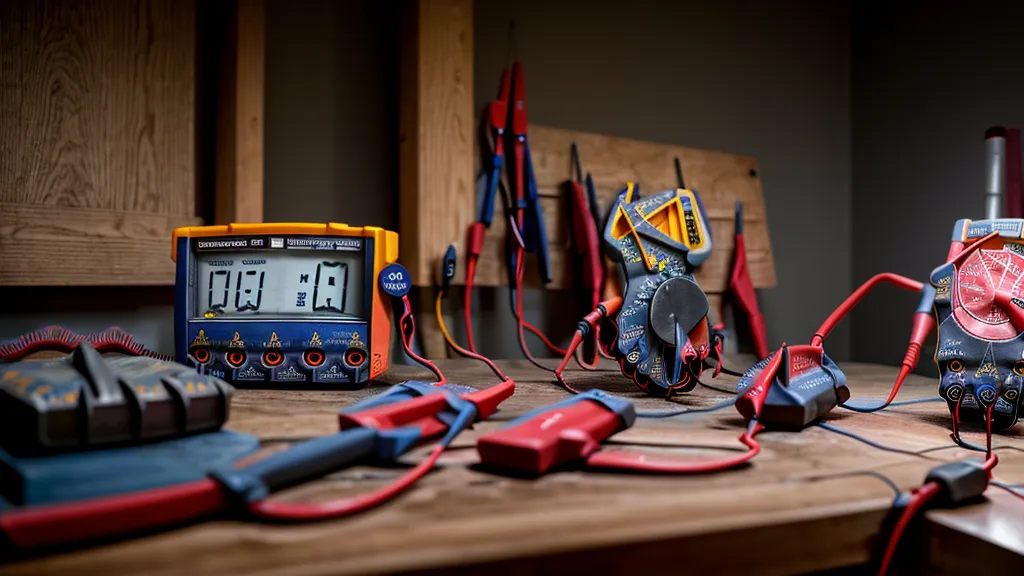
How many amps do you think a turbine bolted to the highest point of your roof is actually pulling in a stiff breeze? Height gets treated like the whole point of backyard wind power, so the number should be good. A monsoon wall rolled in from the south one August evening, my neighbor's palm trees bent nearly flat against the fence line, and my brand-new turbine barely spun while the multimeter in my hand showed next to nothing. The energy was clearly out there. My setup just wasn't catching any of it, and that gap is exactly why site assessment matters more than any spec sheet.
That gap between available wind and actual output is the whole story of DIY power when you're chasing renewable energy gains without a professional installer's price tag. Before any of this wind business, I'd called a couple of local solar installers about a system sized for my whole-house load, and the quotes that came back were high enough to make the DIY route look like the only sane option before I'd priced out a single panel. Wind seemed like the obvious next move once the sun went down, on the logic that if the blades were mounted high enough, the power would just show up. That assumption cost me a Saturday and a very confused multimeter.
The Hilltop Myth Versus Ground-Level Airflow
Wind engineers talk about laminar flow versus turbulence the way network techs talk about clean bandwidth versus packet loss. Placing a turbine at the highest point of a property feels like the obvious move, but ground-level compression zones can actually deliver steadier flow than a turbulent hilltop updraft. When wind hits a roofline, it doesn't slide over smoothly; it tumbles, and that tumbling "dirty air" behaves a lot like a connection with plenty of raw speed and terrible packet loss. You've got bandwidth. None of it is usable.
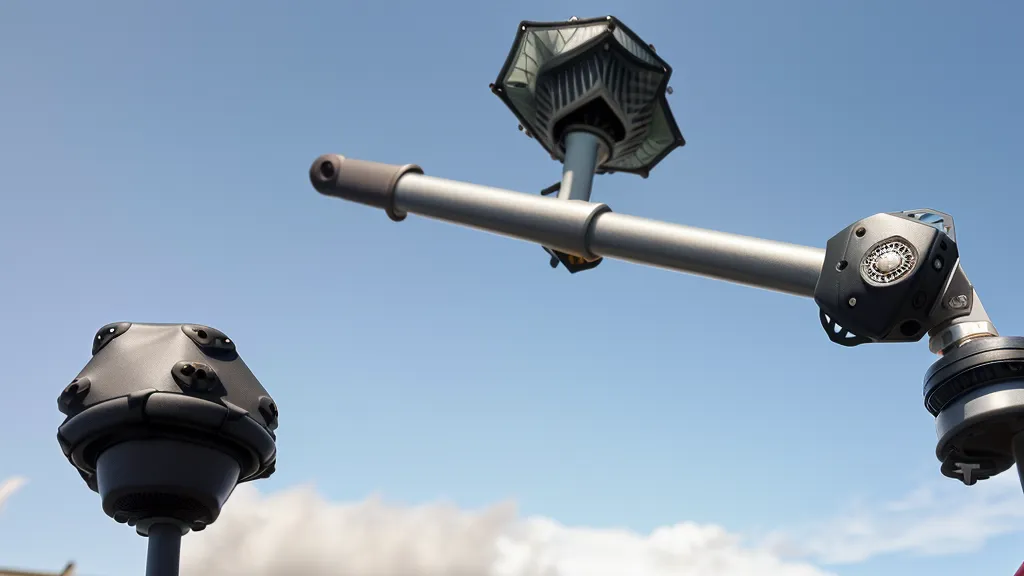
Betz's Law caps any turbine at a maximum theoretical efficiency of 59.3 percent, and that's before turbulence takes its cut. Start with swirling air and you're throwing away most of that ceiling before the blades even turn. I spent four hours one Saturday mounting a telescoping pole right at the peak of my garage roof, positive that height alone would save me, and stood there in a stiff breeze watching the multimeter read 0.05 amps — the number the opening question was dancing around. A whole afternoon of bracket-building had put the turbine directly inside a dead zone created by the building it was bolted to.
None of this makes me an electrician or an aeronautical engineer — I'm still just a guy with a multimeter and strong opinions about utility pricing — but wind power scales with the cube of speed, not the number itself. Double your wind speed by relocating the turbine ten feet and you don't just double the output; you can get roughly eight times the power. Getting there requires clean air, though, and most consumer micro-turbines need something like 7 mph of sustained wind just to start turning. A yard full of wind shadows can sit well under that line even while the trees a few yards over are clearly moving.
Unlike a solar panel, where tilt angle chases the sun across the sky, a turbine doesn't care what angle it's aimed at — it only cares whether the air reaching it is smooth. That's the whole reason a site assessment for wind looks nothing like one for solar, even though both live in the same backyard.
Mapping Wind Shadows With a Ribbon Pole
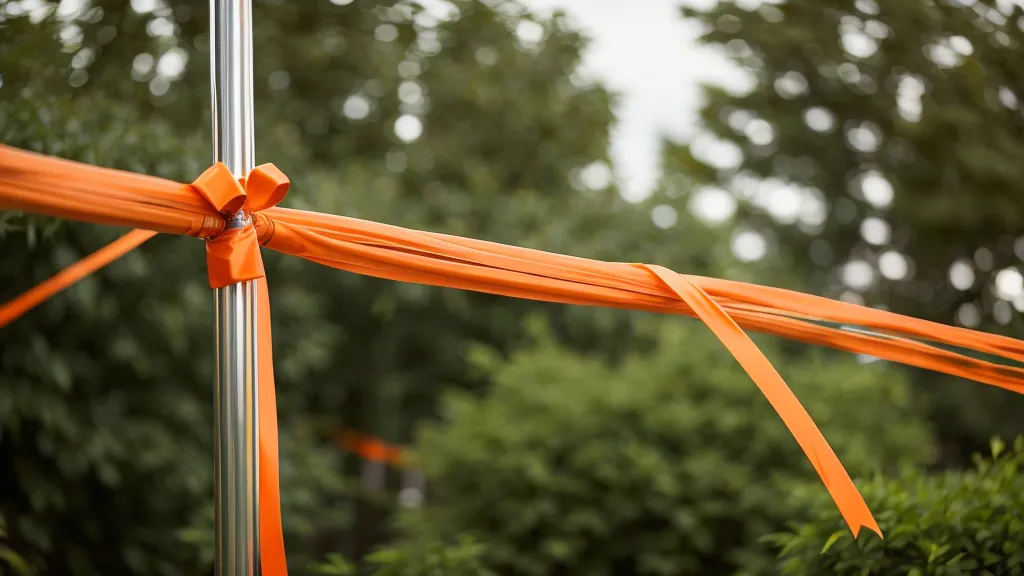
Visualizing something invisible took a fairly ridiculous-looking tool. I taped six-inch strips of surveyor's ribbon every couple of feet along a twenty-foot telescoping pole, picked up secondhand from a stall at the swap meet by Gila River Arena in Chandler, tucked between a table of car stereos and a guy selling knives. It looked like a DIY maypole. It worked like a crude spectrum analyzer, showing turbulence instead of packet loss.
Walking that pole around the yard for a blustery weekend in March showed exactly where things fell apart. Near the house, the ribbons spun in tight circles or snapped back and forth — textbook turbulence, the kind that chews through bearings over time. A turbine making a rattling noise usually isn't a hardware problem. It's the air hitting it wrong.
The smoothest air, it turned out, sat near the back fence line — lower than the roofline, technically, but far cleaner. That's the 20-to-1 rule at work: an obstacle's turbulence zone extends downwind roughly twenty times its height, so a 15-foot house drags a messy wake for something like 300 feet behind it. Nobody's suburban Phoenix lot has that kind of clearance. What you're actually hunting for are compression zones, spots where the wind gets squeezed between two structures and speeds up without picking up much extra chop.
While I mapped all this, I kept half an eye on the rest of the DIY power system this turbine would eventually feed. Whatever charge controller handles the input — PWM or MPPT — the turbine's ragged DC output has to play nicely with whatever the solar array is already sending it, and that pairing is its own separate headache. None of it matters either if the battery bank on the receiving end isn't sized for what a genuinely good wind day can deliver. Running wire from a pole near the back fence down to the garage is also a longer haul than most solar runs, and picking the wrong gauge there bleeds power to voltage drop before it ever reaches the batteries.
Keeping that same battery bank from overheating mattered just as much as anything upstream. I've written before about keeping your DIY solar battery bank cool in a hot garage, and the same logic applies once you start mixing wind and solar into one charge controller — a system that's finally solving its input problem doesn't do you much good if the storage side cooks itself in July.
Does the 30-Foot Clearance Rule Even Apply Here?
Small-scale wind guidelines call for 30 feet of rotor clearance above any obstacle within a 500-foot radius, which is a nice number if you own acreage. Most HOA rules and local zoning cap suburban poles at 15 or 20 feet instead, so that clearance number is basically fiction for anyone reading this. The workaround is finding gaps between obstacles rather than clearing them outright — closer to hunting for the one corner of a house where a Wi-Fi signal actually holds a connection through three layers of drywall.
A guy named Tariq, a former HVAC tech I met at a home-improvement expo table and still trade messages with, is the one who always asks about permits and inspections before anyone even touches a mounting bracket. Fair question — a rotor spinning above head height in a residential neighborhood is not something code enforcement ignores forever, and neither is a pole tall enough to interest your HOA.
Weeks of logging data with a handheld anemometer and that ribbon pole eventually pointed to a spot about five feet off the back fence — a location I'd written off early, assuming the fence itself would just block the wind. The opposite happened. Wind channeling between the neighbor's two-story house and my own garage created a venturi effect, compressing and speeding up the air right at fence height. Moving the turbine there took output from that pathetic 0.05 amps up to a steady 2 to 3 amps in a moderate breeze — not enough to run the house, but finally more than a rounding error.
Vibration turned out to be its own separate problem. Mounted straight to the garage, the turbine sent a low, rhythmic thrum through the wall every time the wind shifted north, loud enough that my wife started asking pointed questions about drywall cracks. My coworker Vince, who keeps a desk drawer stuffed with random adapters and spare inline fuses, lent me his thermal camera for a weekend so I could check the wiring for hot spots while I was troubleshooting the noise. Moving the turbine onto a standalone pole near the fence fixed the rattle and quieted the wall down completely — the same kind of lesson I picked up while troubleshooting the Orgone motor during my first few failed builds: just because something looks like it should work doesn't mean your environment will cooperate.
That whole detour also tripped a breaker more than once while I chased down which wire was actually shorting against the mounting bracket, and there's a specific click-and-settle you learn to recognize once you've thumbed one back into position for the third time in an afternoon. Whatever finally comes off that battery bank still runs through an inverter, and whether that inverter is pure sine or modified sine decides what you can actually plug in without something buzzing or overheating. How you wire the turbine's output into the battery bank — series or parallel — matters here too, though that's a big enough topic on its own that it deserves separate treatment. None of this, to be clear, involves backfeeding the grid; that's a transfer-switch conversation I have zero interest in having with my utility.
A Site Assessment Checklist Before You Bolt Anything Down
None of this replaces a real, on-site assessment before you bolt a pole to anything permanent. I'm not a structural engineer or a licensed electrician, and if you're mounting something heavy near your house, talk to a professional before you find out the hard way that you've created a hazard. Start by checking the actual cut-in speed with an anemometer instead of trusting a spec sheet — a site that only hits 5 mph consistently will never spin that turbine, no matter what the box promised. Map every obstacle within roughly 200 feet, since trees, sheds, and even a tall parked SUV can throw a wind shadow you won't notice until the ribbons start swirling. Grounding matters as much here as it does for solar; I've covered grounding solar panels for beginners before, and the same principles apply to a turbine, since you're effectively planting a lightning rod in your yard and should treat it that way. And listen to what the blades are actually doing: a steady hum means clean air, while whipping or fluttering means it's time to move the pole again.
The number printed on a turbine's box and the number my multimeter eventually shows have never once matched, and that gap between claimed and measured output is a lesson every DIYer runs into eventually, wind or otherwise. Twelve weeks after that first walk around the yard with a pole full of ribbons, the monitoring app on my phone flashed something new one afternoon: generation edging past consumption, something close to 1.4 kilowatt-hours in against 1.1 out for that stretch, the first time wind alone had outpaced my desk setup. It wasn't dramatic. It also wasn't nothing.
Ten feet of pole placement is the difference between a working power source and an expensive lawn ornament, and that's really the whole lesson here: chase clean air over height every time, on any lot, with any turbine. Backyard wind isn't about beating the utility company in one dramatic move. It's about reading your own yard's airflow like you'd read a network diagram, finding where the packets actually flow clean, and building from there.