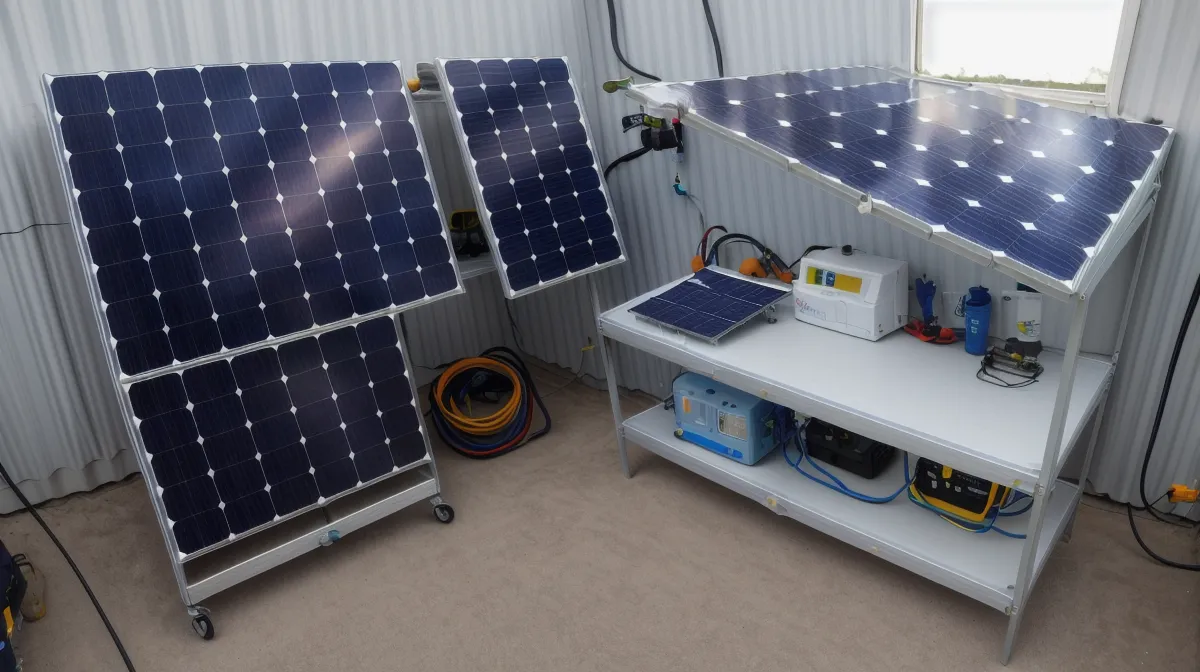
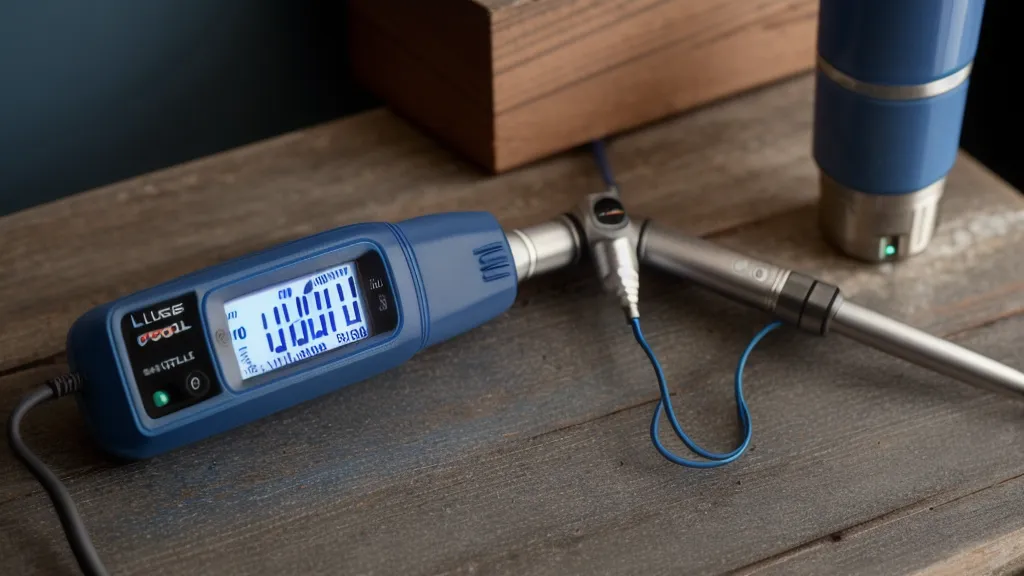
The digital probe clipped to my top cell reads 121°F, and the charge controller keeps shoveling amps in like nothing's wrong. That's the blunt version of solar DIY in a Phoenix garage every summer: battery maintenance stops being a wiring problem and turns into a thermal-management problem, whether you planned for it or not. Off-grid living sounds appealing right up until you realize the biggest threat to your battery bank isn't a bad connection, it's your own zip code.
If you've followed along, my Phoenix electric bill was killing me is what got me into this two-car garage full of solar kits and magnetic generators in the first place, and I've measured plenty of gaps between what a generator claims on the box and what it actually delivers on a meter since then. But building the system was only ever half the job. Keeping it from melting is the half nobody warns you about.
A neighbor of mine, the guy who spends his weekends thrashing a Polaris RZR through the Tonto National Forest, wandered over one evening and asked why my garage sounds like a server closet with the door propped open. Fair question. Between the inverter fans and whatever cooling scheme I'm testing that week, the two-car garage has turned into something closer to a data center than a place my wife parks her car.
Before any of this, I set the Honeywell thermostat to a strict schedule, figuring a few degrees of evening discipline would shave real dollars off the bill. Three days of complaints from the rest of the household later — nobody signs up to eat dinner at 82 degrees willingly — I reverted the schedule and went back to square one. The real savings, it turned out, had to come from the battery bank itself, and the bank had a temperature problem I hadn't accounted for.
I remember standing at the meter box one afternoon, watching my disc barely creep while the neighbor's spun in a blur, both of us hit by the same four o'clock peak that fries every air conditioner on the block. That was the moment off-grid living stopped being a hobby and started being a genuine hedge against the bill — assuming I could keep the hardware that made it possible from cooking itself.
Active Cooling vs. Passive Zoning for a Battery Bank
Every forum thread about hot-garage battery banks splits into two camps. One says throw fans, or better yet a window AC unit, at the problem and cool the whole space. The other says stop fighting the garage entirely and build a small, controlled zone around just the battery rack. I've now tested both approaches, and the honest answer is that they solve different problems, not the same one.
Why Adding More Airflow Didn't Lower the Temperature
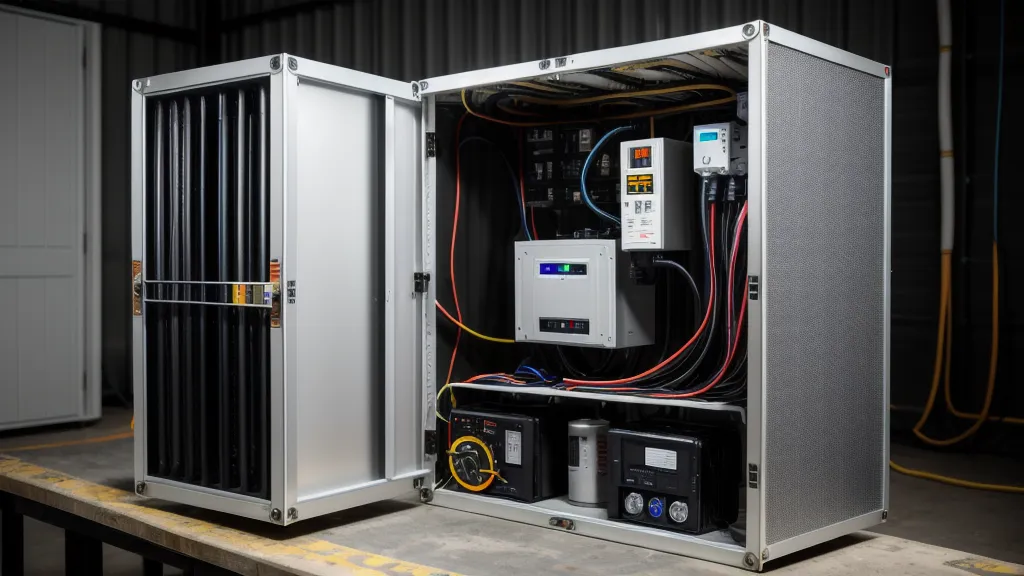
My first instinct, being someone who is not an engineer but is reasonably comfortable with a power strip, was to throw more air at it. I bought two high-velocity box fans from the local hardware store and aimed them straight at the battery rack. A week of that and all I'd accomplished was making the garage louder. In IT terms, it's like trying to cool a server by blowing the hot exhaust back onto the intake — moving 110-degree air over 110-degree cells does basically nothing to the internal temperature of the pack itself. It helped the inverter's heat sink a little. It did nothing for the batteries.
The active-cooling side got worse before it got better. I spent an evening wiring an exhaust fan into the garage ceiling, certain I could vent the rising heat straight out through the roof. I finished, flipped the switch, and felt hot attic air blasting down onto the cells — I'd mounted the blades backward. That's the kind of mistake that reminds you a multimeter and a strong opinion about your utility bill don't make you an electrician. The bigger issue, backward fan aside, is that a concrete slab in Phoenix soaks up sun all day like a battery of its own and radiates that heat back into the garage long after dark. Active cooling was fighting a floor that never stops giving off heat.
Active cooling, on its own, wasn't winning.
Building a Cooler Microclimate Instead of Cooling the Whole Garage
Passive zoning starts from a different assumption: you don't cool the room, you isolate a small volume of air around the batteries and control that instead. Voltage is like bandwidth in this analogy: you want it moving without resistance, and heat is what adds that resistance, causing the kind of sag that makes your inverter work harder for the same output. I built a rough enclosure out of rigid foam insulation, left it unsealed enough for the cells to breathe, and used it to separate the battery rack from the concrete floor's radiant heat.
I probed the air at a few different heights out of curiosity and found the layer near the floor ran five to seven degrees cooler than the air at chest height, which runs backwards from what most people would guess about a hot garage. Ducting that cooler floor-level air into the bottom of the insulated box, instead of just recirculating whatever was already hot, is what actually moved the needle. None of this touches your wire gauge or how much voltage you're losing over a run of cable — that's a separate calculation entirely — but it does mean the batteries stop absorbing heat they never generated themselves.
Is a Steady 90 Degrees Better Than Swinging Between 80 and 100?
Here's where I'll push back on the generic advice. Most sites tell you to blast the AC or run active cooling around the clock, full stop. What I've actually observed testing both setups side by side is that constant active cooling in a hot garage can be worse than doing nothing, because of the swings it creates. A fan kicking on and dropping the surface temperature ten degrees in five minutes, then the temperature spiking right back up once the fan cycles off, puts real mechanical stress on cell connections that a stable, if slightly warmer, environment doesn't.
This lined up with what I saw after why I switched my solar charge controller after months of testing, which is a different comparison entirely from PWM versus MPPT charging behavior (that's its own can of worms), but the new controller's logging made the temperature swings obvious in a way the old one never showed me. The cells that held a steady, unglamorous 90 degrees outlasted, in my own capacity tests, the ones cycling repeatedly between 80 and 100. Thermal stability turned out to matter more than a shorter dip toward cold ever did.
Picking the Right Setup for Your Garage
The answer depends on your circumstances. If your garage only spikes into the danger zone for a few hours during peak sun and you've got power to spare, active cooling timed to that window can make sense: run the fan or the AC hard for the two or three worst hours and let the system rest the remainder of the day. If your garage runs hot for months at a stretch, the way most Phoenix garages do from May through September, passive zoning wins outright: it draws less power, it has no moving parts to fail at 2 a.m., and it avoids the exact temperature cycling that seems to shorten cell life. I lean firmly toward the second camp now, though I still keep a fan on hand for the handful of days that get genuinely unreasonable.
None of this is a substitute for sizing the bank correctly in the first place: how many cells you're running and how you've got them wired together, series or parallel, changes how evenly heat distributes across the rack, and that's a decision you make before any of this cooling conversation matters. Panel tilt angle, for what it's worth, has nothing to do with any of it either; that affects how much you generate on the roof, not how hot your storage gets in the garage. A proper home energy audit will tell you where your house itself is bleeding money, and it's worth doing, but it won't tell you a single thing about whether your battery bank is quietly cooking itself in the corner.
It also has nothing to do with whether you're running a pure sine or modified sine inverter, which carries its own heat signature and its own headaches, or whether you've wired in a transfer switch to backfeed the system into your main panel safely: that's a code and safety question, not a thermal one. I spent real time worried about whether I even knew how to crimp MC4 connectors for solar panel wiring projects, and it turned out the wiring was never the part keeping me up at night. Keeping the system from cooking itself in the Phoenix sun was.
My wife still calls the whole setup the "NASA junkyard," and most days the garage still feels like a sauna despite everything above. But the battery case temperatures have stabilized under whichever cooling zone I'm running that season, and that's really the only metric that matters when the alternative is quietly shortening the life of an expensive stack of cells. I'm not an electrician or an engineer, and nothing here replaces a licensed one: consult a professional before wiring together a permanent power system for your home. Getting the environmental side right turned out to matter just as much as getting the wiring right in the first place.