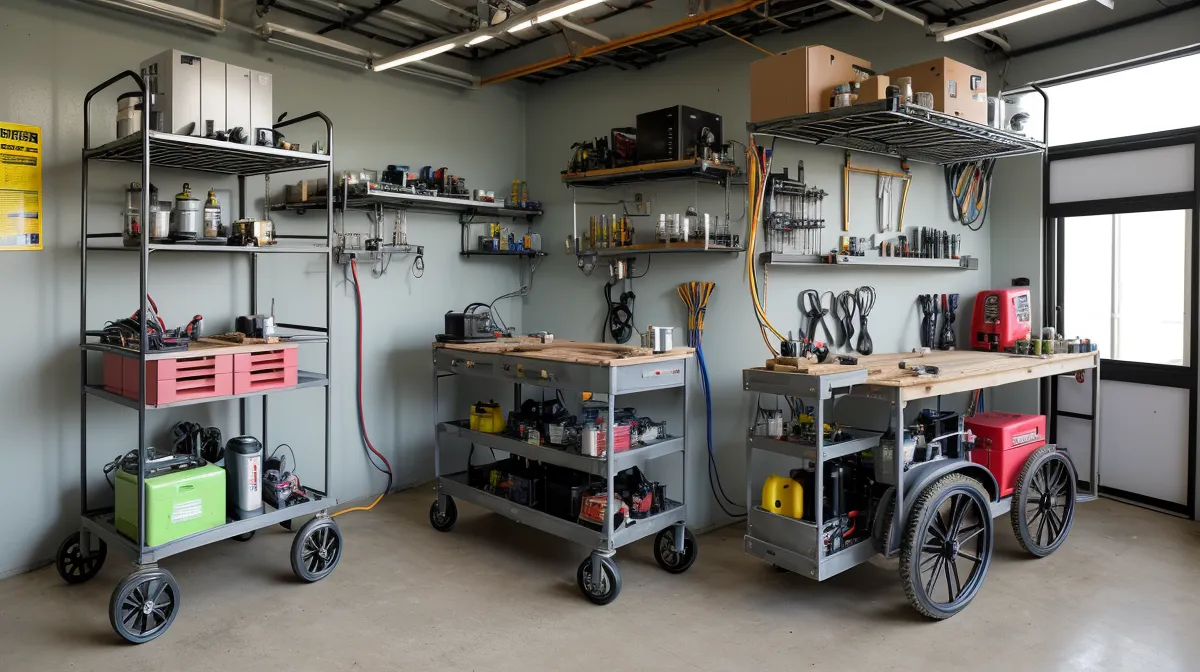
A fifteen-kilowatt gas generator idling in my neighbor's driveway and the battery-and-inverter rig taking up half my garage keep the exact same refrigerator running through a blackout — one of us paid roughly ten times more to get there. That gap is why I stopped believing bigger is automatically safer when it comes to emergency backup for home appliances, and it's the misconception I hear most from people trying to keep the kitchen running without committing to full off-grid living.
I fix networks for a living, so my instinct is to think in bandwidth and headroom — more capacity should mean fewer problems, the same way you'd want extra room on a server rather than running it right at the edge. Backup power doesn't reward that instinct. Oversizing a generator or an inverter setup doesn't just cost more upfront; past a certain point it works against you, and the reasons have almost nothing to do with total wattage.
The Backup Power Myth That Costs You Twice
The pitch for going bigger sounds reasonable on paper: more capacity, more headroom, more safety margin. It falls apart in practice for two different reasons depending on what kind of system you're running. A gas engine sized for far more than it ever actually pulls never gets hot enough to run clean, and a battery-and-inverter rig sized the same way just means money sitting idle in components you rarely touch. Neither problem gets fixed by adding more capacity — if anything, it gets worse.
What Actually Trips a System During an Outage

That surge is what actually decides whether your fridge survives an outage — not your system's total rating. A refrigerator might only draw 150 to 200 watts while it's running, but starting the compressor can demand two to three times that much for a second or two. Undersize for that spike and the compressor stalls with no warning: no error message, no dimming lights, just a stall and a warm fridge a few hours later.
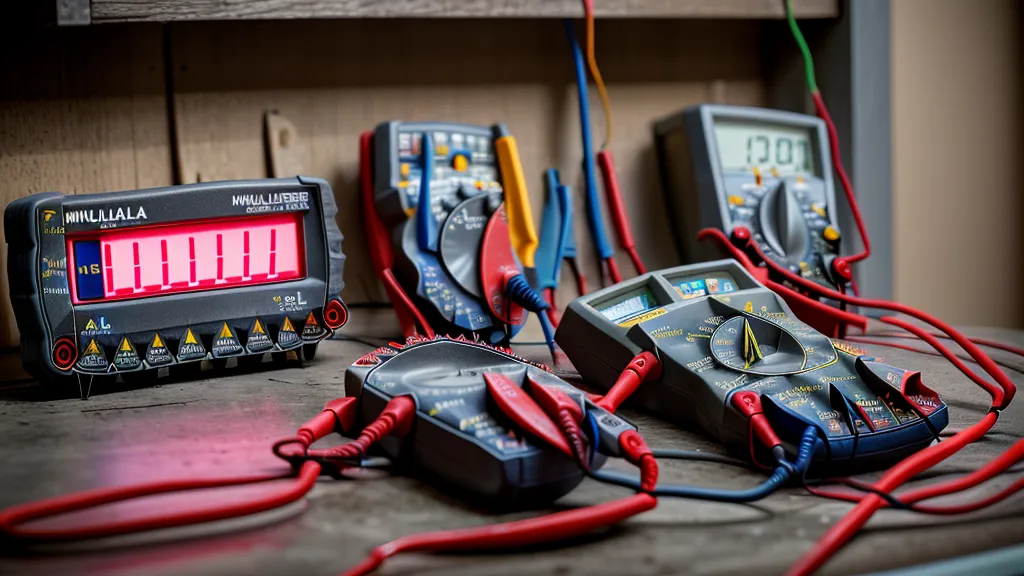
My own inverter has a 3,000-watt surge rating (about the ceiling for a typical household circuit anyway), which sounded excessive until I watched a multimeter jump the instant the compressor kicked in. That headroom is what keeps the fridge and a few LED lights running without tripping anything, not the battery bank's total capacity. Speaking of the battery bank, how big you build that in the first place is its own calculation I've covered separately, along with whether you wire the cells in series or parallel; both change the math more than most people expect.
None of this matters if the inverter's output waveform is wrong to begin with — modern appliance electronics want a clean sine wave, not the stepped or modified kind cheaper units put out, and that comparison alone is worth its own post rather than a paragraph here. What I will say is that I keep my battery bank above 50 percent charge as a hard floor, the same way I'd keep a server's CPU usage below a safety margin instead of running it right at the limit.
Skip the surge math and stack a fridge's startup pull with something like a microwave running at the same time, and you'll find the ceiling on any system fast. Inverters don't fail gracefully. They just cut out, and there's usually a scorched fuse and the sharp smell of ozone involved by the time you trace it back. That's the picture above: what an exceeded surge rating actually looks like once you get to the fuse.
For anything more permanent than extension cords running through the house, I wrote separately about How to Connect Power Grid Generator Units to Your Main Panel, and that part genuinely is a job for a licensed electrician, not a weekend project. Mine still runs on heavy-duty 12-gauge cord because I'd rather keep the wiring reversible while I'm still testing configurations.
Why Bigger Systems Fail in the Opposite Direction
Go back to the gas generator example, because the mechanism is worth understanding even if you never touch gasoline. An engine that's rarely loaded past a fraction of its rating doesn't get hot enough for the cylinders to seal properly. Carbon builds up, glazing forms on the cylinder walls, and a generator bought for reliability ends up needing more maintenance than a smaller one running closer to its actual rating would.
Battery-based setups don't glaze anything, but oversizing still has a cost. A bigger inverter and a bigger bank mean more money tied up in surge capacity and storage you rarely draw down, and none of that spare capacity fixes the actual failure point, which is almost always a startup surge nobody planned for. Charging that oversized bank efficiently brings its own tangent too — whether you're running a PWM or an MPPT controller changes your recharge time more than most people assume, though that's a separate rabbit hole entirely.
Sizing for the Surge, Not the Total Wattage
Before I settled on a battery-and-inverter setup, I fell for a listing on eBay promising a "perpetual magnetic generator kit." What showed up was a bag of mismatched ferrite blocks and an instruction sheet that assumed physics worked differently than it actually does. I still can't fully laugh at people chasing free-energy motors online, because I've written separately about troubleshooting the Orgone motor, and that one cost me more garage space than I want to admit.
The actual sizing question comes down to your biggest inductive load plus a margin, not your home's total wattage. Finding extension cords rated heavy enough for that job took more effort than expected — the hardware aisle near Tempe Marketplace off Priest Drive turned out to have the only 12-gauge outdoor-rated cord in stock within a reasonable drive. Whatever you're recharging that battery bank with matters here too; if solar is part of the plan, even panel tilt angle affects how fast you recover capacity after an outage, though that's a detail for another time.
One afternoon near the 4 PM peak, I actually walked over and compared meters with Rosario, two doors down. She keeps a spreadsheet of her utility bill down to the month, so when her meter disc was spinning noticeably faster than mine, it was the first real proof I'd seen that shedding load during peak hours does something besides annoy my wife.
Picking Which Home Appliances Actually Run When the Grid Drops
Total capacity matters less than the order you plug things in. The fridge, a fan, and the router cover almost everything that actually needs to survive a Phoenix outage — everything else is optional, and treating it as optional before the power goes out is the whole trick. Figuring out which loads are actually worth protecting starts before any of this equipment gets bought, with something like a proper home energy audit rather than a guess.
Most of this testing happens in a two-car garage that's been slowly colonized by cable spools and a pegboard so dense with tools that I've started labeling the labels (not exaggerating). A box fan runs in the corner from May through September because the space turns into a kiln otherwise, and a metal shelving unit sorted into bins of ring terminals, Anderson connectors, and spare fuses gets raided more than I'd like to admit. It's not glamorous, but it's where the actual sizing decisions get tested instead of guessed at.
The Rule I Actually Use Now
Size the inverter's surge rating to your single biggest inductive load plus enough headroom for one more device, not to your home's total wattage, and decide ahead of time what gets unplugged before that compressor kicks on. That's the entire trick, and it costs a fraction of what a stadium-sized generator does to get right.
My Phoenix summer survival piece goes into which small loads made the biggest dent in my actual bill — this one's only about not getting fooled by size. Keep spare fuses on hand, respect the surge number over the total rating, and let the smaller system do a smaller job well instead of asking a bigger one to do everything at once.