
Late at night in my sweltering Phoenix garage, surrounded by stripped copper wires and disconnected solar charge controllers, I watched a bizarre layered rotor make its first twitch on the bench without a wall outlet in sight.
Before we get into the weeds of how this eccentric contraption functions, a quick disclosure: I earn a commission if you make a purchase through links in this review, at no extra cost to you. I am an IT guy, not an engineer or certified electrician, and I only review energy setups that I personally assemble, test, and occasionally short-circuit right here on my own workbench.
To understand why a 41-year-old systems support tech spent months tinkering with esoteric motor blueprints, you have to look at my summer power bills. After seeing my monthly utility statement hit $380 for the third consecutive year, my suburban two-car garage transformed into something resembling a 1990s Radio Shack hit by a dust storm. Most people who want off-grid power install a couple of roof panels and call it a day. But if you have spent decades running network diagnostics, you know that relying on a single upstream provider or a single redundant failover is never the most satisfying way to solve a hardware bottleneck.
That curiosity led me to examine unconventional off-grid designs, culminating in the blueprints for the Orgone Motor. It promised a radically different mechanical approach to generating rotational force, pulling me down a rabbit hole that tested every ounce of my amateur wiring patience.
The Madness Behind the Layered Blueprints
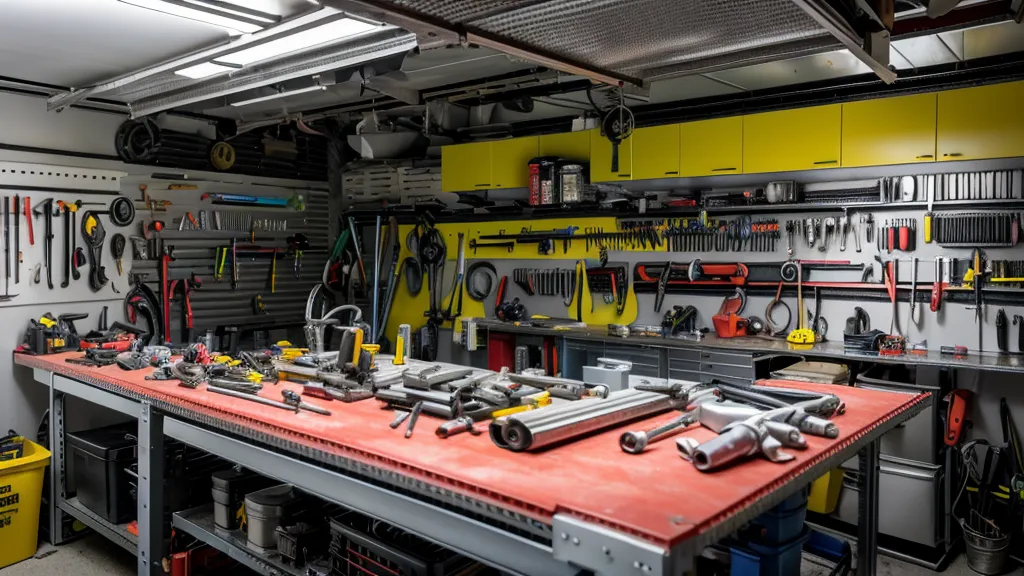
Late in May, when Phoenix was already creeping past triple digits during the day, I downloaded the schematics to see what the build actually entailed. In the IT world, if you want to speed up throughput, you optimize your bus architecture or switch to lower-resistance cabling. The design philosophy here, however, traces back to the controversial 1930s theories of Wilhelm Reich, who conceptualized energy accumulation through alternating strata of organic and inorganic substances.
In practical workshop terms, building this motor means constructing a rotor and stator using interleaved layers of conductive materials (like aluminum or steel sheets) and non-conductive dielectric separators (like acrylic, beeswax, or compressed cardboard). The concept suggests that stacking these materials creates an anomalous charge differential that can be harnessed through carefully timed magnetic induction to produce steady mechanical torque.
When I unpacked the materials on my plywood workbench, the project felt less like installing a breaker panel and more like fabricating a custom cooling block for a server rack. The guide lays out clear diagrams, but unlike snapping together an off-the-shelf solar kit, you are fabricating components by hand. If you cut an acrylic disc half a millimeter off-axis, the entire assembly wobbles like an unbalanced server cooling fan at full throttle.
The Bench Build and Rookie Wiring Blunders

My build phase kicked off in earnest during a mid-July heatwave. Working inside a garage that regularly hovered around 105 degrees at dusk tested my focus. In an early attempt to route the switching pulses through a bridge rectifier, I made the classic rookie blunder: I reversed the coil polarity on the bench test, instantly frying two rectifier diodes with a sharp pop and a thin wisp of acrid smoke.
That is the reality of garage prototyping when you lack formal electrical schooling. I understand network topologies, packet routing, and subnet masking, but bench circuits will punish you immediately if you mix up your cathode and anode. After replacing the diodes and rechecking my continuity with a multimeter, I spent hours adjusting the magnetic pickup gaps. If you run into similar mechanical snags during your own build, check out my notes on Troubleshooting Orgone Motor Magnets After My Build Failed to Start to avoid the headaches I encountered.
There was a specific moment that summer evening that captured the whole experience: the metallic hum vibrating through the workbench wood while sweat dripped straight off my chin onto the multimeter's plastic face. The acrylic cylinder spun up, settled into a low, droning hum, and held steady. Right on cue, my wife poked her head through the garage entryway, eyeballed the spinning acrylic cylinder, and asked dryly if it would knock out our living room Wi-Fi. I assured her our home network was safe, even if my ego had taken a beating from the fried diodes.
Calibration vs Reality: The Output Reality Check
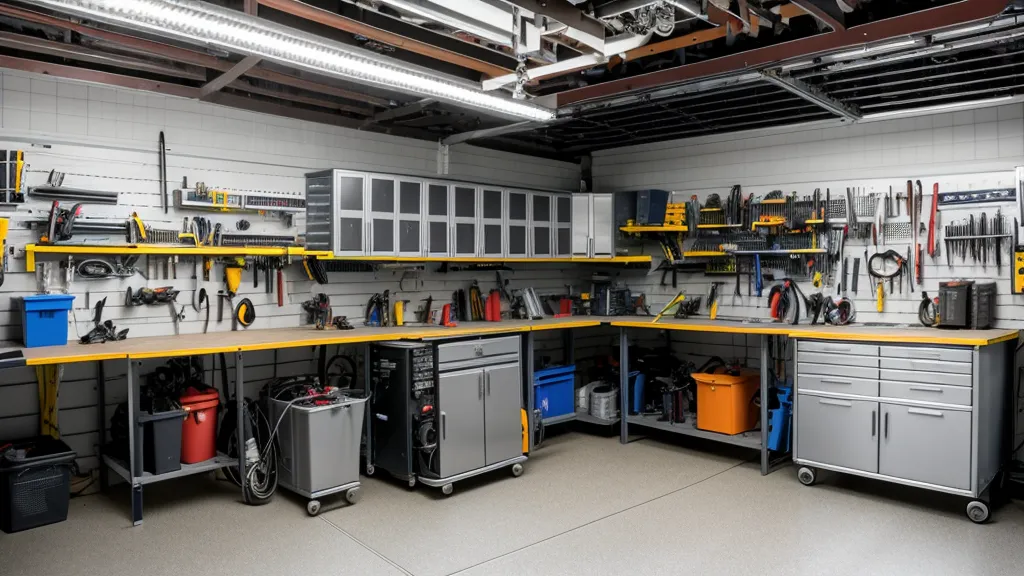
After about three weeks of troubleshooting, balancing the rotor, and rewinding my stator coils with heavier enamel-coated wire, I began taking disciplined measurements. This is where honest bench testing diverges from internet folklore. Many fringe energy blogs claim these layered motors generate limitless free torque out of thin air. In practice, the physics behaves quite differently.
Here is the crucial reality I discovered through testing: the Orgone Motor output provides lower continuous energy density than conventional electromagnetic motors, despite requiring significantly more complex mechanical calibration and specialized component construction. With a standard permanent-magnet DC motor, you dump current into copper windings and get immediate, dense torque. With this layered configuration, you must calibrate the mechanical air gaps, bearing friction, and dielectric spacing to absolute perfection just to generate a modest, steady rotational output.
To put the power scale into perspective, your standard North American household mains wall outlet runs at 120 volts alternating current at a frequency of 60 Hz. A fully charged 12V lead-acid battery sits at a resting potential of 12.6 volts. The trickle voltage I harvested from the switching coils on this experimental rotor was modest—enough to register on my digital meter and slowly charge a small battery bank over hours, but far from replacing my main utility feed. Always remember that before attempting to tie any experimental circuit into household panels, you must consult a licensed electrician; garage experiments are great for learning, but mains connections carry serious electrical fire risks.
Side-by-Side: The Garage Experiment Matrix
One cool evening in October, with the Phoenix furnace finally switching off for the season, I lined up the three distinct alternative energy guides I had tackled over the past six months to compare where each one actually fits.
If your goal is practical emergency electricity with minimal mechanical headache, the Energy Revolution System remains the most accessible project. It functions like an off-the-shelf Linux distribution: well-documented, using standard parts from any big-box hardware store, and requiring almost zero custom machining. In contrast, the Power Grid Generator explores resonant circuits inspired by Nikola Tesla's work. I documented my experience using that system to power bench equipment in Why I Use the Power Grid Generator for My Workshop Tools. That design provides higher immediate electrical output than the Orgone build, but it requires careful tuning of high-frequency components.
The Orgone Motor sits in a unique category. It is not the most efficient watt-per-dollar machine you can assemble. Instead, it is by far the most intellectually captivating mechanical experiment I have put on my bench. Building it teaches you deep fundamentals about capacitance, dielectric absorption, magnetic timing, and precision mechanical alignment that standard solar panel kits simply never touch.
Final Verdict: Should You Build It?
If your sole objective is slashing your electric bill by next month with plug-and-play simplicity, building an unconventional layered motor is not the right move—for that kind of straightforward household backup, a structured setup like the Energy Revolution System is far more practical. Current prices for these guides fluctuate, so check the vendor's official page to see what they are currently asking.
However, if you are a curious DIY builder, tinkerer, or workshop nerd who loves the process of hands-on physical engineering, the Orgone Motor blueprint is genuinely the most engaging garage project you can tackle. Working through its intricate layered design will challenge your troubleshooting skills, give you a tangible piece of mechanical science running on your bench, and teach you more about alternative energy physics than any generic tutorial ever could.
Orgone Motor
Pros
- ● Incredibly rewarding mechanical build for dedicated tinkerers
- ● Clear illustrated diagrams for layered dielectric assembly
- ● Compact footprint fits easily on a standard garage workbench
- ● Teaches deep principles of magnetic timing and capacitance
Cons
- ✗ Requires tight calibration tolerances and manual fabrication
- ✗ Lower continuous power density than basic electromagnetic setups
- ✗ Digital blueprints only -- all raw materials sourced separately