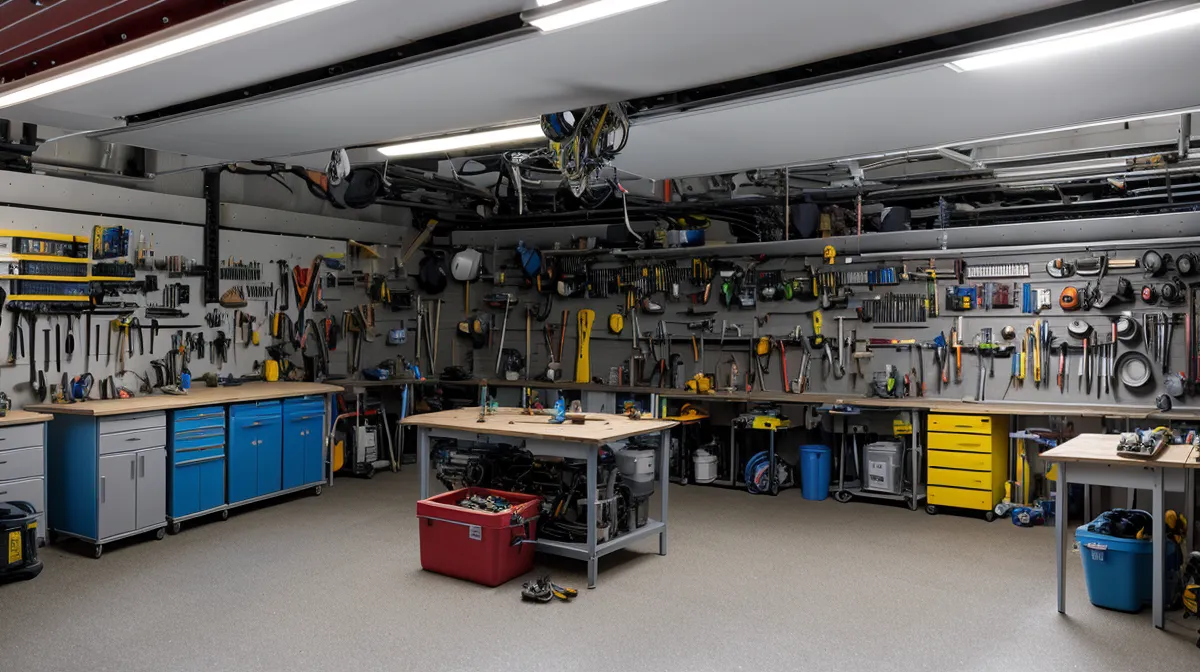
A drill press that pulls 3.5 amps once it is spinning steady can draw two to three times that for the first second after the switch flips. That one-second spike is what kept killing power in my garage, long before I understood the actual mechanism behind it.
Quick disclosure before going further: this site runs on affiliate links, so if you buy something through one of mine I earn a small commission at no extra cost to you. Everything I write about here — workshop power, off-grid generators, general DIY energy tinkering — comes out of gear I have actually bolted to my own garage tools, including the build in this post.
The 15-Amp Bottleneck Behind My Garage Tools
In IT terms, this is a bandwidth problem more than a power problem. An unmanaged switch rarely fails because one device asks for too much all by itself. It chokes when several devices hit the same port at once and nothing is there to arbitrate the traffic. A residential garage circuit runs into the identical wall. Central air cycles the blower relay. A mini-fridge in the corner holds its own baseline draw, and the overhead LED shop lights sip a little more. All of it rides the same wire, sized decades before anyone ran power tools out of this garage.
Code math makes the ceiling obvious once you run it. Under the National Electrical Code, continuous loads running three hours or longer cannot exceed 80 percent of the branch circuit rating. My garage shares a standard 15-amp breaker at the usual 120-volt residential service. That works out to a continuous ceiling of 1,440 watts. The number looks generous on a spec sheet, right up until a tool's startup draw gets stacked on top of everything already running.
Some of that stress compounds through the wiring itself rather than the breaker. I went down a rabbit hole at one point sizing wire gauge correctly for a DIY run, mostly to understand how voltage drop over distance adds its own penalty on top of whatever the breaker is already dealing with — a deeper topic on its own, so I will leave it there.
The actual culprit is startup load, not steady draw. Electric motors produce an inductive inrush current that can spike two to three times the normal running amperage for a brief moment at switch-on. A breaker does not care that the cut only takes a few seconds — it reads a sudden thermal event on an already-loaded wire and opens.
I Built an Off-Grid Generator to Get Around It
This was not my first swing at buffering power away from that circuit. A while back I had picked up a Jackery-style portable power station, hoping it could hold the chest freezer through a brownout. In practice it ran out of reserve well before midnight on a single charge — nowhere near enough to trust it with anything heavier than a phone, let alone a power tool.
Around week twelve of actually paying attention to the meter instead of just the bill, I caught myself standing by the box on a brutal summer afternoon, watching the disc behind the glass turn noticeably slower than the one on my neighbor's meter a couple doors down — same sun, same hour, clearly different draw. That gap is what pushed me from idly reading about isolated power buffers to actually ordering blueprints for one.
That search led me to the build documentation for the Power Grid Generator, a coil-and-resonance design that claims to smooth out exactly the kind of dirty motor startup load my shop tools were throwing at the panel. Putting a tool on its own small isolated supply, rather than forcing everything through the same choked 15-amp line, was the actual goal — not disconnecting the garage from utility power entirely, just giving my workbench its own lane.
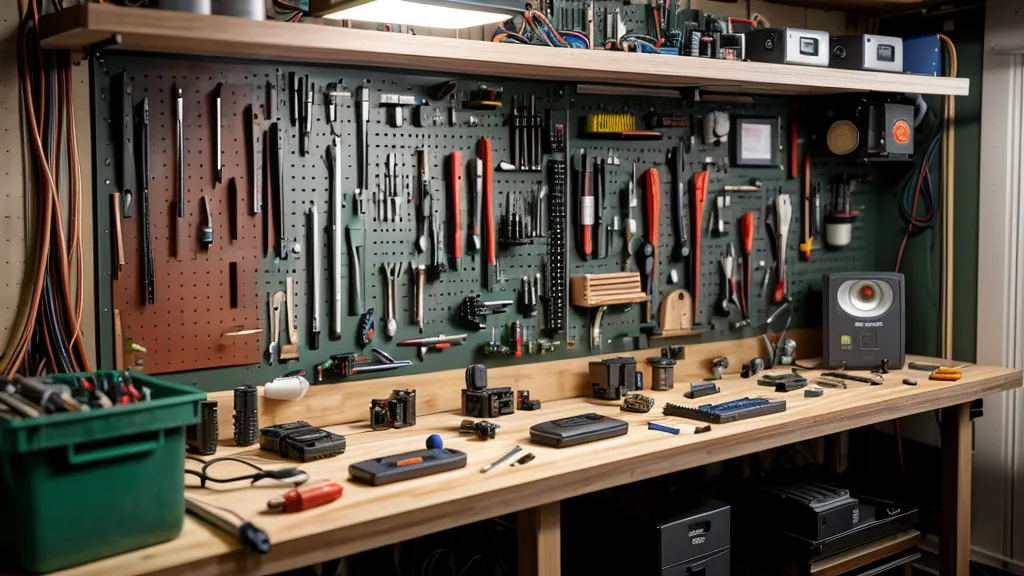
Assembly happened over a weekend in the same bay where one wall is now solid pegboard, every bundle of wire cinched down and tagged so I can actually find a length of 10-gauge without digging through a bin first. Building the coil layout is a lot like racking a custom server from loose parts: straightforward if you follow the schematic in order, unforgiving the moment you rush a connection. I spent an afternoon stripping leads and cross-referencing the diagram against intermittent open-circuit readings on the clamp meter I keep clipped to the folding bench, next to a notepad so beat-up from flux and spilled coffee that half the numbers on it are barely legible anymore.
I still make rookie wiring mistakes, and this build handed me a fresh one. I had the polarity backwards on the first bridge rectifier, and a ceramic capacitor let go with a sharp crack that startled the dog sleeping near the tool cabinet, followed by the particular smell of scorched flux that does not leave a garage quickly. The damage was limited to a single cheap passive part, the kind you buy by the handful for next to nothing, but for a second I was sure my wife was about to walk in on another cloud of smoke over the workbench.
Does a Resonance-Based Design Actually Smooth Out Inrush Current?
The real test came a few weeks later, once the unit was tucked into a small enclosure under the workbench. My main bench tool is an old benchtop drill press pulling that 3.5-amp steady draw mentioned earlier. Under ordinary household power, switching that motor on under load would dim the shop-light strip enough to notice every single time.
Running it off the generator changed that completely. The lamp still dipped for an instant when the bit first bit into a piece of maple, then held steady while the motor settled into its normal draw instead of stalling or popping the breaker. Whatever the resonant tank is doing electrically, it behaves like a shock absorber between the sudden draw and the rest of the circuit — closer to a load balancer than a battery, if the networking comparison still holds.
Marketing copy for anything resonance-based tends to run ahead of what a clamp meter actually confirms, and this is one of the few builds where my own measured output did not fall short of what the claims suggested. I mentioned the stall-under-load problem to Kwame Asante, a guy I originally connected with over a charge-controller wiring thread and now actually see in person now and then — he was mid-rant about antenna SWR at the time, which is his other obsession, but he got genuinely interested the second I said "resonant tank circuit."
The gap between a tool's steady running draw and its brief surge draw is exactly the kind of number I now check against a household appliance wattage chart before adding anything new to a shared circuit, instead of guessing and hoping. That distinction matters most for anyone running tools out of a remote cabin or an off-grid parcel on an undersized inverter or a temperamental backup generator, where a circular saw biting into hardwood can stall the whole system and black out everything else in the building, not just the tool.
Summer heat in a Phoenix garage is also why inverter thermal derating is a real concern for anyone running gear out here, generator or otherwise, since heat and continuous load do not mix well regardless of topology. I also keep this entire setup electrically isolated from the house panel rather than wiring in any kind of backfeed-and-transfer-switch arrangement, since tying supplemental generation into household wiring is a different project with its own code requirements I am not touching without a licensed electrician.
What Changed Once My Shop Tools Had Their Own Supply
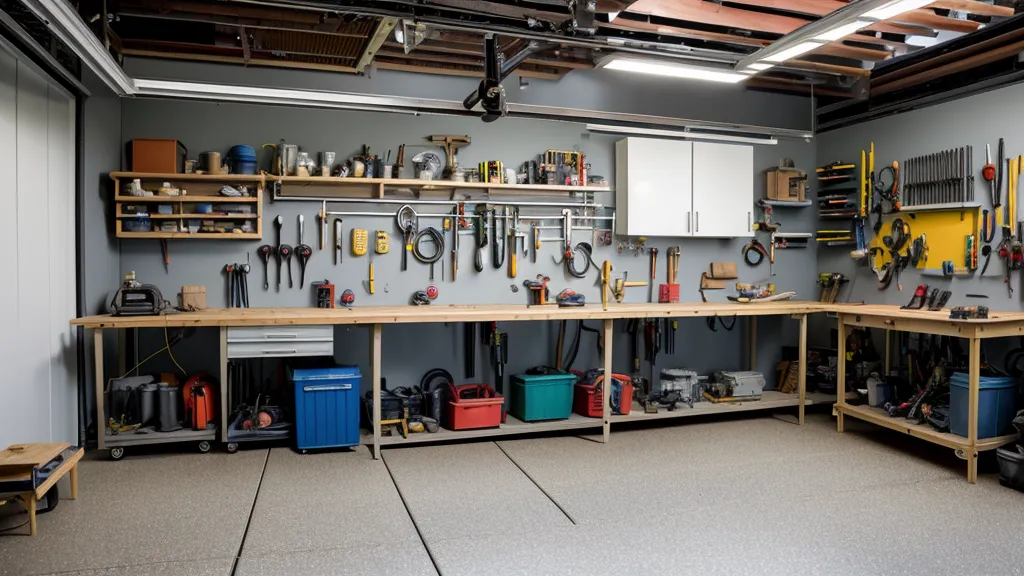
A few weeks into cooler fall weather, I did an honest audit of how the whole setup held up across a brutal summer. Running the main bench tools off this dedicated unit meant garage projects stopped competing with the house for capacity on the shared line. None of this replaces a proper whole-house home energy audit — it only ever solved the garage circuit, not anything else leaking power elsewhere in the house. I had tested a similar isolated setup once before for digital gear while trying a Power Grid Generator home office server setup, but heavy shop tools are where the isolation actually earns its keep.
Worth being straight about this: I am an IT guy who likes multimeters and tinkering, not a licensed electrician. Anyone planning permanent changes to a household service panel, or looking to tie supplemental generation into existing home wiring, should talk to a licensed electrical contractor first. Local code exists for real reasons, not just paperwork.
If there is one thing this build actually taught me, it is that a garage circuit almost never fails because of how much power something draws while running. It fails over the half-second spike nobody budgets for. Size for the spike instead of the nameplate, and most of the breaker-tripping headaches disappear before you even think about a panel upgrade. For my own workbench, having a small isolated supply solved the constant tripping without an expensive service upgrade, and if your shop tools keep browning out the garage lights or choking on startup spikes, the blueprint for the Power Grid Generator is worth a look before you spend money on anything bigger.