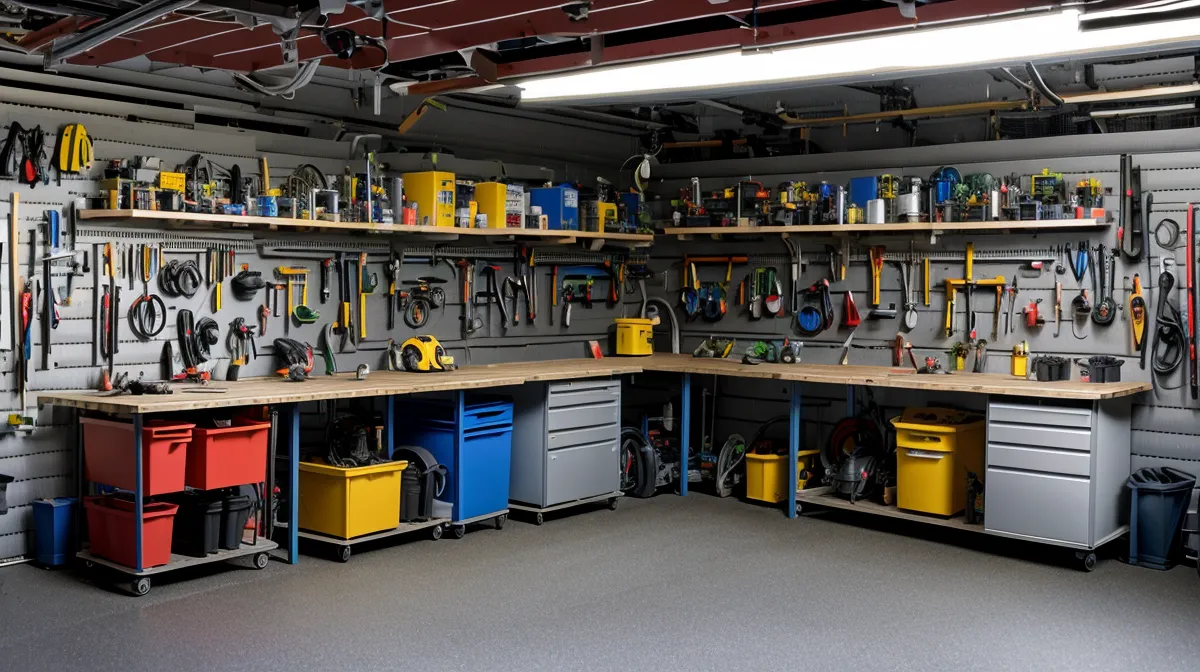
What's the one assumption that quietly wrecks more DIY solar budgets than any wiring mistake ever could? I won't answer that right away, because the real answer only makes sense once you've seen what a Phoenix garage experiment actually produces against what it promises. Mine has produced plenty of smoke, several wrong turns, and eventually a home power system that does something useful — but getting there meant unlearning a handful of ideas about off-grid living and DIY solar power that sounded reasonable on paper and turned out to be wrong in practice, the same way a $380 summer bill that kept recurring every year sounded like something duct tape and good intentions could fix.
Quick note before anything else: a few links in this piece are affiliate links, including the guide and the alternative devices mentioned further down. Buying through them earns me a small commission at no extra cost to you, and I only link to things I've actually tested in my own setup. None of this makes me an electrician — I fix network switches for a living — so treat everything below as one hobbyist's testing notes, not a substitute for a licensed professional before you touch anything permanent on a service panel.
More DIY Solar Power Always Sounds Like a Good Idea
The myth that cost me the most wasn't about wiring or shade — it was assuming that any solar you put up has to help, since panels on a rack feel like progress compared to doing nothing. That's backwards. A badly planned home power system can burn through more in parts and wasted weekends than it ever saves on a bill, and mine did exactly that for a stretch before anything about the setup worked the way I expected. Troubleshooting a build isn't that different from chasing down a flaky network: break it into components, test each one, and find the actual bottleneck. Voltage behaves a lot like bandwidth once you think about it that way, and your wiring is your network topology — get the topology wrong and the electrons, like packets, just don't arrive where they're supposed to.
The Wire Gauge Mistake Nobody Budgets For
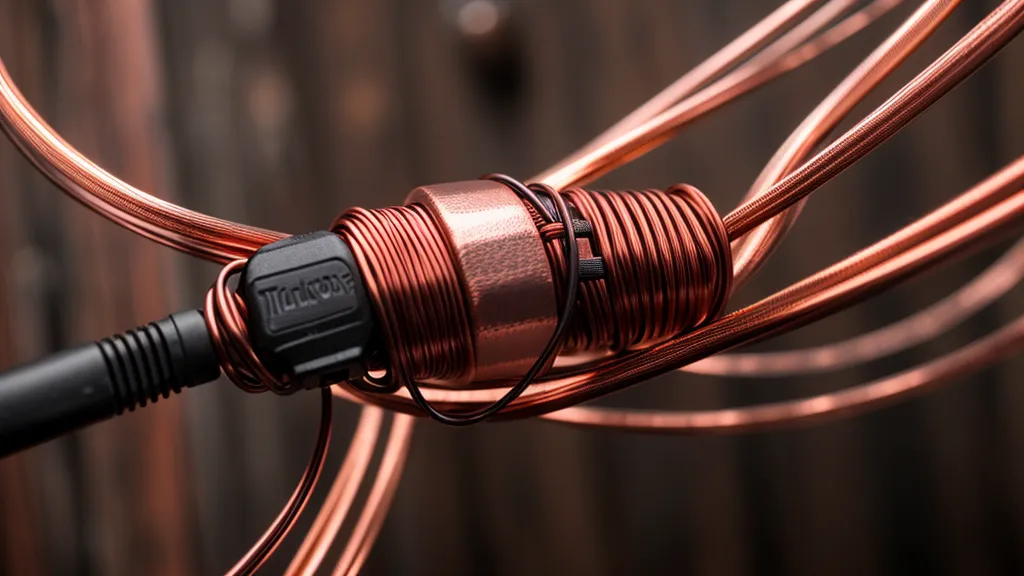
Somewhere in that first stretch I assumed a wire is a wire, the same way plenty of people assume any Ethernet cable works for any job. It doesn't, and in solar the failure mode is worse than a slow download — undersized wire on a high-amperage circuit just gets hot. Vince, a coworker who sits a few desks over and had heard me complain about that bill one time too many, ended up lending me his clamp meter and a handheld thermal camera so I could actually see what was happening instead of guessing. The first pass across my panel wiring found one connector running noticeably warmer than everything around it, on a circuit I'd wired with whatever gauge I had lying around instead of what the amperage actually called for. Switching to properly rated 10 AWG copper fixed it, though the full math behind matching wire gauge to voltage drop is really its own topic, not something I'll try to cram in here.
That same stretch is also where the charge controller taught me a lesson. Mine started as a bare-bones PWM unit, and it took longer than I'd like to admit before I understood why swapping it for an MPPT controller actually changes how much of a panel's output reaches the battery — not a choice to make based on whichever is cheaper that week, though that comparison deserves a full write-up of its own. Grounding the system properly took another pass I won't walk through step by step here, since it's genuinely its own topic, but skipping it is the kind of shortcut that turns a small mistake into a dangerous one. Even crimping my first MC4 connector without the right tool humbled me faster than any wiring diagram did, though that's a short lesson best saved for later.
Shade Doesn't Care About Your Spreadsheet
A second assumption nearly undid the first system entirely: that checking sun exposure at the start and end of the day is good enough planning. It isn't. Shade at solar noon costs more real production than morning or evening shade ever will, because that's when a panel's angle to the sun is doing the most work. By the time the heat shimmer was visible rising off the driveway at midday — the kind that makes the asphalt look like it's moving — the hedge next door had already erased the single best hour of sun the rack was ever going to get, and no amount of spreadsheet math at 8 AM or 5 PM would have caught that. Once the rack was moved and re-angled for the actual path the Arizona sun takes overhead, the output finally matched what the math had predicted — tilt angle is its own puzzle, and I won't unpack it fully here.
The clearest gap between what a product claims and what it actually delivers came from the Orgone Motor I bought on a whim during that same frustrating stretch. The compact design was the whole pitch, and on paper it looked like a quick win squeezed into a small footprint. In practice, the assembly was far fiddlier than the marketing suggested, and it's sat half-finished in a bin since. Whatever a box promises, I've learned to trust my own multimeter over the packaging — which is really its own lesson about claimed output versus measured output, worth a dedicated piece on its own.

Stop Assuming Every Efficiency Fix Pays Off
Another assumption that doesn't survive a Phoenix summer: that any efficiency fix moves the needle on a bill this size. Replacing every bulb in the house with LEDs felt like a guaranteed win at the time, and the next bill came in close enough to the one before it that the difference barely registered, a rounding error against a total that size, not the fix I was hoping for. Lighting just isn't where a house like mine loses money in July; the air conditioner is, and no amount of LED swapping touches that load. None of this would have mattered much if I hadn't already walked the house once with an eye toward finding where the real energy leaks were, before ever mounting a single panel — that kind of walkthrough is worth a dedicated piece of its own, but the short version is that it matters more than any bulb swap.
One afternoon I plugged a Kill-A-Watt into the outlet feeding my home office setup, fully expecting the draw to look different after a full day of sun already banked. It didn't. The reading sat exactly as flat as it would have on a cloudy day, which meant the phantom load I thought I'd already tamed was still pulling just as hard as ever, panel output or not. When I mentioned that to Vince, I got the question I always get from him: how many times had I actually checked that outlet before trusting a single reading. Fair point, and a good reminder that one number isn't a pattern. That same stretch taught me the difference between the surge watts a label promises and the running watts a device actually pulls, usually right as something tripped that shouldn't have, and a dedicated battery monitor for tracking state of charge would have saved me from guessing off voltage alone for longer than I'd like to admit.
What a Modest Home Power System Can and Cannot Do
Eventually the system settled into something real: a working 1kW setup that was never going to run a central AC unit but was plenty for the phantom loads that keep a meter spinning anyway — a home office, a spare fridge in the garage, an entertainment center that never fully turns off. Those background loads are where the savings actually compound once they're handled properly. Getting there meant admitting that a wiring layout thrown together without a plan — batteries mixed into series and parallel with no logic behind which went where — needed a real rebuild, since sizing a battery bank for the load you actually have, not the load you imagine, is a calculation worth doing before buying a single battery.
On the inverter side, I hadn't appreciated that a modified sine wave unit and a pure sine wave unit behave differently once something with a sensitive motor or charger is plugged in. Before trusting any panel on the rack now, I check it with a multimeter rather than the sticker, though reading open-circuit voltage against operating voltage properly is its own topic. What finally pulled all of this into something coherent was following the Energy Revolution System, a video-based guide that worked like the documentation my setup had been missing the whole time — it's what pushed me to fix the grounding and the panel angle at the same time instead of patching one problem and leaving the rest alone.
A contact from a Phoenix home-improvement expo, Tariq, is working through his own off-grid build, and his background as an HVAC technician shows in how disciplined he is about airflow around a battery bank sitting in a hot garage. He treats heat management around batteries the same way he once treated airflow on a job site, and he's not wrong to. Phoenix heat does real things to how much usable capacity a battery bank actually has on a given afternoon, though the full technical side of temperature derating is a topic for a more detailed piece than this one.
Net Billing Isn't Free Money, and Neither Is a Full System
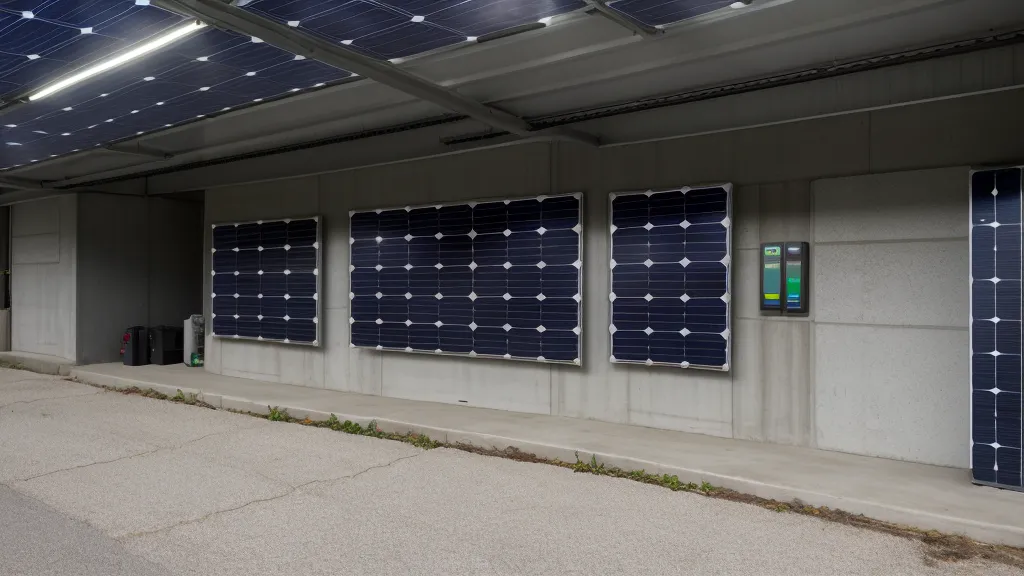
None of the hardware mattered as much as understanding the Duck Curve and how net billing actually works here. Arizona's program pays a fixed rate for energy sent back to the grid but charges a premium during the evening peak, so without a way to store power for when the sun's down, you're effectively selling low and buying high every single day. A battery bank wired correctly finally let me shift that load instead of giving it away for less than it was worth. What I still haven't touched is backfeeding into the main panel through a transfer switch, mostly because that's a different category of risk than picking a wire gauge, and not something to wing based on anything written here.
What surprised me was how much of this scales down for people without a garage like mine. A coworker who rents an apartment asked about doing something similar, and the portable storage principles covered in that same Energy Revolution System guide scale down just fine — nobody's mounting heavy panels on a balcony railing, but a small kit to charge devices and run a portable AC unit during peak hours is realistic at that scale too.
My garage is still a mess, and I've since started poking at the Power Grid Generator as a possible backup to the backup, mostly because once you start shaving down a utility bill, redundancy starts to look appealing everywhere. The results are real either way: the bill isn't what it was, and for the first time I actually know why, instead of hoping the next one looks better. If you're tired of the desert summer tax and want to skip the guesswork I went through, the Energy Revolution System is the structured starting point I wish I'd had before any of this: stop guessing at wire gauges, stop ignoring the shade, and start treating your home power system like the troubleshooting problem it actually is.