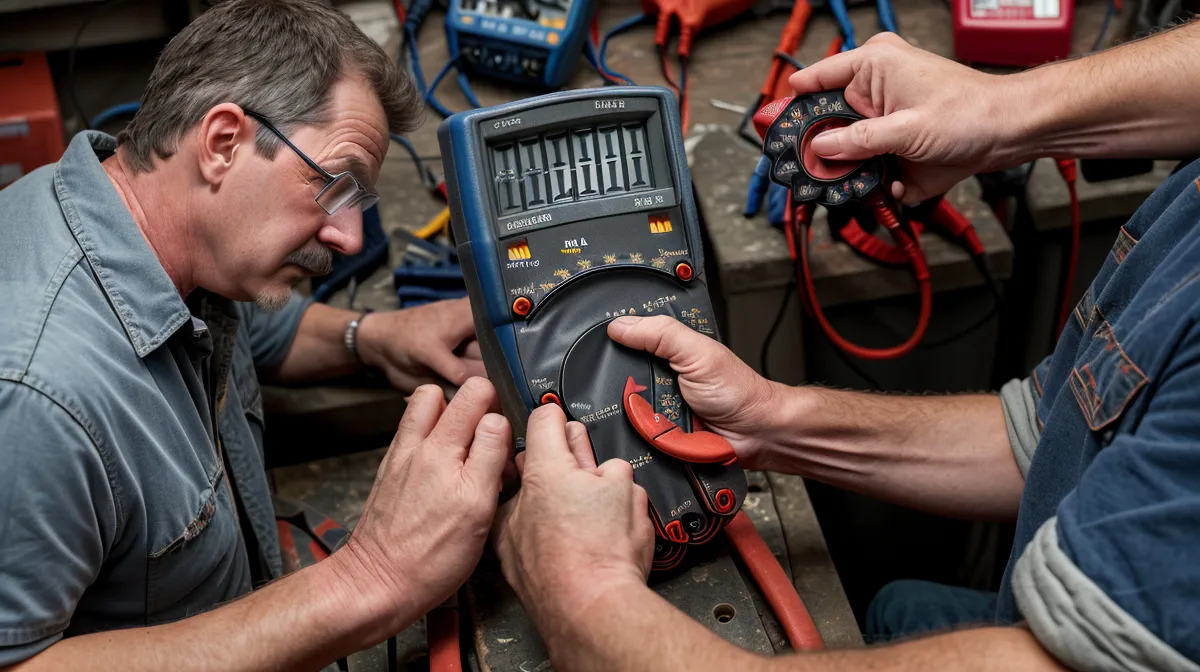
How much does two inches of shifted wire actually change what a solar setup delivers each month? That question got me labeled the guy with the garage full of extension cords by more than one neighbor, and it's part of why DIY energy projects keep eating my weekends long after any sane person would call it quits. Just so you know, I run affiliate links on this site: if you buy through one, I earn a commission at no extra cost to you, but I only point people toward gear I've actually wired up myself. This is my honest look at the Energy Revolution System after building it and pushing it through a full Phoenix summer — the tweaks that actually moved my output, the ones that did nothing, and what off-grid living really costs once the heat gets factored in.
Why I Finally Committed to the Energy Revolution System
Committing to the Energy Revolution System after months of half-finished solar kits and one magnetic motor that barely spun was less a leap of faith and more a spreadsheet decision. A summer bill of $380 for the third year running will do that to a person. Treating the build like an IT infrastructure rollout instead of a weekend hobby changed how I approached it — voltage is bandwidth, and a messy circuit layout just shows up as heat instead of a spinning progress wheel. I'd already gone through reviews of the Energy Revolution System before buying, mostly to see whether someone who still double-checks his own wiring could pull this off without frying anything important.
Long before any of this, I'd tried the cheaper route: setting the thermostat to a strict schedule and just gritting through the heat. That lasted three days before the rest of the household staged what amounted to a small uprising over a warm house at six in the evening, and the schedule got reverted for good. Structural changes to how a house actually handles power turned out to matter more than fiddling with a thermostat app, which is part of why the wiring itself became the real project.
What This Build Actually Costs, Start to Finish
People ask about the number before anything else, so here it is without the marketing gloss: the guide itself ran $49, the copper wiring and hardware-store components added up to $185, and a used deep-cycle battery off a local marketplace rounded out a total investment of $234. None of that includes the time spent chasing down parts, which is its own kind of cost if weekends matter to you. What the $234 doesn't tell you is how much of the first build was trial and error rather than following the blueprint start to finish, and that's really the part worth explaining.
Does Wiring Layout Matter as Much as the Parts List?
Yes, and more than most guides admit. Standard copper wiring resistance climbs as ambient temperature rises, and a garage that sits in triple digits for half the year throttles the effective bandwidth for energy flow the same way an overheating switch throttles a network closet. Networking people talk about Electrical_resistance as the enemy of speed; in a Phoenix build, it's the enemy of the bank account. Whether a charge controller in a setup like this is PWM or MPPT changes how forgiving the whole system is about small wiring inefficiencies, though that's a big enough topic to deserve its own write-up rather than a paragraph here. The same goes for whether panels are wired in series or in parallel — that decision affects how badly one shaded or underperforming panel drags down the whole array, and it's worth research well past what fits in a build log.
A lot of standard advice assumes a roof with twelve uninterrupted hours of sun, which isn't the world most DIY builders actually live in. Full-time RV dwellers parked under forest canopy deal with something similar — constantly shifting shade makes fixed-angle optimization close to useless, so the focus shifts to connection quality and minimizing resistance instead of just adding more panels. Suburban Phoenix heat is the thermal version of that same problem: not shade, but temperature, working against a setup in a different way. Anyone curious about squeezing power from unconventional builds instead of a full solar array might look into the Magnetic Generator DIY approach, though that's a very different animal from anything covered here.
The Two-Inch Grounding Fix That Doubled My Output
Output plateaued even under good conditions until the grounding wire came under suspicion. The ground path looped around the battery bank in a way that created a small resistance bottleneck — the electrical equivalent of a network switch with a loose uplink cable. Shortening that path by about two inches and swapping in a thicker lug fixed it, and the output doubled almost overnight, like swapping a 10/100 switch for a gigabit connection. Anyone just getting into this should look at these common wiring mistakes before starting, if only to skip the hours some builders spend chasing ghosts in a circuit that was never actually broken.
My wife walked into the garage one evening, phone in hand, and turned the screen toward me without a word. The utility app's running estimate for the month was lower than either of us expected, low enough that she checked it twice before believing it. That's the kind of moment that convinces a household this isn't just another experiment taking up shelf space.
Reading the ROI Numbers Without the Hype
Numbers matter more than enthusiasm here, so here's the honest version: a $380 baseline bill dropped to $142 after the tweaks, which works out to a monthly savings of $238, meaning the full $234 build essentially pays for itself in about 31 days. That math only holds if the system is actually sized for what a household draws overnight, and battery bank sizing is a calculation of its own that deserves more attention than most beginners give it. The inverter matters too — running a pure sine wave unit instead of a modified sine one is a decision that affects which appliances run cleanly, and it's not something to decide the same afternoon the panels go up. None of this is magic. It's wiring, patience, and paying attention to where the resistance actually is instead of where a guide assumes it is.
For anyone hesitant about the entry price, the Power Grid Generator is a cheaper way to get a feel for this kind of build before committing to a bigger blueprint, though the two aren't really solving the same problem.
Questions I Keep Getting From Neighbors and Readers
The most common question is whether any of this works if a roof isn't perfectly angled toward the sun. Panel tilt angle is worth adjusting seasonally, though that's a bigger topic than fits in a footnote here. Another one that comes up constantly: does any of this matter if the house is already leaking energy everywhere else? Fair point, and no amount of wiring optimization fixes a house bleeding power through bad insulation and old appliances — a proper home energy audit is a separate project that should probably happen before or alongside a build like this one.
A neighbor of mine spends his weekends out on a Polaris RZR tearing through the Tonto National Forest and has exactly zero interest in any of this, which is a healthy reminder that not everyone needs a hobby built around a multimeter. Somewhere between his approach and mine sits the average homeowner who just wants a lower bill without turning the garage into a lab. That gap is worth thinking about, and it's part of why I dragged my kid to the Arizona Science Center in downtown Phoenix not long ago; watching him get excited over a hand-crank generator exhibit was a good reminder that this stuff is genuinely interesting once the utility-bill anxiety gets stripped away.
Peeling the anti-static wrap off a new charge controller has a specific crinkle to it, almost like unboxing a phone, and it's a small thing, but it's the moment a build actually starts to feel real instead of theoretical.
Still not an engineer, and still double-checking which setting the multimeter is on before trusting a reading. But the Energy Revolution System turned out to be the closest thing to a proven roadmap instead of another half-finished experiment taking up garage space, and for anyone staring at a summer bill that keeps climbing, that's worth more than another year of guessing.