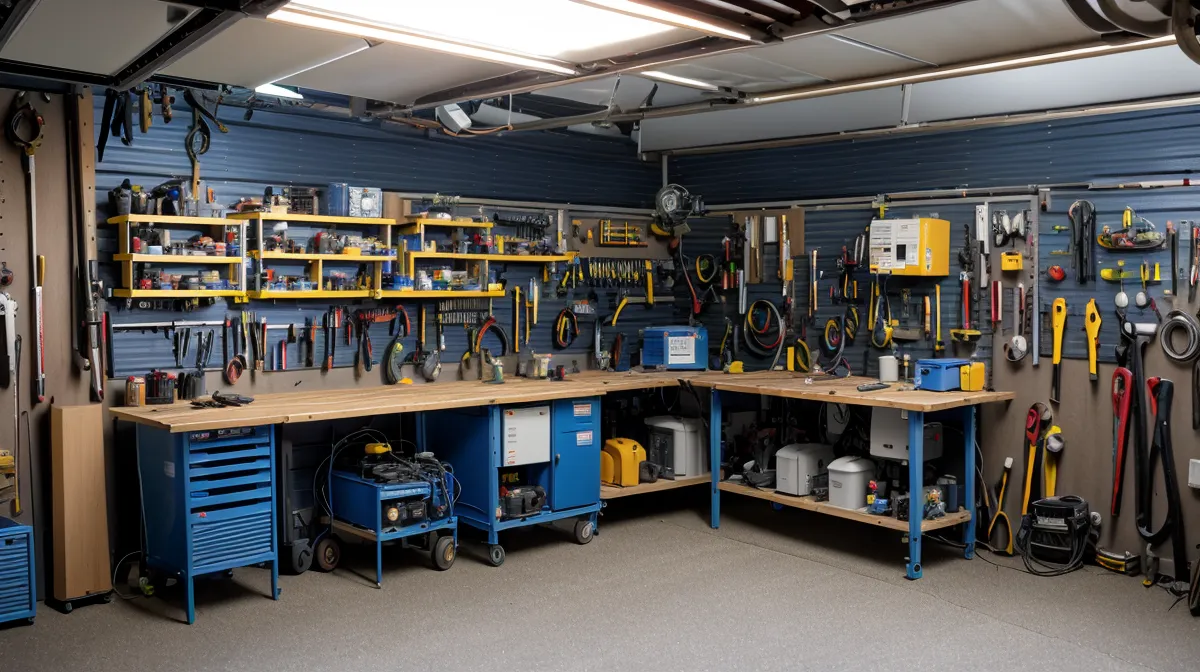
What's the real difference between a garage solar storage bank that shrugs off a long outage and one that quietly runs dry by the third hour? Almost everyone who wanders into my garage workshop asking about a DIY solar setup assumes the panels are the hard part. They're not. The battery bank is where the whole thing either holds together or falls apart, and after living with both lead-acid and LiFePO4 battery packs on the same bench, I've got strong opinions about which one deserves the space.
Quick disclosure before the wiring talk starts: this site runs on affiliate links, and if you buy something through one of them I earn a small commission at no extra cost to you. I only point people toward energy setups and blueprints I've actually built and tested on this same workbench.
My first battery bank was a pair of secondhand AGM lead-acid batteries, because that's the frugal, obvious-sounding answer when you're treating a solar setup like any other IT budget line. It is not the right answer, and the rest of this is basically a long-form answer to every question people ask me about why.
Is Lead-Acid Actually Cheaper for a Garage Workshop Battery Bank?
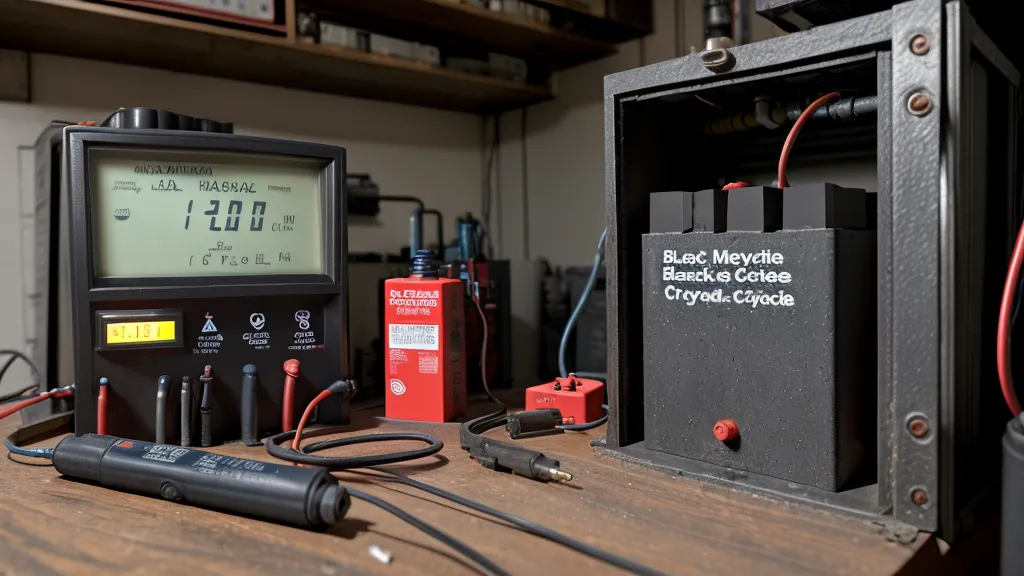
On paper, yes. Two 65-pound AGM batteries cost less up front than an equivalent LiFePO4 pack, and I'd already wired a bank like it using how to wire 12v batteries in parallel for more storage and keeping the parallel strings balanced against each other, so doubling down on lead-acid felt like reusing a pattern I trusted instead of relearning a new one.
The problem showed up on the scale, not the invoice. Hauling 130 pounds of dead weight onto a shelf that was supposed to hold tools, not batteries, turned out to be the easy part of the complaint.
Worse than the weight was how little of that capacity I was actually allowed to use. Lead-acid chemistry punishes you hard if you draw it down too far, too often — push it past its comfort zone regularly and you accelerate sulfation inside the plates, which quietly eats away at how much the battery can hold going forward. Buying a big lead-acid battery and getting to use only a fraction of its rated capacity in practice is the kind of bait-and-switch that would get a vendor fired in IT procurement.
What Changes the Moment You Swap in LiFePO4
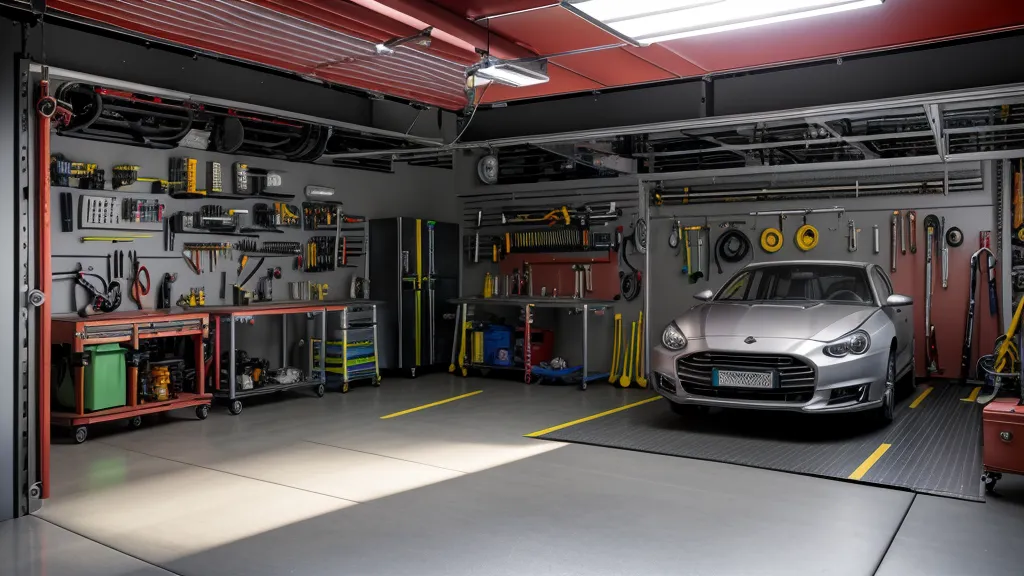
Switching chemistries felt, in IT terms, like replacing a noisy spinning hard drive with a solid-state one. Same basic job, completely different internals. The lithium iron phosphate pack that replaced my old bank weighs around 25 pounds against the 130 pounds it took off the shelf, which alone bought back real workbench space.
Under a steady 150-watt load — soldering iron, a fan, and two tool batteries charging at once — the new pack held at 13.1 volts for hours without drifting. Lead-acid never did that. Watching that old bank tick down from 12.6 to 11.9 volts every few minutes always felt like watching a connection throttle mid-download, and the LiFePO4 pack simply refuses to do that trick.
It also tolerates being drawn down much deeper than lead-acid without the same capacity penalty, and it shrugs off garage heat with a lot more margin before anything becomes a safety concern, though that margin isn't infinite, which is a separate question I'll get to. None of that made the BMS wiring forgiving on the first attempt.
I reversed the balance harness on my first BMS build, and the fuse popped with a sound uncomfortably close to a dying motherboard capacitor. A replacement part meant a parts-store run, not a same-day fix, and a few days of a half-wired bench sitting there as a reminder to check pinouts the way I would on any custom server cable before powering it up.
Rewiring the Rest of the System: What Actually Has to Change
That parts-store run, by the way, was a straight shot to the Home Depot on Bell Road in Scottsdale for a fuse and a handful of ring terminals, since nothing about a blown BMS fuse waits for a weekend trip.
Swapping the battery chemistry itself, though, doesn't force you to redo everything upstream of it. Whether your panels are wired in series or parallel is its own decision with its own trade-offs, and that choice doesn't change because the bank behind it is lithium instead of lead. The same goes for wire gauge — you still size conductors for the current and the run length, not for what chemistry is sitting at the end of the cable. Crimping the MC4 connectors on your panel leads is another one of those jobs that stays exactly as fussy as it always was, needle-nose pliers and all.
Grounding and bonding the system is the one place I didn't trust my own judgment. My neighbor Rosario's husband is a licensed electrician, and he's walked through my grounding scheme more than once just to make sure I hadn't invented a new way to get it wrong. That kind of reality check matters more than any blog post, mine included.
The crimped ring terminal is where that smell lives, too. A sharp, almost solder-iron tang drifts up off the connector right after you pull the heat gun away, the kind of smell that tells you the joint actually took before you've even tested it with a meter.
None of this touches your charge controller or inverter choice either. A PWM controller and an MPPT controller handle the same job differently enough that it's worth its own conversation, and the same is true of a pure sine wave inverter versus a modified sine one — the battery swap doesn't settle that argument for you. If you're ever tying solar storage into your main electrical panel with any kind of transfer switch, that's a licensed-electrician job regardless of what chemistry is sitting in the battery bank.
How Do You Know the Swap Actually Worked?
A battery monitor that actually tracks state of charge, not just a dashboard voltage number, is the one upgrade I'd tell anyone to make at the same time as the battery swap itself, because voltage alone tells you less about a LiFePO4 pack than it ever told you about lead-acid.
Obinna, a maker-space friend of mine building his own shed-mounted array, is the one who talks me down whenever a spec sheet sounds too good. He's the type who shows up with phone photos of whatever he just found at an electronics liquidator, part numbers and all, and his running rule is simple: a claimed output number means nothing until you've actually measured it yourself under a real load.
That's also where surge watts and running watts stop being the same number in your head. A compressor or a grinder kicking on will pull a spike well above what it settles into once it's spinning, and sizing an inverter off the running number alone is how people get a surprise shutdown the first time a motor starts.
The clearest signal that the new bank had actually solved something came from the monitoring app itself, on an ordinary afternoon with nothing special going on. The generation line finally sat above the consumption line instead of trailing behind it, the way it had refused to for weeks before the swap. No alarm, no drama, just the math finally running in my favor instead of against it.
Will a Demand-Response Program Fix the Real Problem?
Before I touched the battery bank at all, I tried the easier fix first: enrolling in the utility's demand-response program and dialing the AC back during peak summer afternoons. I sweated through a couple of August evenings doing exactly what the program asked, and the credit that showed up on the bill afterward was small enough that it barely registered.
That's not a knock on demand-response programs themselves. They're a reasonable way to shave peak load off the grid. It just doesn't address what was actually wrong on my end, which was storage that couldn't hold what little solar I was already generating. A program that asks you to use less at 4 PM doesn't help if the real issue is that your battery bank can't bank the power you made at 11 AM in the first place.
What a Phoenix Garage Still Demands From a LiFePO4 Pack
Heat tolerance is genuinely better with LiFePO4, but better isn't unlimited, and anyone telling you lithium iron phosphate laughs off a closed metal garage in July is overselling it. There's still a point where you want airflow working for you, not against you.
A box fan running in the corner of the garage from spring through the worst of summer has done more for that margin than anything I've bought, which says more about Phoenix than it does about battery engineering.
Cold is the side nobody expects to matter here, but charging a LiFePO4 cell while it's near freezing can do real, permanent damage to it, so any BMS worth using needs a low-temperature charge cutoff built in. Phoenix mornings rarely get there, but a few do every winter, and that's exactly the kind of edge case that doesn't forgive being ignored just because it's rare.
Cheaper, or Just Lighter and Safer?
Cost per usable kilowatt-hour over the life of the pack is the honest way to compare these two chemistries, even though it's a harder number to pin down than the sticker price on day one, and it's not one I'm going to pretend to calculate precisely here without real figures to back it up.
Weight and safety are the parts I can say something concrete about. Not hauling 130 pounds across a garage floor has real value that doesn't show up on any spec sheet, and neither does the peace of mind my wife wanted before a lithium pack went anywhere near our attached garage.
The blueprint I leaned on for the BMS and busbar wiring was the Energy Revolution System, which I'd already used once before when using the Energy Revolution System to run a laptop in my garage. It walks through the wiring with parts you can actually find at a regular hardware store, which mattered more to me than anything flashier, though as always, run any permanent wiring past a licensed electrician before it goes near your main panel.
Chasing parts deals instead of chemistry hype is the cheaper lever almost nobody pulls first, but it only works if you verify whatever a seller claims before you trust it on your own bench.
Somewhere in every off-grid forum thread you'll also run into hobbyists chasing alternative generation devices like the Orgone Motor, built more as a standalone curiosity project than a serious power source for a garage bank. Whatever generates the power flowing into your system, though, none of it matters if the storage chemistry underneath can't hold onto what you made, which is the whole argument for LiFePO4 in the first place. Programs like the Energy Revolution System are built around that storage-first logic, and since pricing on digital blueprints shifts over time, it's worth checking the vendor's page directly for current terms rather than trusting a number here.
Checking the Rest of the System Before You Call It Done
A battery bank this solid still sits inside a bigger system, and most of the questions people ask me after the battery swap are really questions about that bigger system. Sizing the bank itself against your actual loads is a separate exercise from what I've covered here, and it deserves more room than a paragraph.
Panel tilt angle changes how much you're actually generating long before storage ever becomes the bottleneck, and so does how many peak sun hours your site realistically gets rather than what a spec sheet assumes. Testing a panel's open-circuit and operating voltage with a multimeter before you wire it into anything is a five-minute habit that catches a bad panel before it becomes a bad battery bank.
Inverters run hot in a closed garage, and thermal derating is real. An inverter that throttles itself under heat will look like a battery problem if you don't know to check the inverter first. A home energy audit, the boring kind that just tracks down where power leaks out of your house before it ever reaches the garage, and a watt-meter hunt for phantom standby loads sitting on outlets you forgot about, both tend to matter more than people expect once the battery bank itself stops being the weak link.
If you're weighing a backyard wind turbine as a second generation source alongside solar, siting it away from turbulence caused by your own roofline and nearby trees matters as much as the turbine itself, and it's a question that has nothing to do with which battery chemistry is waiting at the other end of the wire.
None of that changes the one thing I'd tell anyone standing where I was: fix the storage chemistry before you spend another dollar chasing generation, because a garage solar setup that can't bank what it already makes will waste money at every other layer of the system too. The battery bank was never the glamorous part of this build. It just turned out to be the only part that mattered.