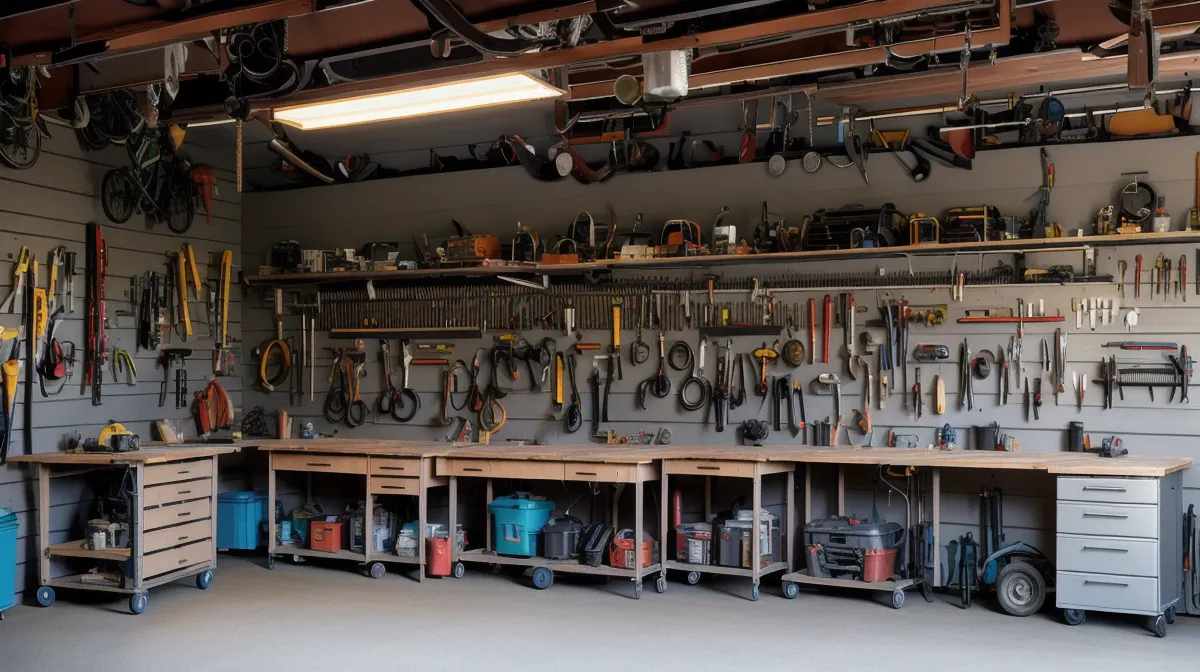
Half a percent. That's roughly what a solar panel loses in output for every degree it runs above the temperature it was rated at in a lab, and a Phoenix roof blows past that lab number long before midday most of the year. I didn't know that number the first time I bolted a sealed 100-watt kit onto my garage roofline, back before any of my DIY energy testing had turned into an actual off-grid comparison project. I found out anyway, watching that kit undershoot its own spec sheet for an entire summer while my electric bill sat at $380 for the third year running. Same number, different summer, like a recurring charge I couldn't cancel.
Full disclosure before the comparison starts: I'm not an electrician or an engineer, just an IT support guy with a multimeter and a garage that keeps absorbing more shelf space than it should. This site runs on affiliate links, so if you buy something through one of mine, I get a commission at no extra cost to you. I only put a product in front of readers after I've wired it, tested it, and in at least one case watched it trip a breaker in my own garage. Whatever you take away from this comparison, talk to a licensed electrician before touching your home's main panel. I'd rather you learn from my mistakes than repeat them.
Before any of this, I tried the obvious fix first. I swapped every bulb in the house for LEDs and waited for the bill to move. It barely budged against that $380 number, a rounding error dressed up as a savings plan. That's roughly when I stopped chasing small wins and started looking at what was actually eating the power: air conditioning, a fridge, a chest freezer in the garage, and a 100-watt solar kit that wasn't pulling its weight.
A 110-Degree Reality Check for Standard Solar Kits
Most sealed solar kits are marketed the way tablets are; closed boxes for people who never want to see the wiring underneath, let alone touch it. They test fine in a lab at a comfortable temperature, but Phoenix doesn't offer comfortable temperatures for roughly five months of the year. When my sealed kit's output started sagging, there was nothing to open, nothing to swap, nothing to diagnose. Just a warranty sticker daring me to void it. It reminded me of trying to upgrade RAM that's been soldered directly to the motherboard: technically possible, practically pointless.

That's the point where I started looking past pre-packaged kits entirely, toward something built more like a system you actually own the blueprint for; parts sourced from an ordinary hardware store instead of a locked plastic housing. The Energy Revolution System is one of the DIY energy blueprints I tested this way: not a sealed unit, but a set of instructions for a build you assemble and can actually get inside of later.
Sealed Kits vs. Modular Builds: The Topology of Power
In IT terms, a sealed kit is a star topology; one central hub, and if that hub degrades, everything downstream degrades with it. A blueprint-built system behaves more like a mesh: more individual points of failure, but no single point that takes the whole thing down if it fails. I spent a stretch early in the testing comparing the Energy Revolution build against a couple of other experimental setups I had going at the same time, including the Orgone Motor and the Power Grid Generator.
What stood out immediately was resilience, not raw output. Standard kits usually lean on high-efficiency monocrystalline silicon, which performs well until dust gets involved. In Arizona, dust is basically our version of snow, showing up everywhere, all the time.
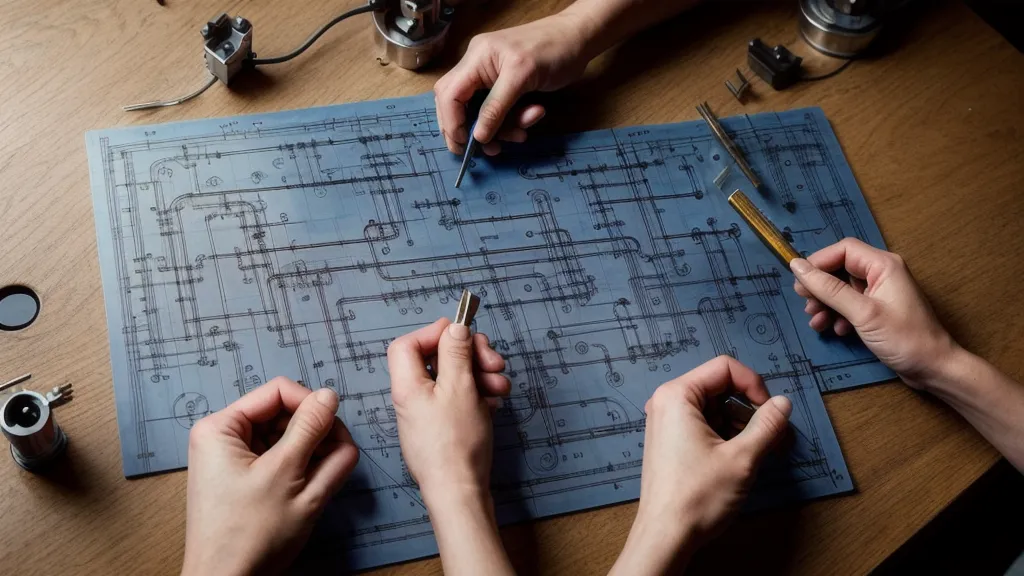
Building from a blueprint meant I could over-spec things like wire gauge without paying a premium for proprietary connectors, and if you're just starting out, understanding how to pick the right solar wire size for DIY projects matters more than people expect. I learned separately that keeping your DIY solar battery bank cool in a hot garage is just as important as anything on the panel side of the system.
None of this replaces the deeper rabbit holes I've gone down elsewhere. The gap between a PWM and an MPPT charge controller changes how much of that panel voltage actually survives the trip to your battery. Wiring panels in series versus parallel changes the voltage and current numbers you're troubleshooting against. Picking a pure sine wave inverter over a modified sine one matters the moment you're running anything with a motor or sensitive electronics in it. Sizing a battery bank for real off-grid storage is its own math problem, not a guess, and getting panel tilt angle right for a Phoenix summer sun angle is worth more attention than most people give it. A proper home energy audit usually finds bigger, cheaper wins than any generator project will, and if you ever tie a backup system into your main panel, backfeed protection and a transfer switch aren't optional extras; they're the difference between a legal setup and a dangerous one.
Which Off-Grid Alternative Actually Held Up After Four Weeks of Testing?
Four weeks into running a side-by-side comparison, the pattern held steady rather than surprising me all at once. I had the Energy Revolution build running the garage lights and my test bench, while a Power Grid Generator handled smaller, resonance-based tasks on the same bench. The Power Grid setup is a reasonable budget entry point; it's the Raspberry Pi of this hobby, cheap enough to experiment with and genuinely useful for learning the basics. For actually running meaningful home load, though, the Energy Revolution System pulled ahead, mostly because I could keep scaling it as budget allowed instead of hitting a hard ceiling.
The Orgone Motor was the other build in the rotation; compact, clever, a good fit if space is tight or you want something more experimental. Think of it as the specialized hardware in this comparison: very good at one narrow job, less of a general-purpose system than the Energy Revolution blueprints. Comparing what any of these builds claim on their sales page against what actually shows up on a meter is worth doing for literally any DIY generator project, magnetic or otherwise. The gap between the two is usually where the real lesson lives. If you want the full build log, I documented that process in this Energy Revolution System tutorial.

One morning early in that stretch, before the household was really awake, I walked into the garage and heard the chest freezer's compressor click off on its own. It was running purely off what the battery bank had stored overnight, not off anything the grid was doing at that hour. Vince Paderewski, a coworker from the IT department who lent me his clamp meter and a thermal camera after hearing me complain about that $380 bill one too many times, wanted the freezer reading confirmed a second way before he'd fully believe it. He's never built anything with his own hands, but he always has an opinion about a sharper way to test something. There's a particular scorched-rosin smell that comes off a ring terminal right after you crimp and solder it, and at this point I associate that smell with a connection I trust, not one I'm worried about.
Tariq Belmahi, a former HVAC technician I met at a Phoenix home improvement expo and have stayed in touch with since, takes a similarly unforgiving approach to his own off-grid plans; if the numbers from a build don't hold up under his own measurements, he'll tear the whole thing down and start over rather than talk himself into a compromise. That's the mindset this kind of comparison rewards. A rating on a chart is a starting point, not a verdict.
Choosing Between a Kit and a Blueprint
The real value in building from a blueprint like the Energy Revolution System isn't only the wattage output. It's that when something fails, and in my garage something always eventually fails, I know exactly which piece to pull and replace. A wiring mistake last month would have taken out a sealed all-in-one unit entirely; because I'd built mine from parts I understood, I swapped a single inexpensive component I already had lying around and moved on with my evening.
Standard kits aren't worthless. For someone who wants a small setup they never have to think about again, a sealed kit still does that job fine. But the lesson that stuck with me after comparing all three builds wasn't which one scored highest on a chart. It's that anything you can't open up and diagnose yourself becomes a liability the moment Phoenix heat gets involved, whether you're looking at a solar kit, a resonance generator, or anything else with a warranty sticker over the screws. With roughly 300 sunny days a year here, the potential is real; the harsh conditions just mean the gear needs to be something you can actually get inside of. If you're tired of watching a bill hover in the $380 range and want a system you can maintain instead of replace, the blueprint approach is where I'd start.
| Product | Rating | |
|---|---|---|
| Energy Revolution System Top Pick | 9.4 | Read More → |
| Orgone Motor | 8.7 | Read More → |
| Power Grid Generator | 8.2 | Read More → |
Energy Revolution System
Pros
- ● Modular design allows for easy component swaps
- ● Uses standard hardware store parts for easier repairs
- ● Excellent video walkthroughs for non-engineers
- ● Handles high-heat environments better than sealed kits
Cons
- ✗ Requires more assembly time than plug-and-play kits
- ✗ You need to source your own physical components