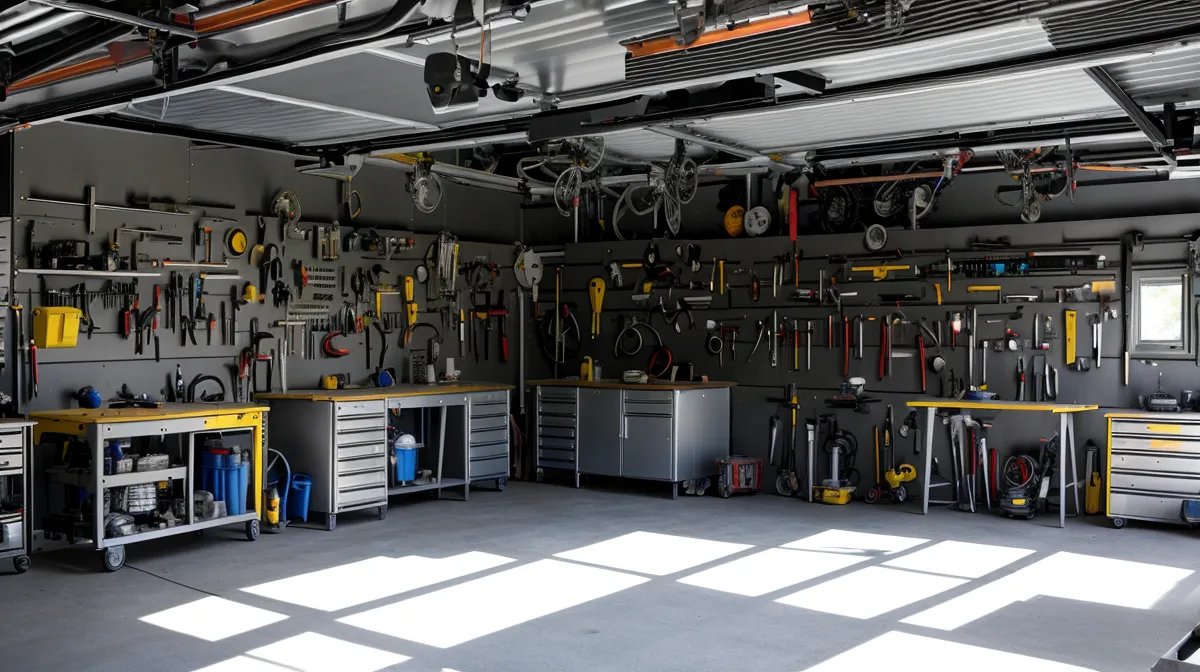
I was standing in my Phoenix garage mid-afternoon, watching the multimeter display flicker while sweat dripped onto my boots and the AC unit outside groaned under the heat. If you have ever seen a server rack struggling with a cooling failure in a data center, you know that sound—it is the sound of hardware begging for mercy. My summer electric bill had hit $380 for the third year in a row, and I was officially done being a passive consumer of the grid.
Before we get into the wiring and the heat, a quick heads-up: I use affiliate links on this site. If you buy something through these links, I earn a commission at no extra cost to you. I only recommend energy products I have personally built and tested in my own garage—usually after a few mistakes. This is my personal experience, and since I am an IT guy, not a licensed electrician, you should definitely consult a professional before you start messing with your home's main panel.
The Problem with 'Black Box' Solar
Back in mid-March, I started looking at those sleek, all-in-one portable power stations you see all over social media. They look great, but as someone who spends his day troubleshooting network topology, I saw a major flaw: they are 'black boxes.' If one internal component fails, the whole unit is a $2,000 paperweight. It is like buying a laptop where the RAM, SSD, and battery are all soldered to the board—great until one bit flips wrong.
Phoenix gets about 300 sunny days a year, which sounds like a goldmine, but the heat is a brutal bottleneck. Standard monocrystalline solar cell efficiency usually sits around 22%, but that is measured at room temperature. When it is 115 degrees outside, your efficiency drops faster than bandwidth on a throttled ISP. I realized I didn't need a pretty plastic box; I needed a modular system I could repair, upgrade, and actually understand.
Building the Energy Revolution System
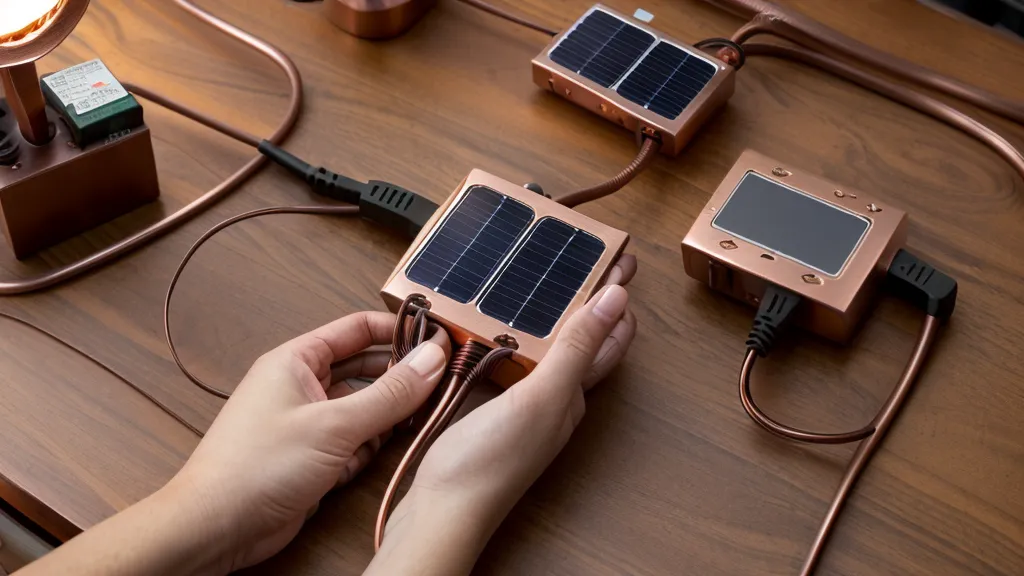
I decided to ditch the pre-made units and follow the blueprints from the Energy Revolution System. It felt more like building a custom PC than a 'science experiment.' Instead of a proprietary battery, I was sourcing parts I could actually find at a hardware store. The learning curve was steep—mapping out a circuit without being a pro is a lot like configuring a VLAN for the first time. You think you have the logic right until you realize you have no connectivity.
I spent a good portion of early June—right as the first triple-digit days hit—working with 10 AWG wire. This is the standard AWG wire gauge for solar applications because it handles the current without turning into a heating element itself. One evening, I found myself staring at a tangled mess of 10 AWG wire on my workbench for two hours, realizing I'd mirrored the diagram backwards. It was the same feeling as plugging a crossover cable into a port that doesn't support auto-MDIX. You just have to laugh, unpin it, and start over.
The system is designed to handle Direct Current (DC) from the panels and convert it to Alternating Current (AC) for the stuff I actually use, like my shop fan and my laptop. In Arizona, we get about 5.7 peak sun hours daily, and if you aren't optimized for that window, you are just wasting silicon.
The Turning Point: A Saturday Afternoon Test
One Saturday afternoon last month, the grid finally gave up. A brownout hit my neighborhood, and usually, that would mean my garage becomes a 130-degree oven in minutes. But this time, I had my DIY portable array ready. I remember the sharp, metallic scent of solder cooling and the satisfying 'click' of a DC breaker finally staying in the 'on' position. I flipped the inverter switch, and my high-velocity shop fan roared to life.
It wasn't just about the fan, though. I was able to keep my laptop and my mesh node running, meaning I could keep working while the rest of the block was dark. This modular approach—using the Energy Revolution System blueprints—meant I wasn't relying on a single 'all-in-one' battery that might overheat. I had separate components that I could keep cool and monitor individually. If you've read about my previous Beating the Phoenix Heat experiments, you know I've tried the 'easy' way before. This DIY path is harder, but it's the only one that has survived a full August in the desert.
Maintenance and the 'Haboob' Factor
One thing the glossy brochures don't tell you is that dust and Phoenix haboobs can reduce solar panel output by up to 25% if the glass isn't cleaned regularly. In late August, after a particularly nasty dust storm, my output dropped from 180 watts down to barely 130. It's like having a dirty intake filter on a server—everything runs hotter and slower. A quick wipe-down with a microfiber cloth, and I was back to full 'bandwidth.'
I have also been looking at the Orgone Motor as a potential add-on for smaller, constant-draw devices. It is a bit more experimental, but it fits that modular philosophy I am chasing. For those on a tighter budget, something like the Power Grid Generator offers a solid entry point, especially if you follow my tips for charging it using DIY panels.
Why Modular Matters More Than Capacity
The biggest lesson I learned over the last six months is that capacity is a vanity metric. If you have a 2kWh battery but you can only charge it at 100W because your 'all-in-one' unit is thermal throttling, that capacity doesn't mean anything. By building my own rig, I can over-provision my panels (like adding more bandwidth to a trunk line) to ensure I am hitting my battery's max charge rate even when the sun isn't perfect.
My garage workshop finally feels like a powerhouse rather than a liability. I am no longer just a guy with a multimeter and a high electric bill; I am the admin of my own local power grid. If you are tired of the 'black box' solutions that fail the moment the warranty expires, it is time to stop buying and start building. Understanding the 'how' behind the power is more valuable than any battery you can buy off a shelf.
If you're ready to stop paying the 'sun tax' to the power company, I highly recommend checking out the Energy Revolution System. It’s the closest thing to a comprehensive 'sysadmin manual' for home power I’ve found, and it’s what finally made my garage livable in July.