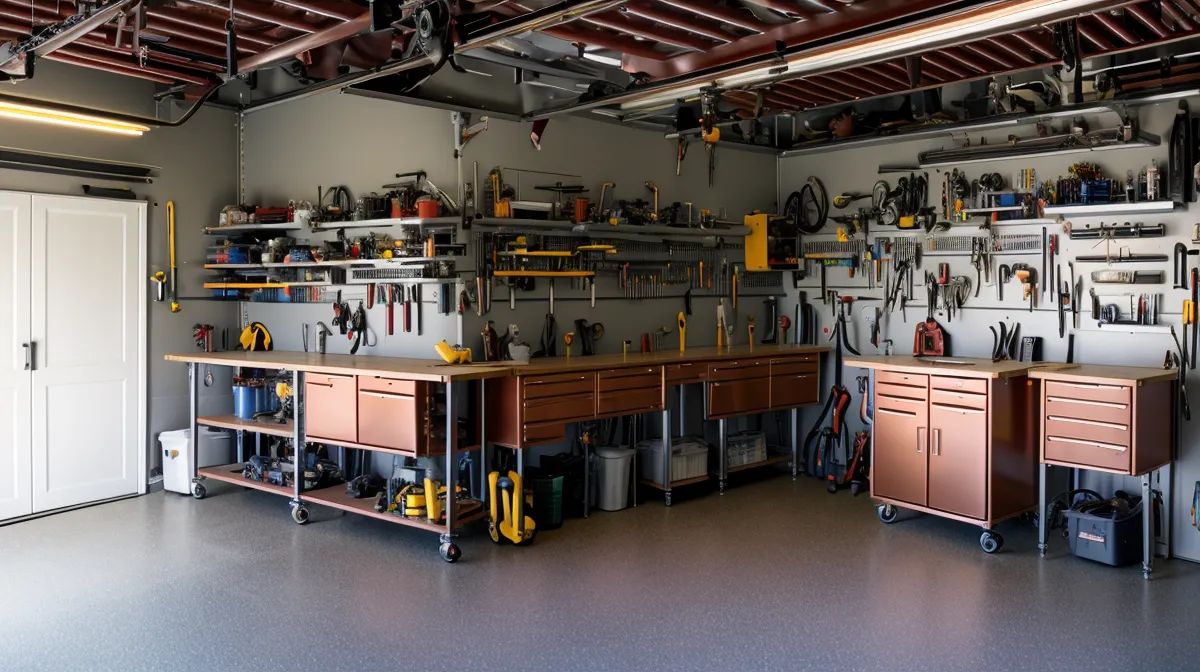
Fourteen-point-one volts, steady, straight off the battery bank — no grid power involved, not once, since the day this thing went live.
That number belongs to a solar-diy cooler build, not a backup power system, and it's the short version of everything in this guide: if you want real off-grid cooling in triple-digit desert heat, skip the thermoelectric plates most tutorials point you toward, go straight to a 12V DC refrigeration compressor, and spend your effort on wiring and airflow instead of foam. Battery storage sizing matters too, but it's the wiring and the ventilation that actually make or break a build like this.
Before any of this, the cheap fix I tried was locking the house thermostat to a strict schedule. Three days of complaints from everyone else living there and I switched it back, which is roughly when a standalone DC cooling rig in the garage started looking like the less contentious option.
Why Peltier Plates Lose the Thermal War in the Desert
Most people chasing a DIY solar cooler start with cheap thermoelectric Peltier plates, and earlier this year, so did I. A TEC1-12706 module looks great on a spec sheet — solid-state, no moving parts, dirt cheap. Under steady operation it draws 4.5 to 6.0 amps at 12V DC, which works out to roughly 60 watts of continuous electrical power dumped into a ceramic square not much bigger than a postage stamp.
Efficiency is the fatal flaw. Thermoelectric cooling runs at a coefficient of performance somewhere around 0.5 to 0.8, meaning for every watt of electricity you push through the chip, you get back less than a watt of actual cooling. Worse, a Peltier plate can only hold a temperature differential — a delta-T — of roughly 20°F to 30°F below the ambient air hitting its hot-side heatsink. When a garage or a truck bed sits at 112°F, a 25-degree drop leaves the inside of the box around 87°F. That's not refrigeration. That's a proofing oven.
I found this out the hard way. Leaning over the bench to adjust an undersized fan, I caught the smell of hot PVC insulation and burned a thumb on heatsink fins that had gone from warm to scalding. The heatsink was so saturated with desert air it couldn't reject heat anymore. Past that point, the module stops cooling and starts back-feeding heat into the cold chamber — a battery-draining space heater with extra steps.
Swapping to a DC Compressor and Battery Buffer
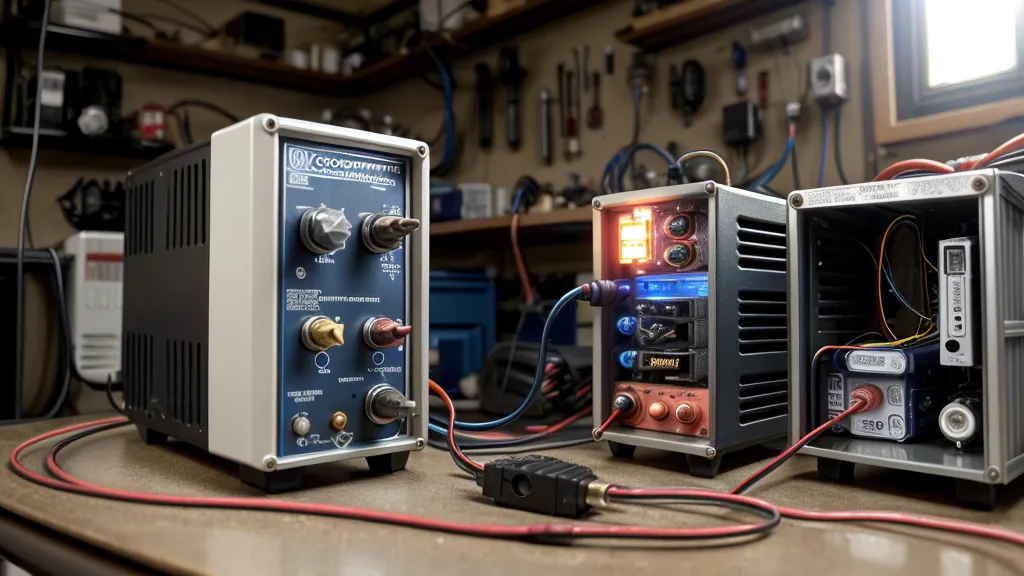
After three days of burned fingers, the solid-state dream got scrapped. Real cooling in the desert means vapor-compression refrigeration, where a dedicated 12V DC micro-compressor runs a coefficient of performance between 1.5 and 2.5 — two to three times the cooling effect per watt of anything Peltier-based. The unit I sourced, the same style used in overland fridges, pulls about 45 watts under normal run conditions. Less power than the failed Peltier setup, with roughly four times the thermal pulling capacity.
Forty-five watts is the running number, though, not the starting number, and that gap matters. Compressors are inductive loads — they need a hard jolt of current to overcome head pressure the instant the piston strokes, and a solar panel producing variable current based on sunlight has no business trying to supply that jolt directly.
The panel is a standard 100W 12V monocrystalline unit, mounted at a fixed tilt that's close to right for the summer sun angle but not fussed over — tilt angle is its own rabbit hole I won't get into here. Before wiring it in, I checked its open-circuit voltage with a multimeter instead of trusting the sticker, and it measured 22.3V Voc, which gives the charge controller real headroom even on a hazy afternoon. Because the compressor runs natively on DC, there's no inverter anywhere in this chain, which also means skipping the entire pure-sine-versus-modified-sine argument that trips up more conventional off-grid builds.
For the charge controller, I went MPPT instead of the cheaper PWM option. PWM controllers clip a 22.3V panel straight down to battery-charging voltage and waste a real chunk of the harvest in the process — there's a whole separate discussion to have about which controller makes sense for a given battery bank, and this isn't it, but in desert heat specifically, an MPPT controller earns its extra cost.
The buffer is a 12V 50Ah LiFePO4 battery, good for roughly 640Wh of usable capacity off a 12.8V working baseline. Sizing a bank like this is its own calculation — usable capacity isn't the same number as the amp-hour rating on the label — but 640Wh turned out to be enough headroom to absorb a compressor's startup surge without the system rail sagging. A battery monitor reading state of charge is worth having here too, if only so you're not guessing at how much of that 640Wh is actually left on a cloudy week. If you want the reasoning behind choosing lithium over lead-acid for this kind of cycling load, I wrote that up separately: why I switched to LiFePO4 batteries for my garage solar bank.
A quick caveat here: I'm an IT guy who resets domain passwords and diagnoses bad patch cables for a living, not a licensed electrician or a refrigeration technician. Anything involving high-capacity lithium storage, permanent grounding and bonding, or circuits wired into the house should get checked by a licensed electrician before it runs unattended.
Voltage Drop Nearly Killed the Compressor
On paper, everything looked solid. The compressor bench-tested fine, the MPPT controller delivered a clean bulk charge, and the whole rig ran without complaint — until a mid-July heatwave, when it started throwing intermittent fault codes out of nowhere.
The compressor would hum, run for two seconds, shudder, and shut down on a low-voltage cutoff. The battery monitor read 13.2 volts at the terminals, which is a perfectly healthy state of charge, so the cutoff didn't make sense at first.
Before chasing the fault any further, I ran a continuity check across every joint in the harness — touch a live terminal in that mode and you get three fast chirps out of the meter before the number settles on the screen, which is the quickest way I know to catch a short before it catches you. No shorts turned up. The problem was somewhere else.
Clamping the multimeter directly onto the compressor's DC input terminals and hitting the start switch told the real story: the reading plummeted to 10.1 volts. Voltage drop under load behaves a lot like network latency on a congested connection — the link light's green, but nothing's actually getting through — and the full mechanics of matching wire gauge to amperage are worth their own write-up elsewhere. What mattered on this build was simpler: six feet of 16-gauge speaker wire, carrying an 8-to-10-amp inductive startup spike, was dropping over two volts across the cable itself. The compressor's control board saw the dip below 10.4V and tripped its protective cutoff to keep from burning out its coils.
The fix was pulling every inch of that scrap wire and re-running the harness in proper 10-AWG tinned marine-grade copper, with the total round-trip run kept under three feet, plus a dedicated 15-amp inline blade fuse right at the battery terminal. Anyone fabricating their own leads should take the crimps seriously — I've got a full walkthrough on how to crimp MC4 connectors for solar panel wiring projects covering the tools and tension checks that keep field connections from melting.
Stop Over-Insulating the Box
Once the wiring was solid, a different problem showed up. Every DIY cooler guide online says the same thing: insulate to the maximum, pack the cavity with foam, wrap the shell in reflective foil, glue two-inch polystyrene board to every surface. That advice got followed closely, resulting in a heavy, triple-insulated box that looked like a shipping vault.
A few hours into running it in 110-degree garage heat, the compressor started short-cycling constantly, and internal temps stalled out at 48°F — nowhere close to food-safe.
Here's what those guides miss: over-insulating a solar cooler box traps latent heat from its own electronics, and that trapped heat is what causes the premature cycling, not a lack of cold. A DC refrigeration unit isn't just a cold box — it's an active mechanical circuit with a motor, an inverter board, and a condensing coil, and all of that sheds parasitic heat as it runs. Wrap the whole shell without giving that heat anywhere to go, and the air around the compressor's control module climbs past 130°F, which trips its own thermal protection and shuts the compressor down — not because the box is cold enough, but because the electronics are suffocating.
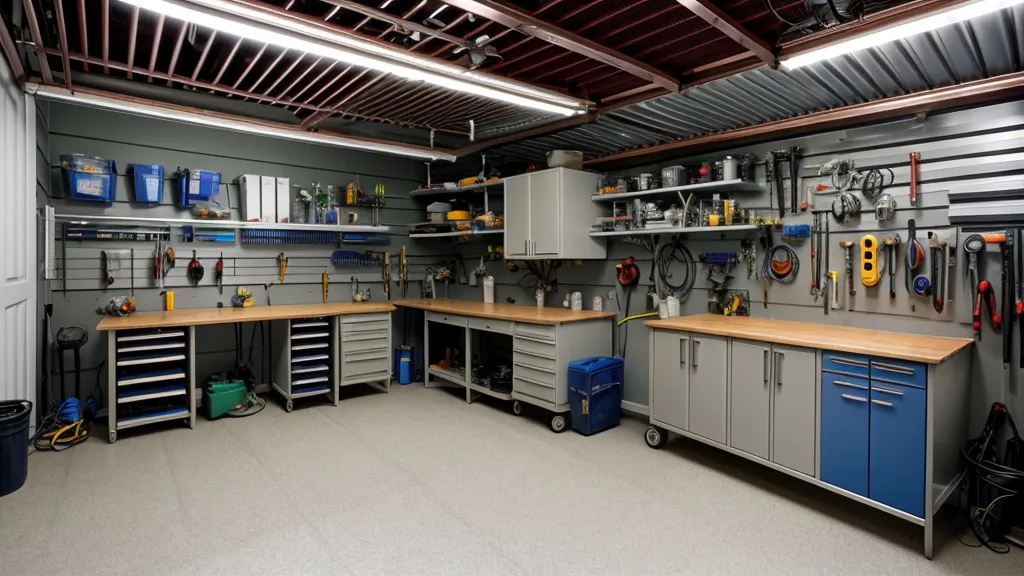
Fixing it meant rethinking the cabinet, not the foam. The cold box stays thoroughly insulated, but a completely uninsulated gap now separates it from the mechanical bay, so the two zones don't share heat. An active 12V brushless exhaust fan sits directly over the condenser coils, venting hot air out of the cabinet instead of letting it pool — the same airflow logic I use when keeping a DIY solar battery bank cool in a hot garage. And the thermostat probe itself needs to hang in free air inside the cold zone, away from any wall shared with the mechanical compartment, or conductive heat from that wall throws off the whole cycle timing.
What the Desert Benchmarks Actually Showed
By the time consecutive weeks of 112°F to 115°F afternoons rolled through, the rebuilt cooler sat on the garage floor wired to the 100W panel and the 50Ah LiFePO4 pack, with a data logger tracking internal temps around the clock.
The 45W compressor held the cavity between 36°F and 38°F continuously. During peak sun hours, roughly 11 AM to 4 PM, the panel generated 65 to 78 watts after thermal de-rating — comfortably enough to run the compressor cycle and float the battery back to full. That gap between the 100W nameplate rating and the 65-to-78W measured output is a good reminder that claimed output and measured output are rarely the same number once real heat and real angles get involved; peak-sun-hour math on a rated panel always assumes conditions no desert rooftop actually sees.
Once the sun dropped behind the mountains, the 640Wh battery carried the cooling load through the warm night, draining only about 35% of capacity before sunrise.
Total out-of-pocket for the panel, controller, wire, compressor, and a recycled cooler box landed in the mid-three-hundreds. I haven't run a full cost-per-kWh breakdown on this build — that math deserves its own article — but the rough version is simple: that's about what one bad summer electric bill costs, except this hardware keeps running every year after, with no second bill attached.
The decision rule, if you're building one of these yourself: once ambient temperatures push past 100°F, a Peltier-based cooler's delta-T ceiling will never get you to food-safe territory, so don't waste money finding that out. Put the budget into a DC compressor, oversize the wire gauge for the compressor's startup surge rather than its running wattage, and give the electronics somewhere to shed their own heat. Everything else — the foam thickness, the panel brand, the color of the cooler — is secondary.