
Nineteen. That's how many things in my house were pulling power with every switch, remote, and charger sitting in the "off" position — the number that came out of a plug-in watt meter and roughly two hours spent going outlet by outlet during my own home energy audit. None of them were dramatic on their own, a couple of watts here, half a watt there, but the running total accounted for more of my utility bill than the air conditioner did that week, and every bit of it was vampire power: electricity draining out of devices that were supposedly switched off.
Most of my garage time goes toward generation, not consumption — I've spent a good stretch comparing the Energy Revolution System to standard solar panel kits, testing which setup actually earns its keep in a Phoenix backyard. None of that testing tells you where a house is quietly leaking money while everything just sits there idle, though. That's a different kind of audit, and it doesn't need a single solar panel to run.
What Counts as Vampire Power
Vampire power — sometimes called standby power or phantom load — is the electricity a device pulls while it's plugged in but not actually doing anything: a television waiting on a remote signal, a phone charger with nothing attached, a game console idling in low-power sleep instead of shutting off completely. The Lawrence Berkeley National Laboratory puts the average home's standby draw at somewhere around 10 percent of total electricity use. Mine felt closer to the high end of that range once I started measuring instead of guessing.
A full home energy audit covers a lot more ground than this — insulation, duct leakage, window losses, all of it adds up to its own project. Vampire power is the slice you can measure and fix without touching a wall or calling a contractor, which is why it's the fastest return for anyone doing this themselves. Knowing your house's floor, the minimum draw while everyone's asleep and nothing is actively running, matters more than any single device reading, and I've covered how to use a battery monitor to track suburban solar usage separately, because the same baseline logic applies whether you're watching a solar system or just your utility meter.
How Do You Actually Find It?
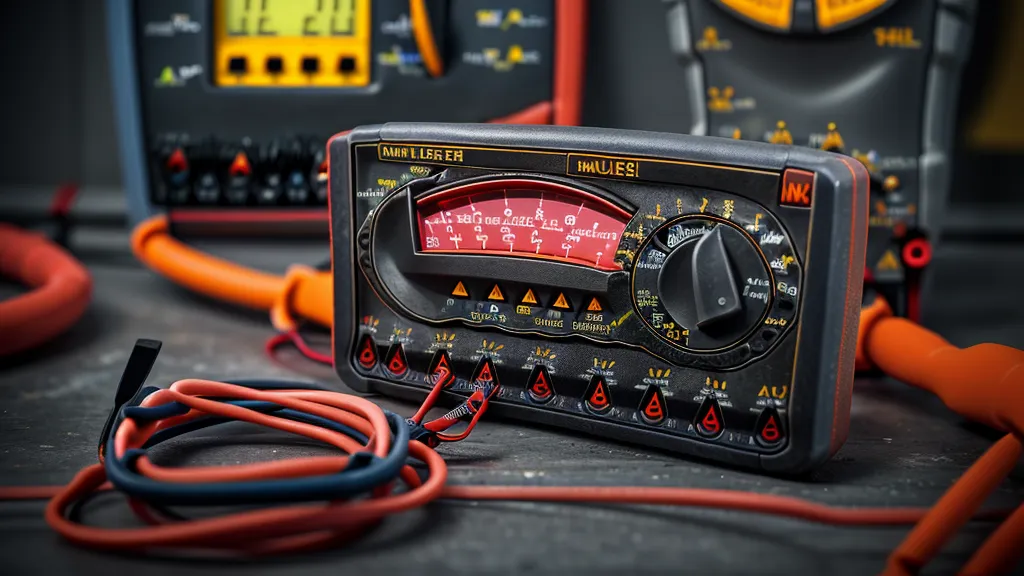
Finding vampire loads takes three tools, and you probably already own one. A plug-in watt meter gives you a real number per device — plug it into the wall, plug the device into that, and read the draw directly instead of guessing off a nameplate rating. A thermal camera is slower to use but catches what a watt meter can't, since a warm power brick or a compressor running longer than it should shows up as heat before it shows up on a bill. A multimeter with a CAT III safety rating lets you check voltage at an outlet — though if you're not comfortable opening your main service panel, that's a job for a licensed electrician, not a weekend project. A hundred and twenty volts does not care how good you are with a soldering iron.
That same multimeter, by the way, isn't set up to properly test a solar panel. Reading a panel's open-circuit voltage against its voltage at maximum power point is a different measurement with its own procedure, and mixing the two up is a common beginner mistake worth flagging rather than glossing over here.

Test the Big Draws First
Once you've got a baseline, test the big draws before chasing the small ones. A secondary refrigerator or chest freezer sitting in a Phoenix garage is usually the worst offender in the house, and mine was no exception: a used unit I kept out there to hold drinks and overflow, with door seals gone soft after a summer where the average high sat around 106 degrees.
Pointing a thermal camera at it, the gasket line glowed on the display, meaning the compressor was running far longer than it needed to just to hold temperature. What a watt meter shows at that point is the running watts, the steady draw once the compressor is already spinning, which is a different number from the surge it pulls for a split second on startup. Conflating the two is how people undersize a battery bank or a power station for a fridge and then wonder why it trips a breaker or dies early.
Where a Battery Backup Fits — and Where It Doesn't
That last point is exactly where my own backup plan fell apart. I'd bought a portable power station sized, on paper, for far more than a chest freezer needs, expecting it to carry the compressor through an outage without any drama.
It made it past dinner.
By the time I checked, the freezer had already dropped back onto grid power because the station was empty, nowhere near the runtime the spec sheet implied. Kwame, a guy I originally traded charge-controller notes with on a solar forum before we started meeting up at a maker space in Mesa, took one look at the numbers — mid-tangent about antenna gain patterns, which is where most conversations with him eventually go — and pointed out that the rated capacity assumed a steady load, not a compressor cycling on and off all night and pulling its surge every time it kicked back on. That gap between what a spec sheet claims and what you actually measure under a real load is the most common way people get burned buying backup power, and it's worth testing yourself before trusting a number on a box.
Sizing a battery bank correctly for a cycling load like that is its own calculation, involving running watts, duty cycle, and how much reserve capacity you actually want, not something to eyeball off a spec sheet. It deserves a full write-up on its own rather than a paragraph here. None of that accounts for what a garage running well above room temperature all summer does to a battery's usable capacity, either. Heat derates a battery's rated capacity, and that's a separate problem from sizing it correctly in the first place.
For Anyone Already Running Garage Solar
A few of these questions turn into separate rabbit holes if you're already running a small solar-and-battery rig the way I am. Whether your charge controller is PWM or MPPT changes how much of a panel's rated output actually reaches the battery, and it's worth understanding on its own rather than assuming your panels perform at nameplate. I've written about why I switched my solar charge controller after months of testing, and the short version is that the label on the box and the performance in a hot garage aren't always the same thing.
How you wire the panels, series or parallel, changes the voltage and current your controller sees, which is a wiring decision, not a preference. Feed a battery through the wrong inverter and you'll learn the hard way that a modified sine wave and a pure sine wave aren't interchangeable for every appliance, especially anything with a motor in it. And if the idea of tying a power station or generator into your main panel ever comes up, do not backfeed a circuit without a proper transfer switch. That's not a corner worth cutting, and it's exactly the kind of thing a licensed electrician should look at before anyone touches a breaker bar.
Panel tilt is its own adjustment too — how much angle you give the array for the season changes output more than people expect, and it's worth experimenting with directly rather than following a rule of thumb. Wire gauge matters just as much on the DC side. A reader named Juniper Halloway once emailed me about a 12-volt battery bank that kept tripping its breaker; she'd already put a decent multimeter on the problem and read through voltage charts before writing in, and the actual culprit turned out to be interconnect wire sized for a much smaller load than she was running. Voltage drop from undersized wire is a real, measurable loss, and it deserves a proper write-up of its own rather than a footnote in a piece about vampire power.
The Fixes That Actually Moved the Number
None of this required a single new gadget, in the end. Replacing the seals on that garage fridge cut its runtime dramatically. Putting the home office on a power strip that actually kills the circuit instead of leaving everything in standby handled the server rack and the old network switches that used to draw current all night for no reason. Five-cent foam gaskets behind outlet covers took care of the rest.
My bill still climbs every July, because that's Phoenix, but it stopped opening past $380 the way it had for three summers running, and it settled under $300 even during the worst of the heat once the standby draw was gone. The most useful thing I measured all year wasn't a new watt number generated by a panel; it was the number I stopped losing to devices that were supposedly off. If you're building any kind of DIY power system, start there before you add another panel to the roof — you can't tell if you're actually getting ahead until you know what your house does with the power it already has.