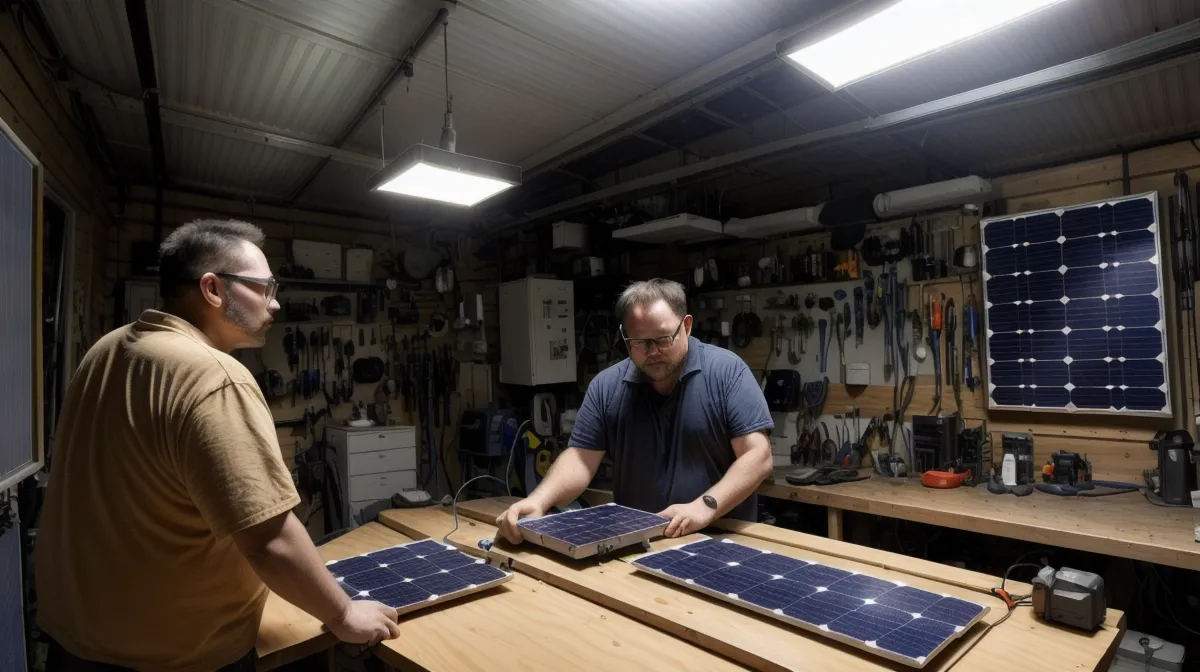
People often ask whether it's better to keep paying the power company for another decade or spend a few weekends risking a burnt finger to learn DIY solar the hard way. I still don't have a clean answer to that one. Two years and one seriously overheated garage into this hobby, I get some version of that question from neighbors, coworkers, and one guy who thinks I fixed his Wi-Fi once and therefore must know everything about off-grid basics and battery storage too. What follows isn't a beginner's course — it's the actual questions people ask me about Phoenix energy independence, once they've already bought a panel and aren't sure what to do with it.
The Electrician Question Everyone Asks First
No, you don't need a license to wire up a small panel-and-battery setup in your garage, and no, that isn't permission to get careless about it. Every serious injury story I've read online starts with someone skipping the disconnect switch because they were "only testing for a second." Before you touch a single wire, the smarter move — and the one almost nobody does first — is figuring out what's actually pulling power in your house, which means a real energy audit rather than a guess, though walking through how to do one properly is a longer conversation than I have space for here. My own approach stayed closer to a network troubleshooting checklist than an electrician's: isolate one circuit, test it, write down what happened, move to the next one. If you can't confidently say which breaker feeds which outlet in your own garage, that's genuinely the place to start, not the panel spec sheet.

Wire Gauge Matters More Than the Panel Wattage
During my first few weeks of testing, the all-day Phoenix sun wasn't charging batteries anywhere near as fast as the marketing on the box implied. The wire I'd grabbed from a leftover spool was too thin for the run length, and thin wire over distance wastes energy as heat before it ever reaches the battery — the same way a long, cheap network cable can quietly throttle your actual throughput even though the port still says gigabit. That's voltage drop, and it's a genuinely deep topic on its own that I won't try to squeeze into a paragraph here. What I will say is that the wattage printed on a panel's spec sheet and the wattage it actually delivers into a battery under real desert sun are two different numbers, and the gap between them surprised me more than almost anything else that first stretch of testing. Getting the physical connections right — including a safe grounding setup, which I wrote about separately in Grounding Solar Panels for Beginners: A Safe DIY Garage Setup Guide — matters more than which brand of panel you bought. Heat makes every one of these mistakes worse, too: Phoenix summers are brutal on electronics that aren't dialed in, and I've separately catalogued the usual culprits in Troubleshooting Common DIY Solar Inverter Problems in High Heat for anyone whose inverter starts acting up once it's 115 degrees outside. The practical rule I use now is simple: whatever gauge an online calculator says is "technically fine" for a longer run, size up one step past it, because a multimeter doesn't lie about the difference the way a spec sheet does.

Is a Bigger Solar Panel Always the Smarter Buy?
Here's the part that surprises almost everyone: no, and buying the largest panel your budget allows can actively shorten the life of your battery bank. Bigger arrays without matching storage capacity mean the battery hits a full charge early in the day and then just sits there, absorbing more voltage than it needs for hours with nowhere useful for that energy to go. Batteries do better when they're worked through a real daily cycle instead of pinned at the top all afternoon. Sizing that balance correctly is a bigger topic than one section can do justice to, but the short version is that matching panel output to what your battery bank can actually absorb matters more than maximizing either number on its own. The controller is really what manages that traffic day to day, and I got into why I eventually swapped mine out in Why I Switched My Solar Charge Controller After Months of Testing. Tilt angle is another lever people chase for an extra percentage point or two of output, and it's worth dialing in once the fundamentals are sorted, though it won't rescue a mismatched system. How you string multiple panels together — in series or in parallel — changes your voltage and current numbers substantially, and that decision deserves its own dedicated look rather than a footnote here. The criterion I'd actually give anyone shopping for panels: buy what your battery bank and your daily draw can absorb, not the biggest number on the shelf.
Battery Storage Chemistry Changed How I Think About Backups
Lead-acid batteries kept me nervous — you can't discharge them past roughly half their capacity without shortening their life, so I was constantly babying a system I was supposed to be testing freely. Heat makes that worse for any battery chemistry, lithium included, since higher temperatures derate how much usable capacity you actually get out of a cell, which in a Phoenix garage is its own ongoing headache I won't fully unpack here. Switching to a LiFePO4 (lithium iron phosphate) bank changed that calculation enough that I stopped treating the whole rig like it might fail if I looked at it wrong. Before wiring any new panel into the system, I still check its open-circuit and loaded voltage with a multimeter, though walking through exactly how to read those numbers is a topic for its own write-up rather than a tangent here. If you're still on lead-acid and find yourself limiting how much you actually use your own battery storage out of fear of damaging it, that hesitation is the signal to upgrade — not a marketing pitch telling you to.
Skip These Gadgets Before Someone Sells Them to You
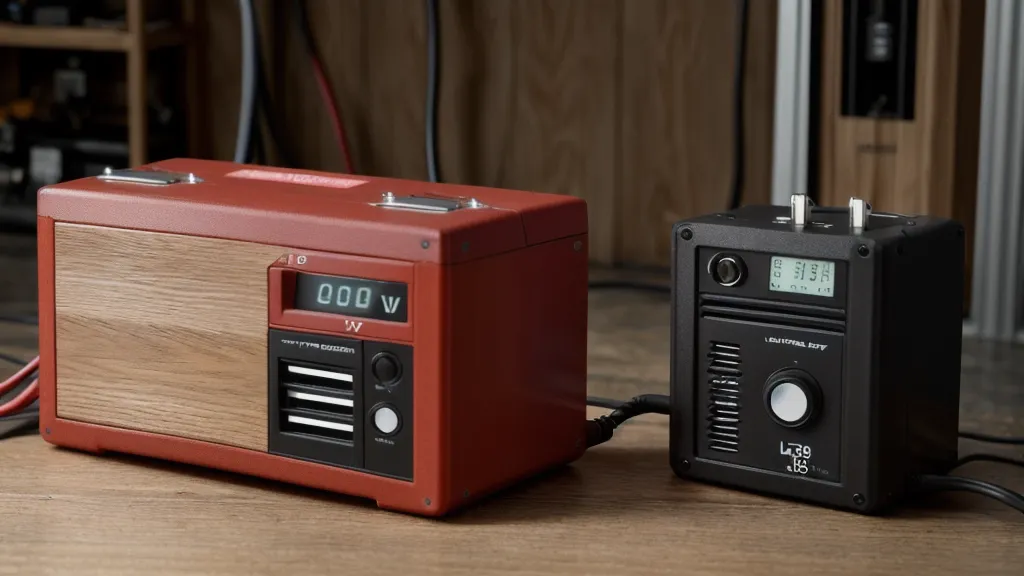
A neighbor of mine — the guy who spends every free weekend restoring a 1972 Chevy C10 in his driveway — asked me about a set of "power saver" devices he'd seen advertised online, the kind that plug straight into an outlet and claim something like thirty percent off your electric bill. Curiosity got the better of me, so I bought three, plugged them into the circuits that looked heaviest, and left a Kill-A-Watt meter running before and after. The reading didn't budge. Not gradually, not eventually — the draw was identical with or without them, which told me everything I needed to know about that entire category of gadget. Surge watts versus running watts is the distinction that actually matters when you're sizing real equipment, like an inverter that needs to handle a fridge compressor kicking on, and mixing those two numbers up is the fastest way to undersize a system. Choosing between a PWM and an MPPT charge controller is a legitimate decision with real efficiency consequences, and it deserves proper research on its own rather than a paragraph tacked onto a gadget rant. If a product promises a flat percentage savings without telling you what it's measuring against, plug in a meter before you believe the box — that one habit has saved me more money than any gadget I've tested.
So, Is Any of This Actually Worth It?
The moment that actually convinced me wasn't dramatic. I clipped a multimeter onto the battery terminals on an ordinary afternoon and watched the display hold flat at 14.1 volts without dipping, while the utility meter on the side of the house sat completely untouched. That's a small thing to get excited about, and it's exactly the kind of small thing that adds up over a year of testing. Tying a setup into the main panel for real backup power is a backfeed-and-transfer-switch conversation with its own code requirements, and that's outside what a piece about garage experiments should try to cover. The choice between a pure sine wave and a modified sine wave inverter matters too, mostly for which appliances will actually run cleanly off it, but that comparison deserves its own space instead of a rushed closing paragraph. If you want the full wallet-level breakdown of what this hobby has actually cost and saved me, I laid it out separately in My Phoenix Electric Bill Was Killing Me: The Real Cost of My Garage Energy Experiments. My honest answer: this is worth doing if you like knowing exactly where your money goes and don't mind a few ruined afternoons getting there. It's not worth doing if you want a lower bill with zero effort on your part, because that expectation will disappoint you faster than any gadget on this list did.