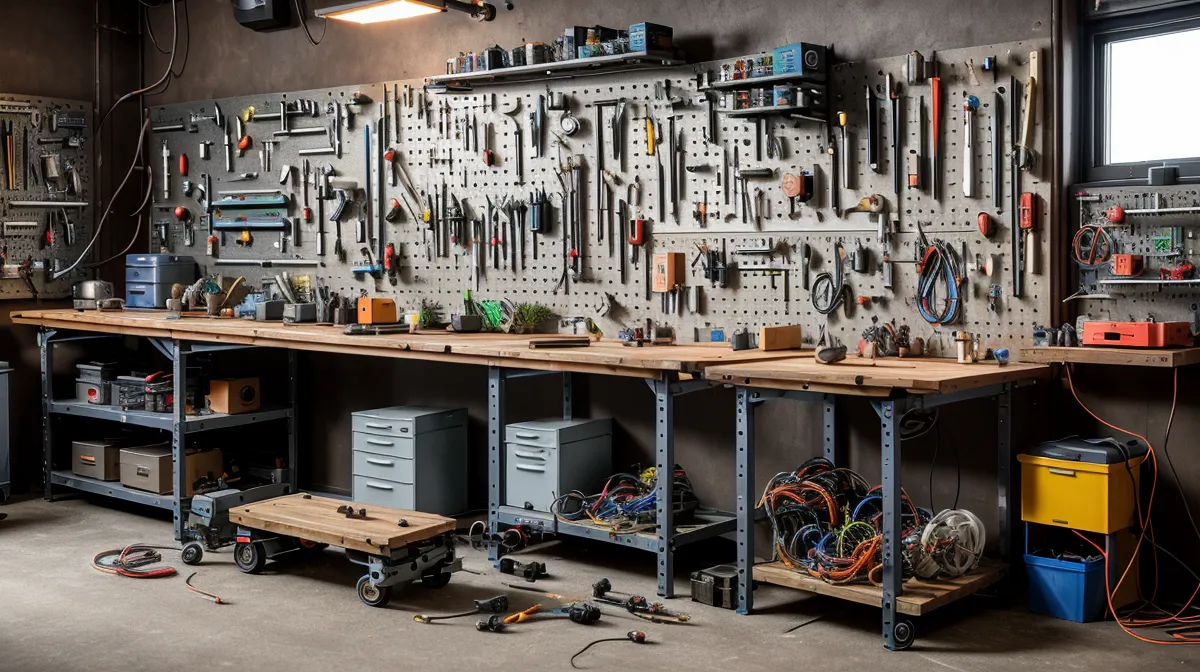
An orgone motor does not generate electricity. Every one I've tested in this garage workshop — and there have been three, each built around a different wiring theory — pulls its "output" from somewhere ordinary: a nearby fan, a phone charger, stray 60-hertz hum already living in the house wiring. None of it comes from Wilhelm Reich's universal life force, no matter how the DIY energy forums frame it. This particular build, an experimental wiring project stacking copper coils, N52 magnets, and a plastic tube stuffed with steel wool, is still worth walking through, not because it works, but because of what actually shows up on the multimeter when it doesn't.
That gap between the claim and the result is the real subject here. Reich borrowed the word "orgone" from his own psychoanalytic background and turned it into a supposed physical force in the 1930s and 40s, and it never passed a test that would make an electrical engineer take it seriously. The wiring exercise underneath the mythology is real enough, though: roughly five hundred turns of magnet wire, a capacitor bank that bites if you get the polarity backward, and a switch you flip while half-hoping the meter does something other than sit at zero.
Orgone Motors Don't Generate Power
Start with the misconception, because it's the one that costs people a weekend and forty-some feet of wire before anyone thinks to question it: the idea that an "accumulator" consisting of layers of organic material like cotton or steel wool concentrates a life-force energy that a coil can then convert into current. There's no accepted physics behind that. Steel wool and cotton don't accumulate anything except dust and, eventually, rust. What they can do, by accident, is change how nearby electromagnetic fields behave around a coil, which is a completely different and much more boring phenomenon than a universal life force.
Most people who recognize Reich's name know him from psychology rather than electronics. He broke away from Freud's circle and later claimed to have found a measurable energy present throughout the atmosphere. Wilhelm Reich's claim was never validated, and versions of his accumulator device eventually drew a federal injunction over the health claims attached to them. None of that keeps the idea from resurfacing every few years on forums full of people who, like me, are just tired of a summer electric bill that keeps landing at $380 for the third year running.
Sourcing the Coil, the Magnets, and the Capacitor Bank
Nearly everything for this build came from one trip to the Home Depot on Bell Road in Scottsdale. I shopped the electrical aisle for wire and connectors, not the plumbing aisle where you'd expect steel wool to be shelved. Back in the garage, the parts spread across a folding workbench that's permanently covered with a clamp-on multimeter and a notepad that's seen better days. Cable along one wall is zip-tied into bundles that used to be labeled before this build ate through half the tags, a shelf holds bins of ring terminals and spare fuses that are always emptier than I remember filling them, and the box fan wedged in the corner runs pretty much nonstop by August.
The core itself called for AWG 22 wire. At about 0.644 millimeters across, it's thick enough to carry real current and thin enough to allow roughly five hundred turns without the finished motor turning into a coffee can. In IT terms, wire gauge behaves like bandwidth: push too much through a channel that's too narrow and you get heat, not throughput, and that's really the only piece of the wire-gauge story this build needs — the deeper math on voltage drop over a longer run belongs to a different project than this one. Winding those five hundred turns by hand took more patience than I expected; halfway through the first coil I rushed the tension, the spool unraveled, and I spent the better part of an evening untangling what looked like a copper tumbleweed.
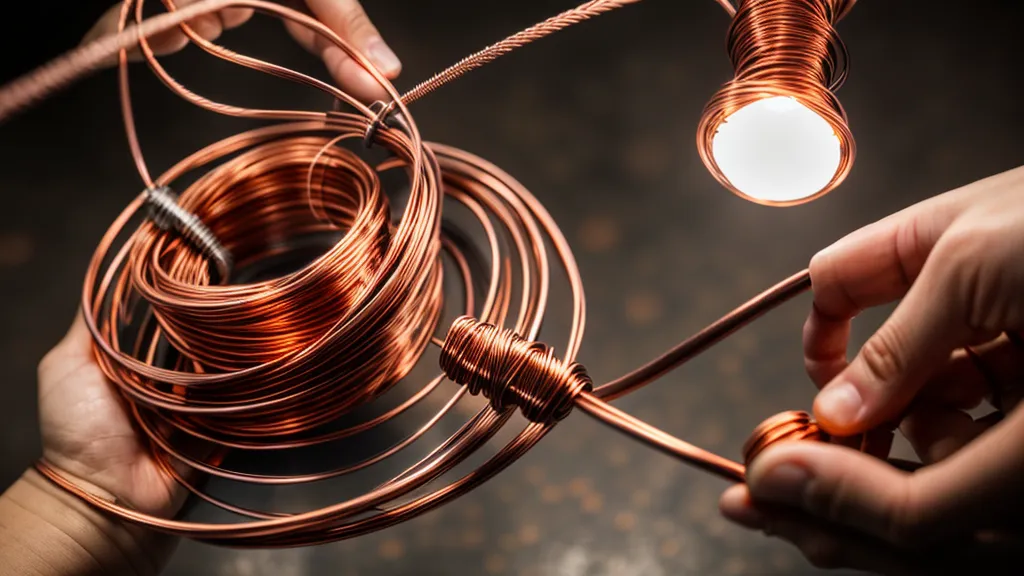
Layered in with the coil sit N52 neodymium magnets, the strongest grade sold commercially. They're brittle enough to chip and strong enough to snap together hard if two of them get within a few inches of each other unsupervised. Neodymium also has a temperature point where it simply stops being magnetic, and a closed Phoenix garage in July can flirt with that number without any help from a soldering iron. The capacitor bank sitting next to the magnets is polarized, and wiring one backward taught me, once, exactly what "a pop and a smell like burnt hair" means in practice.
Why Did the Meter Read Zero?
After the coil was wound and the capacitor bank was soldered, I flipped the switch and the multimeter sat at 0.00. No twitch, no hum, no sign that steel wool and cotton had accumulated anything. That's not a build mistake worth feeling bad about — it's the expected result. A device that isn't generating a field or completing a circuit through a real power source reads zero every time, and no amount of organic layering changes that math.
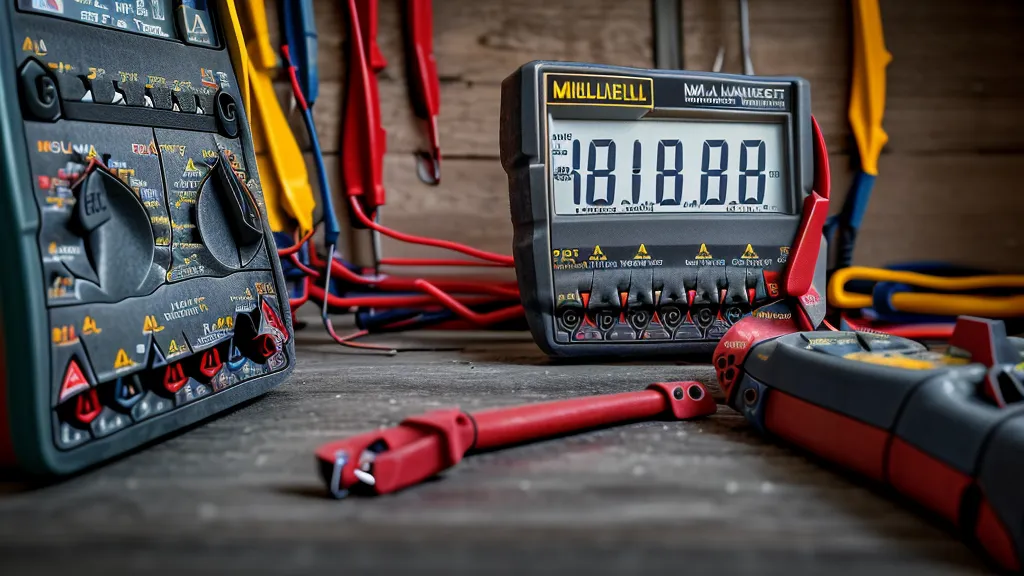
Zero volts is not a mystery. It's just a circuit that isn't complete.
Tracing the reading down turned up a cold solder joint on the main bus — the electrical equivalent of a loose network crimp — and nothing about orgone one way or the other. Reflowing that joint and testing again, the needle didn't jump anywhere near household voltage, but it did move whenever the shop fan spun up nearby. That detail is the actual physics worth remembering: an unshielded loop of wire near a spinning motor will pick up its electromagnetic field and register a small induced voltage on a sensitive meter. It isn't power generation. It's a homemade, fairly mediocre induction sensor, the same reason a laptop speaker buzzes when a phone rings next to it.
The Experimental Wiring That Sent the Ground Loop Nowhere
Somewhere in the DIY-energy corners of the internet you'll find the claim that intentional ground loops improve an experimental circuit's output. The theory is that letting a return path loop back into the organic layers lets "excess potential" circulate and stabilizes the motor under load. In standard electronics, a ground loop is the opposite of helpful: it's noise and interference, the equivalent of a broadcast storm flooding a network segment. Wrapping that loop in cotton and calling it an accumulator doesn't change what a ground loop physically is. What looked like the loop "helping" was the same fan-generated interference as before, arriving through a slightly different unshielded path and landing on the meter as a slightly different number.
I wrote up the specific ways the first three versions of this build went wrong in troubleshooting the Orgone motor, if you want the blow-by-blow instead of the summary. Wiring the N52 array so its polarity lined up with the coil's pulse mattered more than any ground-loop theory. Off by even a few degrees, and the motor doesn't turn, it just hums and vibrates, the way a hard drive sounds when it's trying to read a scratched platter. A simple 555 timer circuit handled the pulsing, mostly because it's cheap and forgiving of a hobbyist's soldering. None of it — the magnet array, the capacitor bank, the pulsed timer circuit — belongs anywhere near a home's actual 120-volt wiring without a licensed electrician checking the work first.
A Better Way to Judge Whether a Circuit Is Really Generating Something
If you build one of these, or run across anything else claiming power from an unconventional source, there's a simple check before getting excited about a reading. Move every nearby electrical device several feet away — fans, chargers, anything with a motor or a switching power supply — and take the reading again. A number that collapses toward zero was interference, not generation. A number that holds steady regardless of what's plugged in nearby is worth investigating further, though even then it's an anomaly to isolate and test, not proof of a new energy source. That one check would have saved a fair number of confused evenings staring at a meter in this garage.
Compare that to the boring, working side of the same garage. Whether a charge controller is PWM or MPPT changes how much of a panel's output actually reaches a battery, and the difference shows up on a meter, not in an argument. Wiring panels in series versus parallel changes a system's voltage and current in predictable, calculable ways. A pure sine wave inverter runs sensitive electronics quieter than a modified sine wave unit, audible in a fan motor if you know what to listen for. Sizing a battery bank is arithmetic — count the loads, count the amp-hours, leave margin — and a transfer switch is what keeps a generator from backfeeding into the grid and hurting a lineman down the block. Panel tilt angle is a seasonal trade-off you can chart against the sun's elevation, and a proper home energy audit usually turns up more real savings than any exotic generator ever will. Every one of those has a claimed output on the box and a measured output on the meter, and the gap between those two numbers is the same gap that swallowed this orgone motor — solar componentry, wired correctly, is just better at closing it.
The APS Rebate Barely Moved My Bill
Not every failed experiment happens at the workbench. A couple of summers back I signed up for APS's demand-response program, the one that lets the utility nudge your air conditioning during peak hours in exchange for a credit. Two August evenings of a warmer house than I wanted later, the credit on the next statement was small enough that I had to look twice to find it. That's the pattern with most "guaranteed" fixes marketed at people with a bill like mine — the promise runs well ahead of the mechanism behind it.
My neighbor Rosario, two doors down, keeps a spreadsheet of her power bill by month — actual columns, actual totals, the kind of record-keeping that would embarrass most of what passes for proof in the orgone-generator crowd. When I told her the multimeter had read zero, she asked whether it lined up with anything on her spreadsheet before she asked whether it was interesting. That's the better question, and a more useful diagnostic than anything Reich's accumulator theory ever offered.
A guy I know from the Mesa maker space, Obinna Nwachukwu, has a habit of using the exact correct electrical term for everything, which makes my looser IT analogies sound sloppy by comparison. He'd probably call the fan-interference problem "inductive coupling" and be finished in four words.
For comparison's sake, my actual battery bank has a real charge controller and real panels doing real work and will sit at something like fourteen point one volts on a quiet afternoon with the grid completely untouched. There's nothing mysterious in that number. It's amp-hours and a charge controller doing what they're built to do, and it's the kind of boring, repeatable result an orgone accumulator has never produced for me or for anyone else who's actually tested one.
Is Building One Worth Your Weekend?
If the goal is learning to wind a tight coil, solder a clean joint, and respect what an N52 magnet can do to an unprotected finger, build the thing. Those are transferable skills for projects that actually work. If the goal is generating usable power from a universal life force, no quantity of steel wool changes the answer, and a multimeter will say so every time you ask it. The habit worth keeping from this whole detour isn't the orgone theory. It's testing every strange reading against a mundane explanation before crediting it to anything exotic — move the fan, unplug the charger, check the joint, and only then get curious.
For a generator setup built around a point instead of a theory, my power grid generator for home office use runs on physics that doesn't need a Reich pamphlet to explain. And grounding solar panels is a grounding project that's actually straightforward — an afternoon of work, with no pretending that cotton catches ghosts.
The garage still looks like a cross between a workshop and a swap-meet electronics table, and this motor sits on a shelf next to two earlier, worse versions of itself. None of them lowered the bill by a single watt. What they lowered was my patience for any claim that skips the measurement step, and that turned out to be worth more than the free energy I went looking for in the first place.